Pack for Possibility, Not for Perfection
Most people pack for the trip they expect. Adventurous travelers pack for the trip that might surprise them.
Think of your bag as a toolbox for saying “yes” more often. Instead of five pairs of shoes, bring one pair you can hike a hill in, walk a city in, and wear to a casual dinner. Swap bulky outfits for quick-dry layers that can handle a sudden rainstorm, an impromptu bike ride, or a last-minute overnight bus.
Leave physical space in your bag. That spare room isn’t just for souvenirs—it’s for the unexpected: a local snack someone hands you, a borrowed jacket from a homestay host, a sarong you buy at a market that doubles as blanket, curtain, and beach towel. Space in your bag is space in your plans.
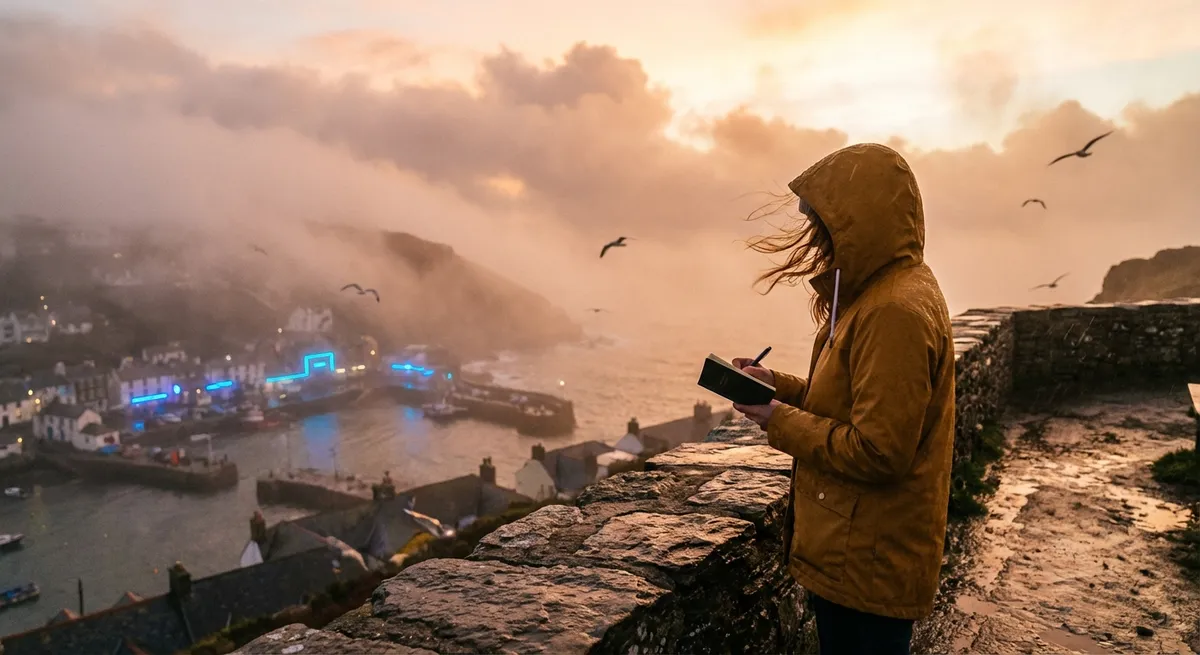
Keep a tiny “adventure kit” in your daypack: a lightweight scarf or buff (works as mask, sun protection, or temple cover-up), a collapsible water bottle, a pen and small notebook, a phone battery pack, and a digital copy of key documents. With these, you can pivot when a stranger invites you to a village festival, a park ranger offers a back-route hike, or you decide to chase that sunset an hour away instead of heading back to the hotel.
Pack less to move faster—and move faster to say yes to more.
Design Your Days Around Curiosity, Not Checklists
Guidebooks and “must-see” lists are helpful, but they tend to flatten new places into tasks to be completed. If you want your travels to feel electric again, plan your days around questions, not queues.
Instead of “See the famous cathedral,” try: “What does this city feel like before it fully wakes up?” That might mean a pre-dawn walk along the riverside or sipping coffee in a nearly empty café watching shopkeepers roll up old shutters. You’ll see the same city everyone else sees, but in a version most travelers miss.
Give each day one loose theme: “Follow the water,” “Chase local music,” or “Only eat where there’s no English menu.” Let that theme guide your choices: canal-side neighborhoods over main squares, side-street bars over polished lounges, local eateries where you point to what looks good instead of reading a translation.
Build “unplanned hours” right into your itinerary. Literally block off time where the only rule is to follow whatever catches your eye—a crowded bakery, an alley with colorful laundry lines, a sound of drums in the distance. Wrap your structured activities (like museum visits or tours) in this softer, unscheduled time, so there’s room for a city to surprise you.
The more you let curiosity, not obligation, shape your day, the more each destination feels like a living story instead of a checklist of sights.
Turn Every Interaction Into a Story You’ll Tell for Years
The most vivid travel memories rarely come from perfect photos; they come from imperfect conversations, awkward hand gestures, and unexpected kindness.
Treat every encounter as the opening line of a story: the bus driver who plays the same song on repeat, the café owner who insists you try “the real version” of a dish, the elder on a park bench who keeps gesturing toward the mountain as if it holds a secret. Approach people with the assumption that they know something about this place that you don’t—and your job is to find out what it is.
Learn a tiny “connection kit” of local phrases beyond hello and thank you:
- “This is beautiful.”
- “What do you recommend?”
- “How do you say this?”
- “Where do you go on your day off?”
Even if your pronunciation is clumsy, the effort often flips a switch. You’re no longer a passing tourist; you’re a guest who’s trying. Locals might scribble down a hidden viewpoint, invite you into a family-run shop, or warn you about a tourist trap everyone else walks into.
Record these micro-moments. Jot down the name of the woman who gave you directions in a rainstorm, the joke your taxi driver made, the snack that tasted strange but grew on you. When you look back, these become anchors for your memories—proof that you didn’t just pass through a place; you participated in it.
Let the Landscape Change How You Move
Most trips are built around what we see. Transformative trips are built around how we move through a place.
Use the landscape as a script for your day. In a coastal town, let the tides dictate your rhythm: early walks on the sand when the beach is empty, late-night strolls when the tide’s high and the air is thick with salt. In a mountain village, time your routes around the shifting light: valleys in the soft morning, ridgelines when the sun is high, viewpoints as the sky turns gold and violet.
Experiment with how you move, not just where you go. Trade a taxi for a bicycle on flat city streets and you’ll feel the texture of the place—the cobbles, the wind, the smell of bakeries—in a way you can’t from a car seat. Take a slow local train instead of a short flight once in a while; watch how the scenery stitches together, turning scattered dots on a map into a continuous story.
Be intentional about “stillness stops.” Find one spot—a bench, a rock, a pier—where you return during your stay. Visit it at different times: dawn, midday, night. Notice what changes: the people, the sounds, the colors, the temperature of the air. That single viewpoint becomes a time-lapse window into the life of the place, grounding your memories in more than snapshots.
When you let a destination set the pace and style of your movement, travel stops feeling like you’re skimming the surface and starts feeling like you’re part of the terrain.
Build a Ritual That Starts Before Takeoff and Outlasts the Trip
The journey begins long before your boarding pass prints and continues long after your suitcase is back in the closet. Creating small rituals around your travels keeps them vivid, meaningful, and easier to relive.
Begin with a pre-trip ritual that flips your brain into “explorer mode.” The night before you leave, look up one local legend, festival, or piece of history that fascinates you—not because it’s on a top-10 list, but because it makes you curious. Write down one question you want answered on this trip, like “How do people here celebrate the end of a workday?” or “What food reminds locals of childhood?” Let this guide what you notice once you arrive.
During your trip, give yourself a 5-minute nightly “trip download.” Jot three things: one thing you saw, one thing you felt, and one thing you learned or wondered about. It could be as simple as “The way the light hit the square at 5 p.m.,” or “I felt small standing under those cliffs,” or “Why does everyone here gather in parks at night?” You’re training your brain to pay attention.
When you get home, create a post-trip ritual that keeps the adventure alive. Make a simple map with lines tracing where you walked, rode, and wandered. Print one favorite photo—not the most perfect one, but the one that makes you feel something—and write a few sentences on the back about what was happening outside the frame.
Share your story in a way that’s useful to others: a short social media thread with practical tips you wish you’d had, a custom Google map with honest notes, or a mini guide for a friend who might go next. Turning your experience into something that helps future travelers is a powerful way to “travel” twice—once in real time, and once in the retelling.
Conclusion
Every journey has a choice baked into it: you can move through the world as if you’ve seen it all before, or you can travel like it’s your first time everywhere—curious, light on your feet, open to detours, tuned in to people and place. You don’t need more money, more time off, or more stamps in your passport to feel that sense of electric newness. You just need to pack for possibility, design days around curiosity, lean into human connection, let landscapes set your pace, and weave your own rituals into the edges of each trip.
Do that, and every border you cross—whether it’s a country line or just the city limits—becomes less about getting away and more about waking up.
Sources
- U.S. Department of State – Traveler’s Checklist - Practical guidance on documents, safety, and preparation before you travel
- Centers for Disease Control and Prevention – Travel Health - Up-to-date information on vaccines, health risks, and region-specific travel health tips
- National Geographic – The Science of Why You Should Spend Your Money on Experiences, Not Things - Explores why experiences like travel are more fulfilling than material purchases
- Harvard Business Review – How to Make Your Travel More Meaningful - Research-backed ideas on designing more intentional, memorable trips
- Lonely Planet – Responsible Travel Tips - Advice on connecting respectfully with local people and places while you explore