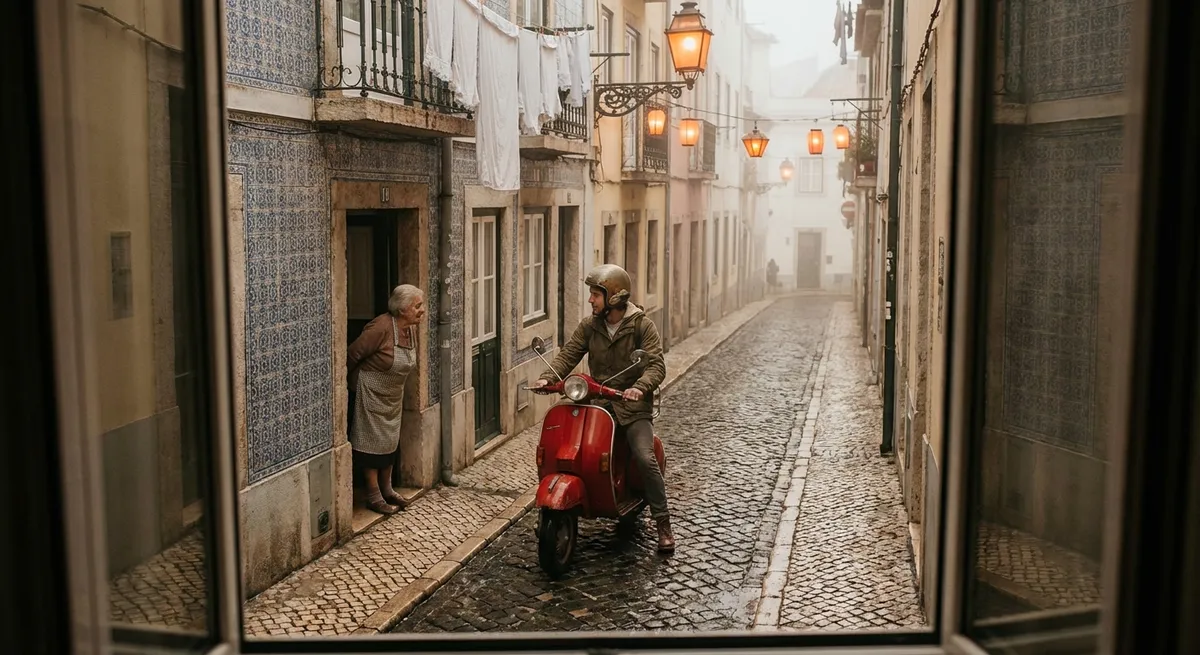
Below are five powerful ways to step into that sweet spot: grounded in real local life, but wide open to adventure.
Swap the View from a Hotel Window for a Neighborhood Base
A city reveals its real pulse in the spaces where people live, not where they check in.
Instead of defaulting to the main hotel strip, look for a stay in a lived-in neighborhood—somewhere with a bakery that opens before sunrise, kids walking to school, and neighbors greeting each other in the stairwell. Short-term rentals, guesthouses, and small family-run hotels can plug you straight into the everyday rhythm.
Once you arrive, walk a slow lap around your block. Note the corner store with crates of fruit outside, the park where older locals play cards, the tiny café with fogged-up windows. These are your anchors—the places you can visit again and again until you’re recognized, if only by a nod.
Practical move: use offline map tools to mark your “home base” plus three essentials within a 10-minute walk: a grocery shop, a café, and a transit stop. The moment you know how to grab breakfast, catch a bus, and find your way back without thinking, you’re no longer just visiting—you’re inhabiting.
Let Transit Be Your First Adventure, Not an Obstacle
Public transit is the circulatory system of a city. Learn to ride it, and the place opens up.
Instead of jumping into ride-shares by default, challenge yourself to understand the local way of moving. Is it metro lines slicing under the city, ferries crossing a harbor, tuk-tuks buzzing between districts, or shared minibuses weaving unmarked routes? Each system tells you who lives where, which areas are hub-like, and how people’s days flow.
Start with one route: maybe the line that connects the historical center to a residential district, or the tram that runs along the waterfront. Watch who gets on and off. Listen to snippets of conversation and announcements. Notice the way commuters dress, what they eat on the go, which stops feel sleepy and which absolutely thrum with energy.
To keep it smooth, buy a transit card if available, screenshot station names, and learn one useful phrase like “Does this go to…?” in the local language. When you can cross a city the way locals do, every ride becomes a moving window into its real life.
Eat Where Curiosity Points, Not Just Where Reviews Shout
Food is a language, and the best fluency comes from following your senses, not just your screen.
Yes, reviews can help you avoid tourist traps, but if you rely only on star ratings, you’ll miss the smoky street stalls and family kitchens humming with conversation. Instead, let a few simple rules guide you: when in doubt, go where it’s busy, where the menu is short, and where you can see the food being made.
Step into markets early in the morning when fish are still glistening on ice and bread is stacked in fragrant towers. Ask stall owners what they eat when they take a break. Say yes to the unfamiliar dish that keeps reappearing, the one everyone seems to be ordering. Order one “safe” option and one that surprises you—it’s a low-risk way to discover new favorites.
Don’t be afraid to linger. Sharing a table with strangers or sitting at the counter gives you a front-row seat to everyday rituals: how people season their food, where they rush off to afterward, what “comfort food” looks like here. That’s culture on a plate, and you’re right in the middle of it.
Turn Small Interactions into Your Richest Souvenirs
The most memorable things you bring home rarely fit in your luggage.
Make a quiet promise at the start of your trip: every day, you’ll initiate at least one new interaction beyond a basic transaction. It could be asking a barista for a non-touristy café recommendation, complimenting a street musician and asking about their instrument, or chatting with a fellow hiker about their favorite local trail.
Learn and actually use a few phrases in the local language—hello, thank you, please, delicious, and “What do you recommend?” Even imperfect efforts are often met with warmth and can open doors to deeper conversations. Carry a small notebook or use your phone to jot down names, places, and tiny stories before they blur together: the bookseller who circled her favorite poet in your guide, the bus driver who insisted you hop off at one extra viewpoint.
These micro-moments are what stitch a destination into your memory—not just as a place you saw, but as a place that saw you back, even briefly.
Follow One Thread of Obsession Across the Map
One of the boldest ways to experience a place is to choose a single interest and chase it relentlessly.
Maybe it’s coffee, street art, ancient temples, indie bookstores, live jazz, or hiking trails. Pick your “thread” before you go, then let it guide your planning. In every city or region, look for your chosen obsession: the neighborhood espresso bar with a line out the door, the underpass layered with murals, the tiny venue in a basement where a band you’ve never heard of is playing.
This focus does two powerful things. First, it gives you an anchor—a reason to explore neighborhoods far from the usual sights. Second, it lets you compare how the same passion is expressed in wildly different cultures. Coffee in Istanbul vs. Seattle vs. Hanoi becomes not just about taste, but about ritual, pace, and social connection.
Ask people you meet about your chosen passion: “Where would you go for live music?” “What’s the most beautiful bookstore in town?” Locals light up when you care about something deeply, and your journey becomes less about ticking boxes and more about building a web of stories around the things you love.
Conclusion
Traveling like a local isn’t about pretending you’re not a visitor. It’s about showing up with respect, curiosity, and a willingness to let the place change your rhythm.
Anchor yourself in a real neighborhood. Learn the routes that everyone else takes. Taste boldly. Turn everyday encounters into shared stories. Follow that one obsession across new landscapes. When you move through the world this way, your trips stop feeling like brief escapes—and start feeling like chapters in a much bigger adventure you’re writing for yourself, one journey at a time.
Sources
- U.S. Department of State – Traveler’s Checklist - Practical pre-trip guidance on documents, safety, and preparation
- OECD – Tourism Trends and Policies - Insight into how tourism impacts local communities and why responsible, local-focused travel matters
- UN World Tourism Organization - Research and recommendations on sustainable and culturally respectful travel practices
- BBC Travel – How to Travel More Responsibly - Tips for engaging with destinations in more meaningful, less extractive ways
- National Geographic – The New Rules of Sustainable Travel - Guidance on making travel choices that support local cultures and environments