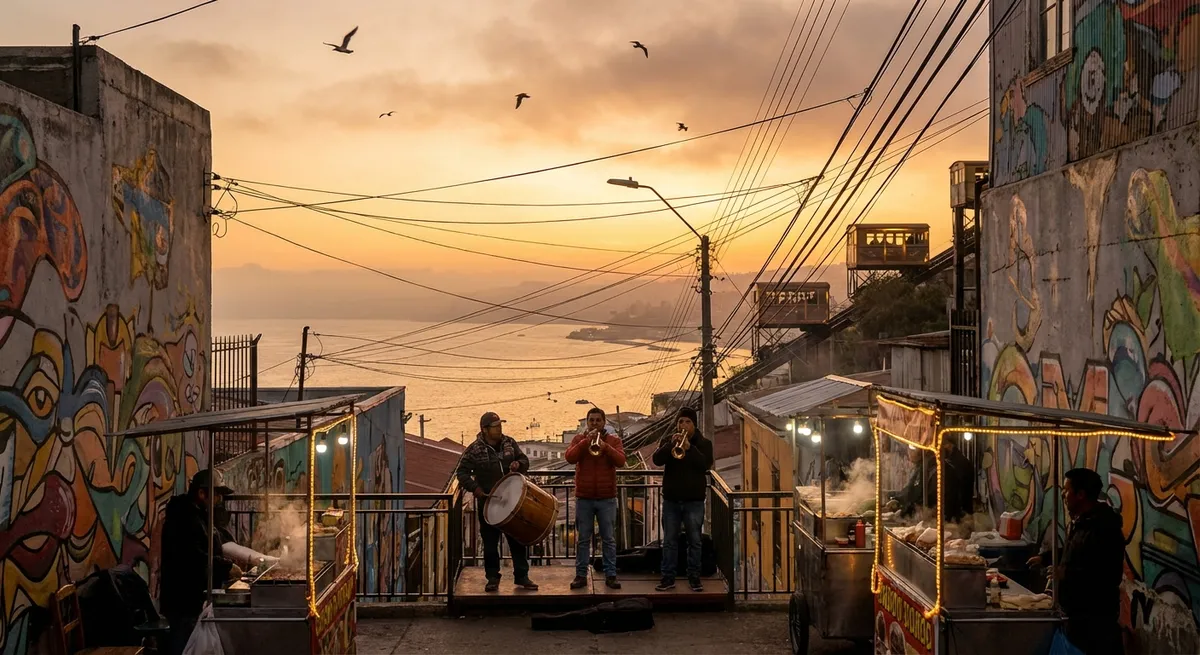
Cities That Never Sleep, But Still Let You Dream
Some cities don’t wind down—they simply change frequency. Think of places like Tokyo, Mexico City, or Istanbul, where sunrise markets give way to neon-lit nights, and the streets are a 24-hour conversation.
Walk through Shinjuku at dusk and you’re swallowed by light and sound, yet duck into a tiny alley bar and it’s suddenly intimate, almost whispered. In Mexico City, the day starts with the smell of tortillas on a corner griddle and ends with live music spiraling out of cantinas until the small hours. Istanbul hums with ferry horns, sizzling street food, and the echo of history in every narrow lane. The trick is not to try to “do it all,” but to choose a neighborhood and let it claim you for a while—wander markets slowly, sit in one café long enough to see commuters turn into night owls, and use public transit not just to get around, but to feel the city’s pulse.
Captivating point:
Let the city’s rhythm set your schedule. Sleep late after a night of street food and rooftop views, then chase sunrise from a quiet park or waterfront. This loop—late nights, early discoveries, slow afternoons—is where city trips turn into stories.
Practical tip:
Pick accommodations near a major transit hub. That one decision unlocks last-minute detours to festivals, pop-up galleries, and street performances you’d otherwise miss.
Islands That Teach You to Move With the Tide
Islands are masters of slow persuasion. They don’t demand that you slow down—they just quietly offer so many reasons to that eventually you do. From the volcanic beaches of the Azores to the wind-sculpted coasts of the Greek islands, these destinations invite you to live by natural cues instead of notifications.
Wake up to the sound of real waves instead of white-noise apps. Time your day around the wind: calm mornings for paddleboarding or snorkeling, breezier afternoons for sailing or kitesurfing, golden hours for coastal hikes where the sea turns molten under the sun. On islands like São Miguel in the Azores, you can soak in hot springs surrounded by jungle foliage, then wander into town for fresh seafood caught hours ago. Life contracts to a simple, satisfying loop: swim, walk, eat, repeat.
Captivating point:
When you stay long enough for the shopkeeper to recognize you, the island changes. Locals start sharing tips about hidden coves, unmarked trails, and little family-run taverns that never appear on maps.
Practical tip:
Travel outside peak season—late spring or early autumn—when the water is still warm, crowds thin out, and prices soften. Ferries and local buses often expand your reach to smaller, more remote spots at a fraction of the cost of tours.
Rivers That Pull You Through History and Wildness
Follow a river and you follow a story—from source to sea, mountain to metropolis. Destinations built along major rivers, like the Danube, Mekong, or Nile, weave together ancient history, local life, and raw landscapes in a way few other routes can.
Glide along the Danube and watch as baroque cities, cliffside castles, and vineyard-covered hills roll past like a centuries-long time-lapse. Drift down sections of the Mekong and see riverbank villages where markets, temples, and laundry lines all lean toward the water. On the Nile, felucca sails catch sunset light as they’ve done for millennia, and the line between myth and reality blurs with every temple and tomb. Traveling with the current means you don’t just “see” a destination—you feel how it connects, stretches, and sustains life.
Captivating point:
Rivers force you to slow down, to surrender to their pace. That pause is exactly where chance encounters happen: card games on deck with locals, impromptu language lessons, or sharing fruit bought from a floating market.
Practical tip:
Mix your modes. Combine a short river cruise or local boat ride with bike segments along the riverbanks, or use regional trains that track the water’s edge. You’ll access small towns and viewpoints most travelers skip.
High Places That Shrink Your Problems
There’s something about gaining altitude that strips away the static. Whether you’re hiking the Lake District in England, exploring the mountain villages of the Dolomites, or taking a winding road trip through the Rockies, high places reset your inner compass.
From a ridge trail above a valley town, the world looks simple again: sky, rock, water, breath. In the Dolomites, jagged peaks turn pink at sunset, and tiny rifugi (mountain huts) welcome you with warm meals and shared tables. In the Rockies, switchback roads lift you above the treeline to tundra landscapes where elk graze and clouds cast huge shadows that race across the slopes. These destinations aren’t just about epic vistas—they’re about earning them, step by step.
Captivating point:
The moment you turn around on a trail and realize how far you’ve climbed is pure magic. It’s visual proof that you are more capable than you felt at the start.
Practical tip:
Acclimate slowly. Spend a day or two in mid-altitude towns before tackling high trails or passes. That gentle adjustment gives you more energy and fewer headaches—and leaves you ready to seize every sunrise start and ridge walk.
Borderlands Where Cultures Collide and Blend
Some of the most fascinating destinations aren’t defined by one identity, but by the friction and fusion of several. Border regions and crossroads cities—think places like Tangier, Tijuana, or the Baltic capitals—carry overlapping languages, cuisines, and histories in every street.
Walk through a borderland market and you’ll hear three different tongues at once, smell spices from one side of a frontier and pastries from another, and see aesthetics colliding on the same block. In cities like Tallinn or Riga, medieval lanes share space with modern design cafes and Soviet-era remnants. In Tangier, European, Arab, and African influences swirl together in the medina and along the waterfront. These are the places that remind you that culture has never been a fixed point—only a constant conversation.
Captivating point:
Every meal becomes a story in borderlands. One plate might layer ingredients and techniques from multiple countries, a delicious, edible map of everything this region has survived and embraced.
Practical tip:
Seek out local museums, walking tours, or community-run cultural centers. Understanding the region’s layered history—its migrations, conflicts, and alliances—turns ordinary streets into living archives.
Conclusion
The world doesn’t just wait for you; it hums, sings, and shouts in places where life spills over the edges. Cities that never sleep, islands that move with the tide, rivers that braid time together, high places that clear your head, and borderlands where cultures collide—all of these destinations invite you to show up not as a spectator, but as a participant.
Choose the kind of energy you crave—urban, coastal, wild, or in-between. Then go where the horizon feels alive enough to answer back. The next place you land might not just change your view. It might change the volume at which you live your life.
Sources
- UN World Tourism Organization (UNWTO) - Global tourism data and insights on travel trends and destinations
- National Geographic Travel - In-depth articles on rivers, islands, cities, and cultural crossroads around the world
- Lonely Planet Destination Guides - Practical information on cities, islands, mountain regions, and border areas
- OECD Tourism Trends and Policies - Research on international tourism patterns and emerging travel regions
- U.S. National Park Service - Resources on mountain destinations, high-altitude travel tips, and protected landscapes