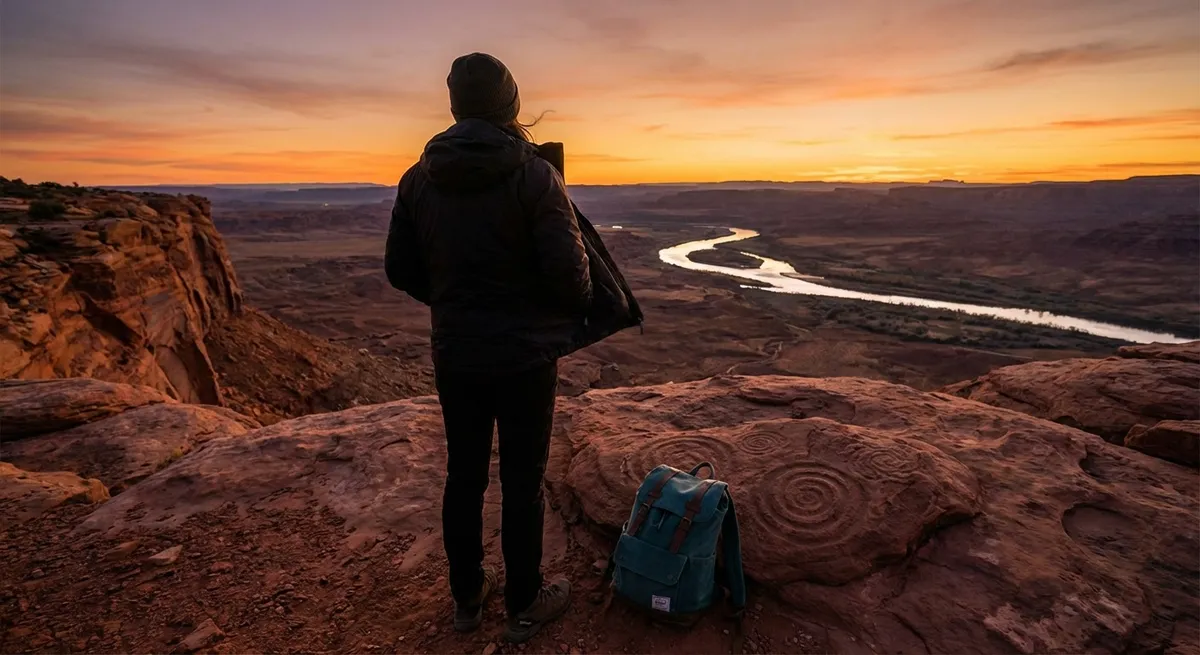
Below are five destination types—spread across the globe—that don’t just entertain you; they invite you to grow, stretch, and wake up to a wider version of yourself.
1. High-Altitude Cities That Teach You to Breathe Differently
There’s a moment in every high-altitude city when you realize your breath has become a teacher. Maybe it’s in La Paz, Bolivia, watching cable cars crawl over a sea of brick houses 3,600 meters above sea level. Maybe it’s in Lhasa, Tibet, as prayer flags snap in the wind and the Himalayas glow in the distance. Up here, nothing is rushed—because it can’t be.
In these places, every step becomes intentional. You drink more water. You slow your pace. You notice the texture of cobblestones, the warmth of sun on your shoulders, the laughter of kids who run uphill like it’s nothing. High-altitude destinations invite you to confront your limits without bravado; your body sets the rhythm, and your ego has no choice but to follow.
Practical advice: arrive with patience, not plans. Take at least a day to acclimatize before packing your schedule, drink plenty of water, and avoid heavy alcohol when you land. Learn the local remedies—like coca tea in the Andes or ginger and garlic soups in Himalayan towns. When you finally ride that mountain cable car, hike that ridgeline, or wander that centuries-old square, you’ll be fully present, lungs and all.
2. Ancient Cities Where the Past Feels Unfinished
Some cities feel like museums. Others feel alive—as if history is still mid-sentence. Walk through the narrow alleys of Fez in Morocco, where leather is still tanned in sunlit pits as it has been for centuries. Drift along the canals of Venice at dawn, when the tourist chatter fades and the city sounds like itself. Or stand in Athens, Greece, where glass-fronted buildings reflect the Parthenon, and you’re caught between thousands of years in a single glance.
These destinations are less about “seeing the sights” and more about letting time blend. You might sip coffee beside a ruin older than your entire country, or follow a scent of fresh bread into a bakery that has worked from the same family recipe for generations. You start to understand that “old” isn’t a synonym for “finished”—it’s an ongoing story you’re stepping into for a brief chapter.
Practical advice: walk wherever you can. The details—aged doorways, faded tiles, hand-painted shop signs—live at street level. Join a walking tour led by local historians or architecture experts to decode what you’re seeing. Visit major landmarks early or late in the day, then get lost (safely) in the residential neighborhoods, where laundry sways overhead and history feels personal, not staged.
3. Wild Coasts Where the Land Refuses to Be Tamed
There’s a special kind of energy where solid land suddenly gives way to infinity. Think of the cliffs of the Wild Atlantic Way in Ireland, where waves roar against rock that has held its ground for millions of years. Picture South Africa’s Cape Peninsula, where two oceans collide and penguins waddle along the same shore where surfers chase swells. Or imagine New Zealand’s rugged West Coast, where glaciers spill almost to the sea.
These coastal destinations remind you that nature doesn’t need your permission to be wild. They’re the perfect antidote to over-curated lives: salt on your lips, hair whipped by wind, a horizon that refuses to sit still. You might hike a seaside trail that swings between forest and cliff edge, watch storms roll in from a cozy inn, or paddle a kayak along a shoreline where sea caves boom with every wave.
Practical advice: pack layers and treat the weather as part of the adventure, not a problem to fix. Check local tide charts before exploring beaches or sea caves. Support coastal conservation by sticking to marked trails and choosing outfitters with strong sustainability practices. Above all, schedule unscripted time—just you, a stretch of coast, and the evolving theater of sky and water.
4. Night-Sky Sanctuaries Where the Stars Take Over
If you’ve only ever seen a handful of stars, you don’t yet know how loud the night sky can be. Head to designated dark-sky reserves like Utah’s canyon country in the United States, Aoraki Mackenzie in New Zealand, or rural regions of Namibia, and your definition of “night” changes forever. The Milky Way doesn’t just appear—it explodes across the sky in a river of light.
In these destinations, the darkness is a feature, not a flaw. Streetlights are dimmed on purpose. Locals know the constellations by heart. You might join an astronomy tour and peer through powerful telescopes, or simply lie on your back far from any road, feeling your sense of scale rearrange. Suddenly, your daily worries feel microscopic—not in a dismissive way, but in a freeing one. You’re part of something vaster than you imagined.
Practical advice: time your visit around a new moon for the darkest skies, and check local weather patterns to avoid cloudy seasons. Bring a headlamp with a red-light mode to preserve night vision. If you’re photographing the sky, learn a few basic settings in advance—but remember to put the camera down for at least half an hour and just look up. Some experiences are better stored in your memory than your gallery.
5. Cultural Crossroads Where Borders Blur
There are places on the map where worlds collide—and instead of clashing, they blend. Istanbul sits with one foot in Europe and the other in Asia; its skyline is punctuated by both minarets and modern towers, its food a love letter to centuries of trade. Singapore fuses Chinese, Malay, Indian, and global influences into one humming city-state where hawker centers and skyscrapers coexist. In Mexico City, pre-Hispanic roots, colonial architecture, and bold contemporary art all breathe the same air.
In these destinations, you feel how human culture is constantly remixing itself. You can eat three completely different cuisines in a single block, hear multiple languages in one metro car, and see religious sites sharing the same neighborhood. You begin to understand that identity doesn’t have to be either/or—it can be gloriously both/and.
Practical advice: let food be your guide. Target markets, hawker centers, or street-food hubs, and try dishes from different cultural communities. Visit museums that trace the region’s migration and colonial histories to understand how these blends formed. Learn a handful of phrases in more than one local language; even simple greetings can open doors and conversations.
Conclusion
The destinations that move you most won’t always be the most famous—they’ll be the ones that meet you at the edge of your comfort zone and invite you a little further. High-altitude cities that teach you humility with every breath. Ancient towns where time overlaps. Coasts that roar. Skies that erase the ceiling. Crossroads where cultures dance instead of divide.
You don’t have to chase every corner of the globe at once. Start with the destination that tugs at you the hardest, the one that raises your pulse when you picture it. Pack your curiosity, your respect for the places you enter, and a willingness to come home slightly changed. That’s the real horizon you’re chasing—and it’s closer than it looks.
Sources
- International Dark-Sky Association – Dark Sky Places - Official list and details of certified dark-sky parks and reserves around the world
- UNESCO World Heritage Centre - Information on globally recognized cultural and natural heritage sites, including many ancient cities mentioned
- Centers for Disease Control and Prevention – Altitude Illness - Practical health advice for travelers visiting high-altitude destinations
- Wild Atlantic Way – Official Tourism Site - Overview of Ireland’s rugged coastal route, activities, and safety tips
- Singapore Tourism Board – Visit Singapore - Insight into Singapore as a multicultural destination and cultural experiences available to travelers