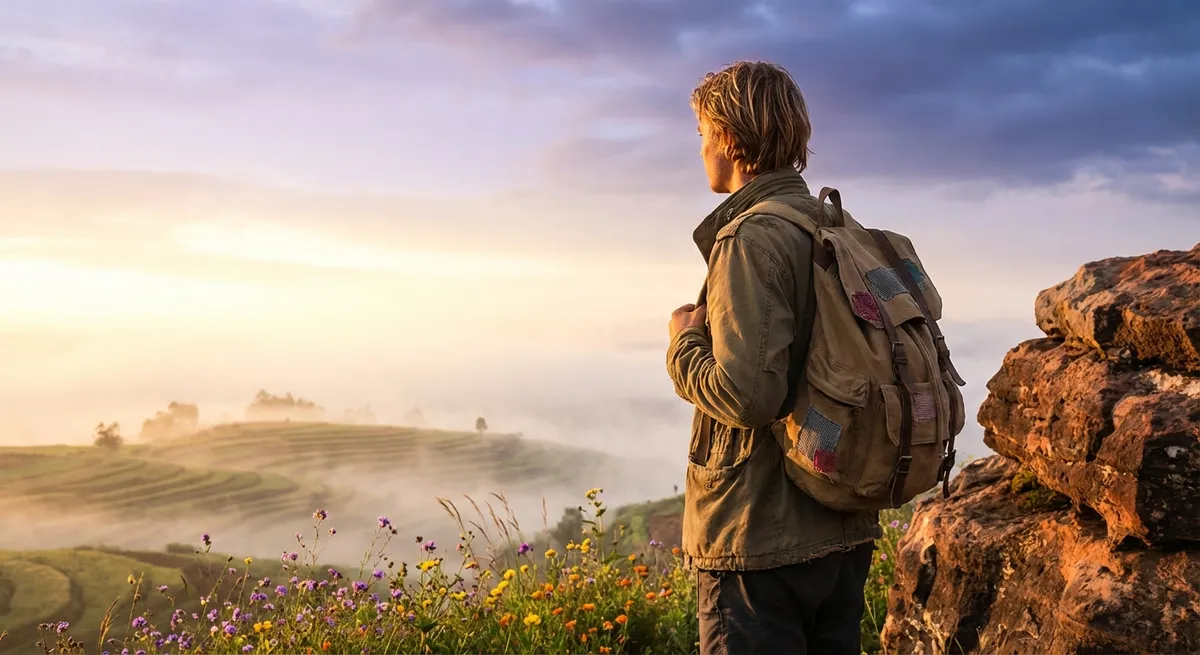
For travelers who crave more than just “seeing the sights,” here are five kinds of destinations that turn every sunrise into a first step into the unknown—each with vivid experiences and practical tips to help you actually get there.
1. High-Altitude Cities Where the Sky Feels Within Reach
There’s a special kind of electricity in cities that live close to the clouds. The light is sharper, your breath a little shorter, and every staircase feels like a small summit. Yet, that thin air also seems to strip away the noise and hurry of sea-level life.
Think of La Paz, Bolivia, spilling over the Andean bowl at more than 3,500 meters, cable cars tracing lazy lines across jagged peaks. Or Quito, Ecuador, where colonial plazas glow gold at sunset while volcanoes watch from the horizon. In Lhasa, Tibet, prayer flags crackle in the wind as incense curls through monasteries perched just below the sky.
Why it’s thrilling:
- You feel your body working with every step—a constant reminder that you’re not just passing through, you’re earning every view.
- Sunsets last longer, the stars burn brighter, and the city lights look like constellations spilled across the earth.
- Culture and elevation intersect: markets, temples, and everyday life unfold at heights you once only flew over.
- Give yourself at least 1–2 days to acclimatize. Walk slowly, hydrate constantly, and avoid heavy meals or alcohol your first night.
- Pack layers—high-altitude cities swing from intense sun to biting cold in a single afternoon.
- Build “float days” into your itinerary so you can rest if the altitude hits harder than expected.
Practical advice:
2. Island Frontiers Where Land Feels Like a Lucky Accident
On certain islands, you can’t shake the feeling that the land barely managed to rise above the waves—and that’s exactly the magic. These are places where the map looks almost unbelievable: green specks in endless blue, volcanic crescents carved by fire and time, coral atolls you could walk across in minutes.
Picture Faroe Islands cliffs sliced clean into the North Atlantic, turf-roofed houses holding fast against the wind. Imagine the Azores, nine volcanic islands adrift in the mid-Atlantic, where crater lakes shimmer in impossible shades of blue and green. Think of Vanuatu or Réunion, islands where lava, rainforest, and reef are all within a day’s reach.
Why it’s thrilling:
- Every weather shift feels dramatic: fog lifting to reveal a hidden fjord, storm clouds rolling in over a whale-dotted horizon.
- The edge is always present—sheer cliffs, black-sand beaches, boiling hot springs reminding you how alive the earth really is.
- Island cultures tend to be fiercely rooted, with stories and traditions shaped by isolation and the ocean’s moods.
- Travel in shoulder seasons (just before or after peak) for better prices and fewer crowds—this is especially key on smaller islands with limited capacity.
- Ferries and small planes can be weather-dependent; build slack into your schedule and avoid tight connections.
- Respect local ecosystems: stay on marked trails, avoid disturbing bird nesting sites, and be responsible with ocean activities (reef-safe sunscreen, no touching coral).
Practical advice:
3. Cities That Come Alive After Dark (Without Losing Their Soul)
Some destinations shine brightest under neon and moonlight—not just as party hubs, but as places where night rewrites the script. In these cities, the dark is an invitation, not a warning. Markets awaken, street food stalls blaze into action, and alleys that felt sleepy by day hum with possibility.
Think Taipei, where night markets are a full-contact experience of steaming dumplings, sizzling skewers, and claw machines. Or Istanbul, with rooftop terraces overlooking the Bosphorus, and late-night ferries shuttling between continents. In Mexico City, taquerías, mezcalerías, and music-filled plazas turn the hours after dusk into a second daytime.
Why it’s thrilling:
- You see the “real” rhythm of the city—when locals gather, unwind, and fill the streets.
- Night reveals different layers of a place: lit minarets, glowing temples, street musicians echoing through old stone alleys.
- The sensory overload—smells, sounds, flicker of lights—etches itself into memory.
- Start in busier, well-lit districts recommended by locals or your accommodation; ask which areas feel safe and active at night.
- Join a night tour (food crawl, photo walk, or history-focused stroll) on your first evening to get your bearings.
- Carry only essentials, keep valuables minimal, and trust your instincts—if a street feels off, pivot without guilt.
Practical advice:
4. Borderlands Where Two Worlds Collide
Most of us grow up imagining borders as clear lines on a map. Then you arrive in a true borderland and realize: this is where lines blur, languages bleed into each other, and architecture, flavors, and music mix into something utterly unique.
Think of Tbilisi, Georgia, balancing at the crossroads of Europe and Asia with sulfur baths, Art Nouveau facades, and hilltop fortresses. Or Tangier, Morocco, where Atlantic and Mediterranean meet and traces of French, Spanish, and Moroccan life overlap in a dizzying collage. Then there’s Chiang Rai and the Golden Triangle region, where Thailand, Laos, and Myanmar fold into one another along river curves and misty hills.
Why it’s thrilling:
- The cultural overlap is palpable—you might hear three languages on a single street or see a church, mosque, and temple within a short walk.
- Food becomes a living map: hybrid dishes, fusion flavors, and markets carrying goods from multiple regions.
- These places often come with layered histories: trade routes, migrations, empires—making every alley feel like a footnote in a massive story.
- Read a short, focused history of the region before you arrive—it will transform what you see on the ground.
- Visit border markets and transport hubs; these are often where cultural merging is most visible.
- If crossing borders, research visa rules and entry requirements well in advance; don’t assume open movement just because it’s easy for locals.
Practical advice:
5. Quiet Wilds Where Silence Becomes Its Own Adventure
There’s a different kind of exhilaration waiting in destinations where “nothing is happening”—at least on the surface. These are the quiet wilds: wide deserts, tundra plains, wind-brushed coasts, and deep forests where days are marked not by attractions, but by small, powerful moments.
Picture Patagonia’s endless steppe, where guanacos dot the horizon and mountains rise like serrated stone waves. Imagine Finnish Lapland, lakes mirrored in summer’s midnight sun and snowfields glowing under winter’s auroras. Think of Namibia’s sand seas, where dunes shift colors from amber to blood-red as the sun travels overhead.
Why it’s thrilling:
- Space alters your perception—distances grow, time stretches, and you become more aware of your own footsteps and breath.
- Wildlife encounters feel earned: a fox darting across the trail, a herd of wild horses, a faint chorus of unseen birds.
- Without constant stimulation, your mind starts paying attention to micro-details: the crunch of gravel, the curve of a dune, the chill in the air just before darkness falls.
- Travel with a reputable local guide, especially in remote deserts, tundra, or heavy wilderness—this is safety and deeper access rolled into one.
- Prepare for temperature extremes and sudden weather shifts: good layers, sun protection, and reliable footwear are non-negotiable.
- Download offline maps and carry backup navigation tools; connectivity can vanish completely, and that’s part of the appeal—if you’re ready for it.
Practical advice:
Conclusion
The world isn’t just a collection of checkboxes on a bucket list. It’s a living, shifting mosaic of edges: high-altitude skylines where air and stone collide, storm-carved islands, nocturnal cities, liminal borderlands, and quiet wilds where your heartbeat becomes part of the landscape.
Choosing destinations like these means choosing to feel more—more awe, more discomfort, more wonder, more humility. It means letting the places you visit push back a little, asking you to slow down, pay attention, and meet them on their own terms.
The next time you stare at a map, don’t just look for where everyone else is going. Look for the places that sit on the edge of something—a continent, an ocean, a language, a silence. That’s where the horizon hunters go.
And that’s where your next story is waiting.
Sources
- Centers for Disease Control and Prevention – High-Altitude Travel & Altitude Illness - Medical guidance on acclimatization, symptoms, and safety for high-altitude destinations
- UN World Tourism Organization – Tourism Highlights - Data and reports on global tourism trends, including popular regions and emerging destinations
- Lonely Planet – Faroe Islands Travel Guide - Practical information, routes, and highlights for remote North Atlantic island travel
- National Park Service – Hiking Safety & Preparation - Essential safety tips and preparation advice for outdoor and wilderness destinations
- U.S. Department of State – Travel Advisories - Up-to-date safety, entry, and border information for international travel