This isn’t about finding the cheapest deal (though you often will). It’s about catching places mid‑transformation: after the rush, before the rush, or right when nature flips the switch. Step into that space, and you don’t just see a destination — you feel like you’ve been let in on a secret.
Why “Hidden Season” Travel Feels Like a Discovery
Hidden seasons live in the gaps between the tourist brochures: late spring before peak summer, the weeks after a big holiday, the shoulder days between one climate and the next. Think April in Japan after cherry blossoms fade, November in Italy once the cruise ships leave, or early June in the Canadian Rockies when snow still lingers on the peaks but the trails are waking up.
What makes these windows special is contrast. Cafés have time to chat. Trails are quiet enough that you can hear your own boots on the earth. Museum lines shrink from chaos to a casual stroll. You still get local life in motion, but with enough breathing room to actually see it. Practical perks follow: more flexible bookings, better odds of finding character-filled stays, and the freedom to change plans without everything being sold out. When you stop chasing “the best time to go” that the internet repeats, you start discovering your best time to go — the one that matches your pace, your curiosity, and your tolerance for a little beautiful unpredictability.
Point 1: Storm-Watching Coasts – Where Wild Weather Becomes the Main Event
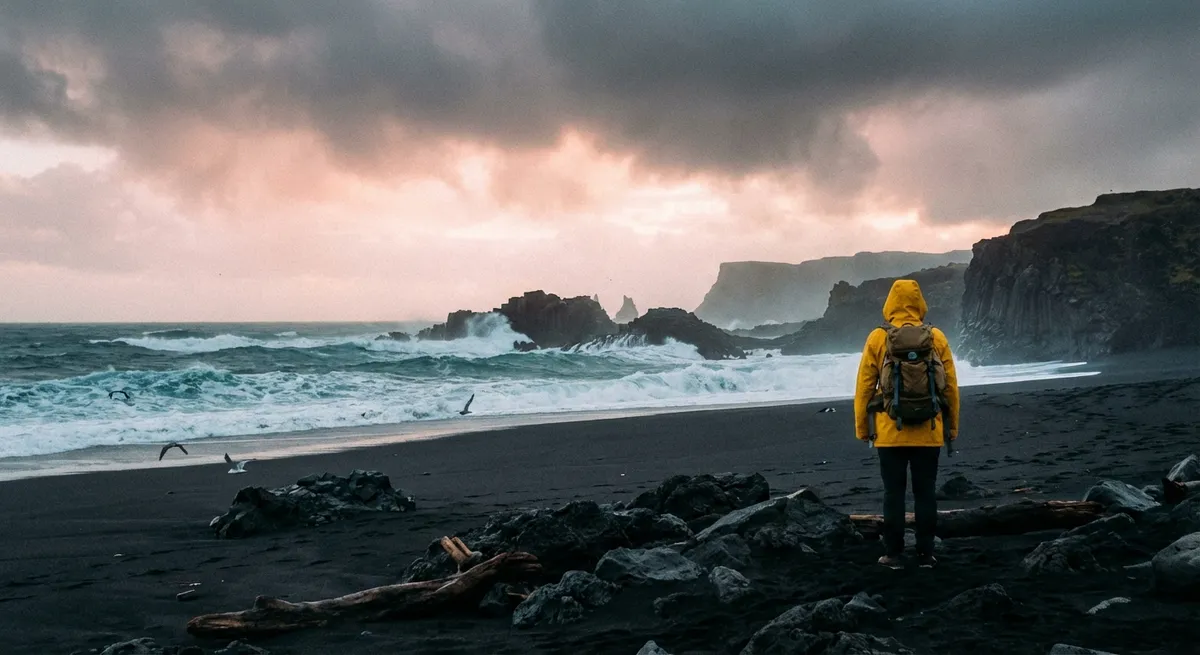
There are places where locals don’t dread the stormy season — they celebrate it. Rugged shorelines in British Columbia, Oregon, Ireland, and the Atlantic coasts of France and Portugal come alive when moody skies roll in and waves hammer the rocks like a drum.
Storm-watching isn’t reckless thrill-seeking; it’s learning to stand just far enough from nature’s power to feel humbled but safe. You find glass-front lodges facing the sea, windproof decks, and short coastal trails designed with wild weather in mind. Pack a serious waterproof shell, quick-dry layers, and shoes that won’t slip on wet rock. Keep a respectful distance from cliff edges and follow local warnings — ocean surges can surprise even seasoned residents. In return, you witness drama most summer visitors never imagine: clouds stacking like mountains, sea spray lifting into the wind, and the entire horizon flashing from steel gray to fiery orange when the sun punches through. When the wind finally drops, you’ll walk empty beaches littered with driftwood and seafoam, feeling like the last person on earth.
Point 2: Desert Dawns and Twilight Skies – Heat’s Edge as a Sweet Spot
Deserts are brutal at the wrong time of day — and breathtaking when you time them right and travel in the gentler months around peak heat. Late winter and early spring in places like Jordan’s Wadi Rum, California’s Joshua Tree, Morocco’s Sahara fringes, or Australia’s Red Centre can feel like stepping into another planet with a built-in dimmer switch.
The real show happens at the edges of the day. Before sunrise, the sand is cool beneath your boots, and the world glows in shades of blue and violet. As the sun climbs, rock formations shift from pink to gold to rust, and distant dunes sharpen into ridges. By midday, you retreat to shade like the locals — using that time to nap, write, or share tea under a canvas awning. Twilight is when the desert softens again, temperatures fall, and stars prepare their takeover. Some of the clearest night skies on earth are in desert regions, making them perfect for stargazing, astrophotography, and learning constellations the way ancient travelers once did. Respect the environment: carry more water than you think you need, use sun protection even in cooler months, and avoid stepping on fragile crusts or plant life that take decades to recover from one careless footprint.
Point 3: Night Cities – Exploring Urban Destinations After Dark
Every major city has a daytime story the guidebooks tell — but the after-dark version is often more revealing and far less crowded. In many destinations, evenings are actually the most “local” hours: families strolling, workers unwinding, food carts firing up, street musicians turning sidewalks into impromptu stages.
Cities built for heat, like Athens, Mexico City, or Bangkok, ease into themselves at night when temperatures drop and lights flicker on. Northern cities like Copenhagen or Berlin feel more intimate after sunset, when windows glow and canals or parks become quiet mirrors for the city’s reflections. Aim for neighborhoods known for atmosphere rather than just nightlife: waterfront promenades, historic districts, night markets, or cultural hubs where galleries, bookstores, and cafés keep late hours. Practice smart night travel basics: stick to lit main streets, learn where locals actually go instead of just tourist bars, and let your instinct guide you — if a place feels off, trust that feeling and move on. When you do find those sweet spots — a jazz trio in a tucked-away bar, a midnight bowl of noodles at a corner stall, a bridge where the whole skyline spreads out in front of you — you get the sense the city is finally talking in its true voice.
Point 4: Harvest & Migration Moments – Traveling with Nature’s Calendar
Some destinations aren’t defined by a month, but by a moment — a pulse in the natural or cultural calendar that turns the entire region into a living story. Wine regions from Portugal’s Douro Valley to South Africa’s Western Cape light up during harvest: grapes picked at sunrise, trucks rolling through hillsides, festivals that blend local music, food, and old traditions. Agriculture seasons everywhere — olive harvests in Greece, rice planting in Southeast Asia, apple picking in New England — invite travelers to witness work that’s usually invisible.
Then there’s animal migration: whales cruising past the coasts of Iceland or Baja California, wildebeest and zebra thundering across the Serengeti-Mara ecosystem, birds filling skies over wetlands and estuaries. These experiences require a bit of research: not just when migrants appear, but how to see them ethically and responsibly. Choose operators that respect distance rules, avoid chase tactics, and put conservation ahead of photo ops. Weather can be fickle in these windows, so build flexibility into your schedule with extra days in case your viewing gets delayed. When you catch it right, though, you feel the scale of the world in a way that’s hard to forget — hundreds of creatures moving as one, fields humming with harvest activity, entire communities orchestrating their year around a short, intense burst of life.
Point 5: Mountain Shoulder Seasons – Between Snowfall and Sunburn
Mountain destinations have at least two separate identities: the winter postcard of powder-covered slopes and the summer playground of sunlit trails. Hidden in between those extremes are shoulder seasons when the mountains are half one thing, half another — and entirely themselves.
Early spring in the Alps, Rockies, or Carpathians can mean snow lingering on high ridges while valleys explode with wildflowers. Late autumn in the Dolomites or the Japanese Alps might give you crisp air, fiery larch and maple trees, and empty hiking paths normally choked with hikers or skiers. Not everything will be open; some lifts shut down for maintenance, and certain trails might be off-limits due to conditions. That’s part of the adventure: planning days that mix what is available — low- to mid-elevation hikes, lakeside walks, village markets, thermal baths, or slow train rides through mountain passes. Pack for multiple climates in a single day: a base layer, a warm mid-layer, and a waterproof shell so you’re never caught off-guard by a sudden change. If you’re willing to trade predictability for personality, the mountains in these in-between weeks will reward you with quieter viewpoints, spontaneous chats with locals, and the sense you’ve stepped into their “off-camera” world.
Conclusion
Travel becomes powerful when you stop asking, “When is it busiest?” and start asking, “When does this place feel most alive — for me?” Hidden seasons unlock versions of destinations most visitors never see: wild seas instead of flat blue postcards, cool desert starlight instead of sunstroke, city nights that reveal more than daytime checklists, harvest days that smell like earth and fruit, and mountains mid-transformation.
The next time you dream up a trip, flip the script. Look for the edge of the season. Consider the weeks after festivals, the months locals recommend but brochures ignore, the times when nature is changing gears. That’s where discovery lives — not just of new places, but of new ways you’re ready to move through the world.
Sources
- U.S. National Park Service – Visiting Busy Parks – Tips and insights on avoiding peak crowds and exploring parks in shoulder seasons
- NOAA – Weather Safety and Awareness – Guidance on staying safe in severe coastal and storm conditions
- International Dark-Sky Association – Dark Sky Places – Information on prime destinations for stargazing, especially in desert and remote regions
- UNWTO – Tourism Seasonality Report – Background on seasonality in tourism and the benefits of off-peak travel
- WWF – Wildlife Watching and Responsible Tourism – Best practices for ethical wildlife viewing during migration and breeding seasons