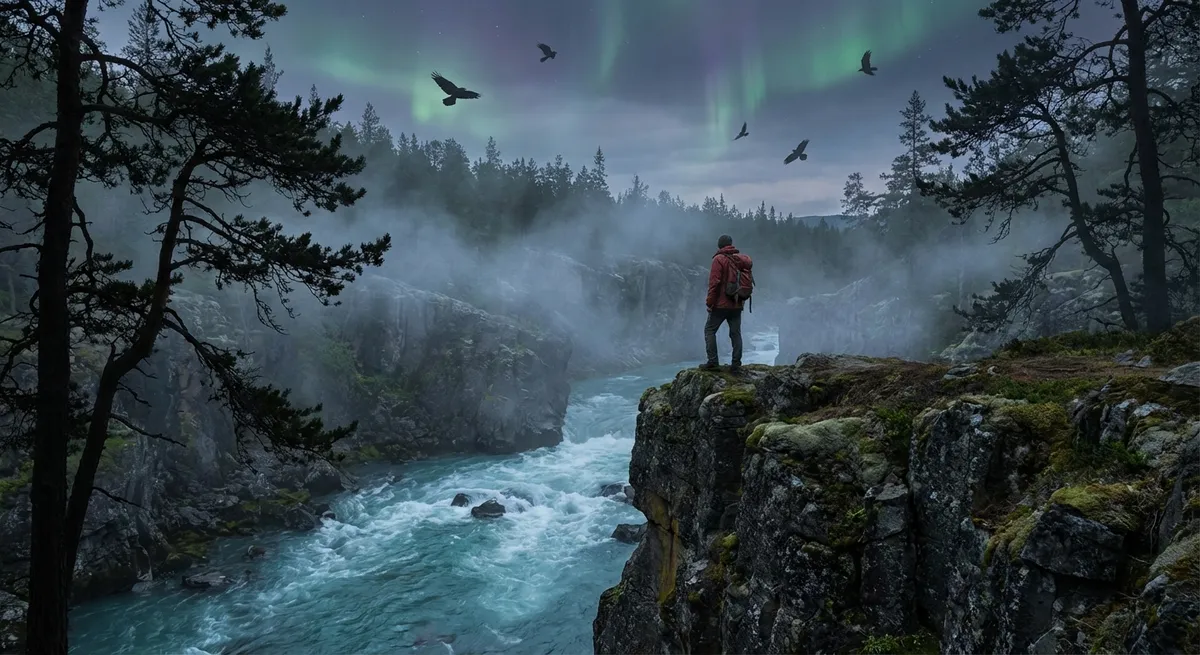
If you’ve ever felt the tug to go somewhere that wakes you up from the inside out, this is your invitation. Below are five kinds of wild-hearted destinations—and how to meet them on their own terms.
1. Where the Night Sky Becomes Your Ceiling
There are destinations so far from city glare that the sky doesn’t just show stars—it erupts with them. In certified dark-sky regions like rural Utah in the U.S., parts of New Zealand’s South Island, or remote corners of Namibia, the Milky Way is no longer an idea from a science book; it’s a river of light overhead.
Camp under these skies and your entire sense of scale shifts. You start to understand distance differently as satellites drift past and shooting stars mark time. The simple act of turning off your phone and looking up for an hour becomes a kind of quiet rebellion against the rush of normal life.
To tap into this magic, travel in shoulder seasons when skies are clearest, and plan around the moon phase—new moons offer the darkest canvas. Bring a red-light headlamp to preserve your night vision, and download offline star maps before you go. Dress in layers, even in the desert; temperatures free-fall when the sun disappears. Out here, the night is not something to hide from. It’s the main event.
2. Coasts Where the Ocean Still Calls the Shots
Some shorelines aren’t about cocktails and sun loungers—they’re about feeling the sheer power of the sea. Think of rugged coasts like Portugal’s Alentejo region, the wild west of Ireland, or Chile’s Patagonian fjords, where cliffs drop into churning water and tiny harbors cling to rock like punctuation marks at the end of the land.
Walking these coasts means accepting that you’re a guest on the edge of something huge. Paths brush past wind-twisted shrubs and spray-slick boulders. Fishing villages hum with early-morning engines and the slap of nets. The weather rewrites your plans in minutes: calm horizons one moment, steel-grey swells the next.
Travel with flexibility here. Build your days around tides, ferry schedules, and local advice. Pack breathable waterproof layers and shoes that can handle mud, salt, and rock. Order the day’s catch instead of a set menu, and let the coastline decide what’s for dinner. Adventure on these shores isn’t loud—it’s in the quiet realization that the ocean was here long before you and will keep roaring on long after you’ve gone home.
3. High Places That Make Every Breath Count
Mountain destinations don’t just challenge your legs; they stretch your perspective. Whether it’s the towering peaks of Nepal, the jagged Dolomites in Italy, or the volcanic ridges of Ecuador, high places demand that you move in slow, deliberate steps—and notice everything.
The rewards come in layers: the thinning air, the way conversations shorten to shared looks and laughter, the glow that spreads across a mountain range at sunrise like someone just turned up the world’s dimmer switch. Every viewpoint earned by your own effort feels like a private victory, whether you’re summiting a peak or simply reaching a quiet mountain hut before dusk.
Respect altitude by ascending gradually when possible, drinking more water than you think you need, and building “rest days” into your plans. Pack light but smart: sturdy boots, a reliable insulating layer, and a small first-aid kit can turn a risky trek into a confident one. In the mountains, itineraries are suggestions and the weather is the boss. Instead of fighting that, lean into it—let changing skies guide you to unexpected paths and conversations in trail-side teahouses or refuges.
4. Ancient Cities That Reveal Their Layers Slowly
Not all wildness is natural; some of it is human, layered over centuries. In cities with deep roots—like Fez in Morocco, Oaxaca in Mexico, or Tbilisi in Georgia—time doesn’t feel linear. You can sip coffee in a contemporary cafe, step outside, and follow stone alleys that have held the footsteps of traders, pilgrims, and wanderers for hundreds of years.
These destinations reward curiosity over checklists. Getting “lost” in a maze-like old quarter becomes the point, not a problem. Markets overflow with spices, textiles, or ceramics that tell stories before you even ask. Conversations with street vendors and cafe owners become informal history lessons, anchored in lived experience rather than museum plaques.
To connect meaningfully, learn a few phrases in the local language. Stay in family-run guesthouses or small inns where the city’s stories come with breakfast. Visit major landmarks early in the morning, then spend the rest of the day wandering without an agenda—following music, aromas, and side streets that catch your eye. Respect local customs and dress codes; when you show care for a city’s culture, it opens doors you didn’t know were there.
5. Quiet Corners Where Nature Heals in Whisper Mode
Not every adventure needs to be extreme. Some of the most powerful destinations are gentle: forest sanctuaries in Japan, lake districts in Finland, or rolling moorlands in Scotland where the loudest sounds are birdsong, wind, and the soft thud of your own footsteps.
These are the places where you finally exhale. Trails meander instead of climb. Mornings begin with mist rising from water and end with long twilights that stretch the day’s edges. You might spend hours moving slowly through a forest, noticing how the air cools with shade and how each tree holds its own quiet presence.
Approach these landscapes with the intention to unplug. Leave your headphones in your bag; let natural sounds be your soundtrack. Pack a simple picnic and a journal instead of a long list of “must-sees.” Practice low-impact travel—stick to marked paths, carry out everything you bring in, and support local conservation efforts or guides. Here, the adventure is internal: watching your thoughts settle as the world around you softens, and realizing how deeply you needed this kind of stillness.
Conclusion
The world’s most powerful destinations don’t just look spectacular in photos—they ask something of you. They ask you to slow down under star-drenched skies, to stand small before storm-lashed coasts, to climb higher than your doubts, to listen closely in ancient alleyways, and to finally give yourself permission to rest in places built for quiet.
You don’t have to chase every peak or cross every ocean. You just have to choose one place that stirs your curiosity and step toward it with an open itinerary and an even more open mind. The planet is still full of wild-hearted corners. They’re waiting for you to show up, pay attention, and let them rewrite what “travel” means in your life.
Sources
- International Dark-Sky Association – Dark Sky Places - Overview of certified dark-sky reserves and parks around the world
- UNESCO World Heritage Centre - Official list and descriptions of natural and cultural sites with outstanding universal value
- U.S. National Park Service – Hiking Safety - Practical guidance on planning, gear, and safety for outdoor adventures
- Centers for Disease Control and Prevention – High-Altitude Travel & Altitude Illness - Evidence-based advice on staying healthy while traveling to high elevations
- Leave No Trace Center for Outdoor Ethics - Core principles for minimizing impact and traveling responsibly in natural environments