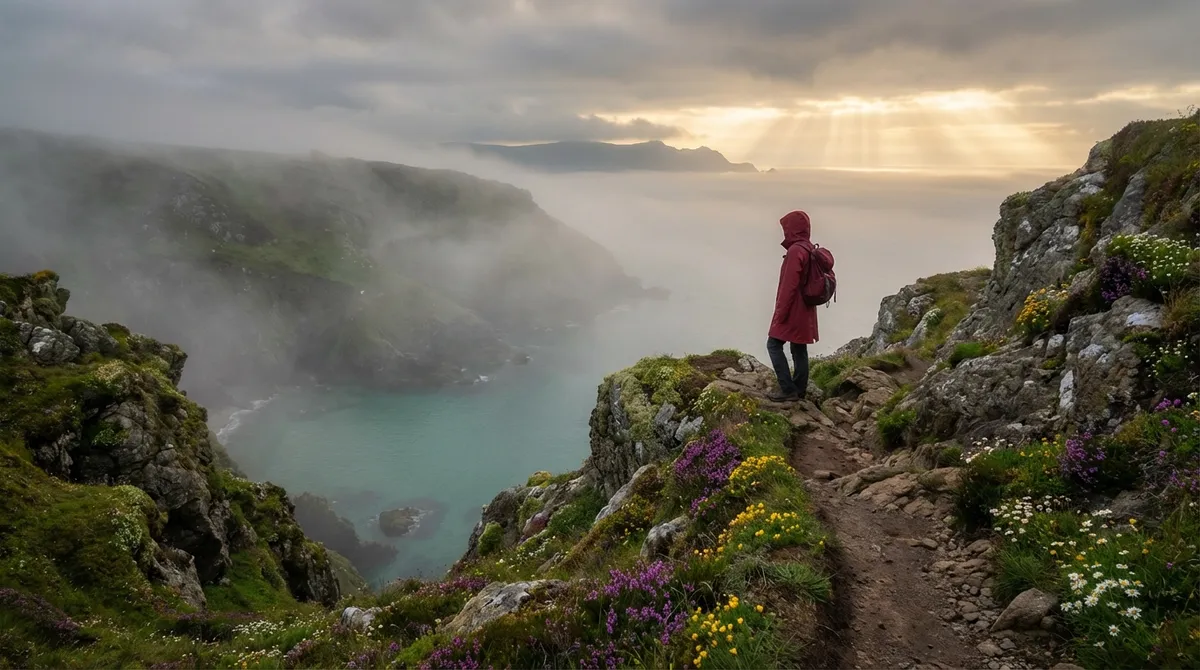
This guide is your invitation to step off the predictable path. Five captivating kinds of places, woven across the globe, each offering something that sparks curiosity: surreal landscapes, living traditions, wild nature, soulful small towns, and cities that are quietly reinventing what urban adventure means. Use them as a compass, not a checklist, and let them guide you toward your own hidden horizon.
Destinations That Feel Like Another Planet
Some places feel less like a stop on Earth and more like walking onto the set of a sci‑fi film. These are landscapes that challenge your sense of scale, color, and possibility—and force you to admit you’ve been underestimating what the planet can do.
Think of Iceland’s Highlands in late summer, where black volcanic deserts collide with neon-green moss, steaming vents, and milky-blue hot springs. Or the otherworldly red dunes of Namibia’s Sossusvlei at sunrise, when the sand glows like embers against a sky that’s just starting to blush. Standing there, you don’t just see the view—you feel the age of the Earth humming under your boots.
To unlock these “another planet” destinations, be ready to travel in shoulder seasons when the crowds thin but the landscapes are still dramatic. Hire local guides who know how to navigate unpredictable terrain and fragile ecosystems; they’ll get you safely to places you’d never find on your own. Pack layers, sturdy shoes, and a willingness to wake before dawn. These are not arrive-at-noon-in-sandals destinations. They reward the traveler who chases first light, waits out storms, and keeps walking even when the path turns to dust or lava rock.
When you reach that ridge, crater, salt flat, or plateau and everything goes silent, take your time. Put your camera down after the first few shots. Let the wind sting your face, listen to the emptiness, and notice how small—and wildly alive—you feel.
Places Where Traditions Still Shape Everyday Life
Some destinations are less about spectacular views and more about the invisible threads that weave a community together. These are the towns and regions where culture isn’t packaged as a show; it’s simply lived. You’re not an audience member—you’re a respectful guest stepping into an ongoing story.
Picture a riverside town in Japan where the day still moves to the rhythm of morning markets, evening communal baths, and centuries-old festivals that light up narrow streets with lanterns and drums. Or a village in the highlands of Peru where weaving isn’t a souvenir industry but a living language passed from grandparents to children at dusk, patterns recording history in wool and color.
To tap into these destinations, slow down. Instead of hopping between five cities in a week, choose one region and give it days, not hours. Stay in guesthouses, ryokan, or small family-run inns. Say yes to shared meals, local workshops, and neighborhood celebrations. Learn a handful of phrases in the local language; even a simple “thank you” and “this is delicious” can open doors.
Respect is your most important travel gear here. Ask before you take photos, especially of people and rituals. Dress modestly when you’re visiting temples, mosques, or sacred sites. Support local artisans directly rather than buying mass-produced imitations. In return, you’ll often be invited into stories and spaces that casual visitors never see: kitchens that smell like spices and smoke, back rooms lined with instruments and costumes, hidden courtyards where elders share stories over tea or coffee.
These destinations don’t announce themselves with dramatic skylines. Their magic is quieter: the weight of a handmade bowl in your hands, the warmth of fresh bread just pulled from a clay oven, the sense that for a brief moment, your life and someone else’s have overlapped in a way that changes you both.
Wild Corners Where Nature Still Feels Untamed
If you’ve ever stared at a map and wondered what it feels like to step beyond the last major road, wild destinations are your answer. These are the parks, reserves, and remote coastlines where nature hasn’t been polished for convenience—where getting there is part of the adventure, and the reward is immersion in something bigger than you.
Imagine paddling along the jagged coastlines of a northern fjord, your kayak dwarfed by sheer rock walls that rise straight from the sea. Or trekking through a rainforest where the humidity wraps around you like a second skin and every rustle in the canopy could be a monkey, a bird, or something you’ve never seen before. In these places, the soundtrack is wind, water, and your own heartbeat.
To reach wild destinations, research protected areas and national parks that limit visitor numbers or require permits. These restrictions aren’t obstacles; they’re what keep the experience raw and real. Plan ahead—far ahead—for access, and be honest about your fitness level. Travel with reputable eco-conscious outfitters who follow “leave no trace” principles and prioritize local guides and conservation.
Your packing list shifts here: think reusable water bottles, solar chargers, quick-dry layers, and fewer but sturdier items. Tech has its place—offline maps, emergency contacts, essential safety gear—but remember that the whole point is to unplug from your everyday noise. The most powerful moments often happen when your phone is zipped away, and it’s just you, a trail, and a sky exploding with stars you’ve never seen through city haze.
In these wild corners, you learn humility. You move more slowly, listen more intently, and remember that the world was never built to fit your schedule. That’s exactly the point.
Soulful Small Towns That Steal Your Heart
There’s a special kind of destination that doesn’t shout; it whispers. It doesn’t have a skyline or a checklist of “must-see” attractions. Instead, it has one perfect café where the chairs wobble a little, a riverside path that locals walk at sunset, a weekly market where everyone seems to know each other’s name.
These are the small towns that travelers stumble into and then find themselves rearranging plans just to stay “one more night.” Maybe it’s a harbor village on a quiet Mediterranean coast where fishing boats bob against a backdrop of pastel houses and the smell of grilled octopus drifts through the air. Maybe it’s a mountain town in Eastern Europe where old stone streets curl around a central square and church bells mark the passing hours more reliably than any clock.
To discover these places, start at the edges of better-known regions. Look for the towns one or two train stops past the famous destination. Use regional train lines, local buses, or rental bikes to explore beyond the big names. When you arrive, resist the urge to “do everything.” Instead, choose a base and explore as if you already live there.
Order the dish you can’t pronounce. Ask a barista or baker where they like to go on their days off. Walk aimlessly without GPS for an afternoon and see where the side streets lead. You’ll start to notice the tiny patterns that give a place its personality: the dog that naps in the same doorway every day, the musician who claims a particular bench, the corner store that somehow has whatever you need.
Soulful small towns rarely go viral on social media—but they embed themselves deeply in your memory. Months later, when someone asks about your trip, you’ll talk less about the big sights and more about that one morning when the whole town smelled like rain and fresh bread, and for a second, it felt like you belonged there.
Cities That Quietly Redefine Adventure
Not all adventures happen far from civilization. Some of the most exciting destinations today are cities that are quietly reinventing what urban travel can be: places where old industrial districts have turned into creative playgrounds, where rivers have become bike paths instead of concrete barriers, where food scenes draw on diverse communities to tell new stories on every plate.
Picture a former port city where abandoned warehouses now glow with street art and host night markets, indie bookstores, and rooftop gardens. Or a mid-sized Asian city where sleek public transport, car-free districts, and pedestrian bridges make it easier to explore by foot or bike than by car. These aren’t the mega-capitals everyone knows; they’re the rising stars that locals love and travelers are just starting to whisper about.
To find them, look for secondary cities in countries you’re already curious about—places often mentioned in regional blogs, food shows, or creative festivals but not yet splashed across every tour brochure. Search for cities investing in green spaces, public art, and cultural districts; these are signals of a place evolving in interesting ways.
Once you arrive, lean into the city’s rhythm rather than imposing your own. Ride public transit just for the experience. Seek out local markets, urban farms, waterfront promenades, and community theaters. Spend time in neighborhood cafés and co-working spaces; these are often ground zero for the city’s creative energy. Say yes to live music in tucked-away venues, pop-up galleries, or temporary events you only heard about from a flyer pinned to a lamp post.
Urban adventure in these cities isn’t about ticking off iconic monuments. It’s about watching how a place reinvents itself day by day—and letting that spirit of reinvention nudge you to rethink what’s possible in your own life when you head back home.
Conclusion
The world’s most powerful destinations aren’t always the ones with the biggest hype; they’re the ones that meet you where you are and quietly push you a step further. A volcanic plain that makes you question what “Earth” even looks like. A village where time bends around shared meals and living traditions. A wild coastline that reminds you how small you are—and how capable. A small town that teaches you the joy of staying put. A rising city that proves adventure and creativity can thrive in concrete and glass.
You don’t have to chase every continent or every trend. You just have to stay curious enough to wander past what’s expected. Let these five kinds of destinations be your jumping-off point. Pick one, find your own version of it, and go there willing to be surprised.
Your next place doesn’t have to be famous to be unforgettable. It just has to be real enough to change you—and you’re closer to that than you think.
Sources
- UN World Tourism Organization (UNWTO) - Global tourism data and trends, including insights on emerging and less-visited destinations
- UNESCO World Heritage Centre - Official list and descriptions of cultural and natural sites, useful for finding regions rich in tradition and unique landscapes
- U.S. National Park Service - Information on wilderness travel, safety, and Leave No Trace principles that apply to wild and remote destinations worldwide
- International Union for Conservation of Nature (IUCN) Protected Areas - Background on protected areas and why permits/visitor limits matter for conservation-focused travel
- OECD: Tourism Trends and Policies - Research on how cities and regions are reshaping tourism, including sustainable urban and secondary-city travel development