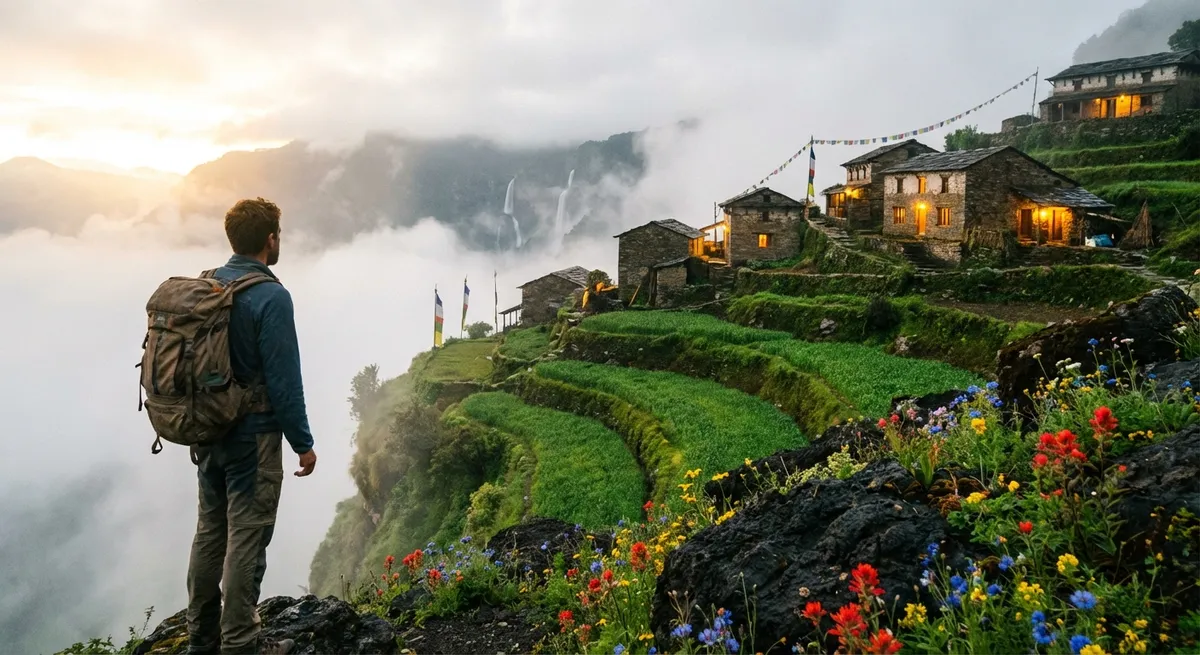
Below are five destinations that feel like secrets the world hasn’t fully discovered yet—each one a different kind of adventure, each one ready to rewrite how you travel.
Svalbard, Norway: Chasing Polar Twilight at the Edge of the Map
Svalbard looks like a place drawn from the margins of an atlas—a high Arctic archipelago where the rulebook for daylight, weather, and wildlife gets rewritten. In winter, the sun doesn’t rise for weeks, and yet the sky glows in bands of cobalt and violet, a permanent twilight that makes every snowfield and mountain ridge look otherworldly. In summer, the midnight sun transforms everything; you can hike on glacier-carved plateaus or kayak beside creaking icebergs at 2 a.m. and still forget what time it is.
This is a destination for travelers who want to feel the raw scale of the Earth. You’ll move through landscapes where polar bears roam the sea ice, walruses haul out on lonely beaches, and fossil-studded cliffs tell stories millions of years old. Outfitters in Longyearbyen—a frontier town perched between permafrost and sea—run expeditions from snowmobile safaris to multi-day ski and sailing trips, and safety briefings include polar bear protocols instead of just sunscreen reminders. Pack serious layers, waterproof gear, and respect for the elements; out here, weather changes fast and distance is measured as much in effort as in miles. Svalbard doesn’t just show you the Arctic—it lets you feel just how far from “normal” you’ve wandered.
Raja Ampat, Indonesia: Floating Through an Underwater Kaleidoscope
Raja Ampat is what divers dream about when they close their eyes: a labyrinth of emerald islets scattered off the coast of West Papua, ringed with coral reefs so alive they seem to hum. This marine paradise sits at the heart of the Coral Triangle, the most biodiverse stretch of ocean on Earth. Slip below the surface and you enter a living kaleidoscope—shoals of electric-blue fusiliers, swirling barracuda, slow-drifting manta rays, and coral gardens painted in improbable colors.
What makes Raja Ampat special isn’t just what you see, but how it feels. Many islands here are still sparsely populated, with homestays that are little more than wooden bungalows raised over glass-clear shallows. Mornings start with the sound of water lapping under your floorboards and fishermen pushing out their boats at first light. You can freedive over drop-offs that plunge into deep blue, paddleboard between limestone towers, and hike to jungle viewpoints where the entire archipelago unfurls beneath you like a map.
Getting here takes effort—usually a flight to Sorong, then a ferry, then a small boat—but that extra layer of remoteness keeps the mass tourism machine at bay. Travel light but bring reef-safe sunscreen, a rash guard, and a mask you can wear for hours; once you see what’s underwater, you won’t want to surface.
Georgia’s Svaneti: Stone Towers in the High Caucasus
In Georgia’s Svaneti region, the mountains rise like an unfinished thought, peaks and ridges layered against the sky. Medieval stone towers guard tiny villages, and footpaths crisscross between them, linking communities that for centuries were snowed-in and self-reliant. This is one of those rare places where you can trek from village to village with a small daypack, sleep in family guesthouses, and feel mountains—real, jagged, serious mountains—looming above you at every step.
Base yourself in Mestia or Ushguli, then follow trails that cut across alpine meadows, beside glacial rivers, and under the shadows of the Caucasus giants. You’ll pass herds of cows clanging with bells, wooden balconies draped in laundry, and families offering thick wedges of khachapuri (cheese bread) and steaming khinkali (dumplings) for dinner. The hospitality here feels almost disarming; strangers invite you in with a toast, and suddenly you’re drinking homemade wine while someone tells stories about winters that lasted half the year.
The adventure is as much cultural as it is physical. The Svan language, ancient polyphonic chants, and fiercely local traditions make this feel like a world within a world. Pack sturdy hiking boots, a rain shell, and an open schedule—mountain weather can alter your plans, but those unscripted pauses often become your favorite memories.
Atacama Desert, Chile: Walking on Otherworldly Earth
The Atacama Desert doesn’t feel like a desert; it feels like an experiment in how strange and beautiful Earth can get when water steps aside. This is one of the driest places on the planet—there are weather stations here that have never recorded rainfall—yet life clings to the edges in improbable ways. Mirrored salt flats reflect mountains with surgical precision, while wind-carved valleys, geyser fields, and flamingo-dotted lagoons make the horizon look endlessly reinvented.
Base yourself in San Pedro de Atacama, a low-slung adobe town that hums with explorers loading 4x4s at dawn. From there, you can walk across Valle de la Luna (“Valley of the Moon”), where every rock formation begs to be photographed in the golden hour, or stand before El Tatio geysers at sunrise, watching steam pillars roar into the sub-freezing air. As night falls, look up—this is one of the world’s premier stargazing destinations, with skies so clear that major observatories share the landscape with local sky tours.
Altitude is part of the adventure; many lagoons and viewpoints sit well above 4,000 meters. Take it slow for the first day or two, hydrate constantly, and listen to your body. The desert demands patience, but it rewards you with something rare: the sensation of walking through a landscape that feels almost uninhabited, except by your own footsteps.
Faroe Islands: Storm-Lit Cliffs in the North Atlantic
Between Iceland and Norway, the Faroe Islands rise from the North Atlantic like a secret the ocean almost managed to swallow. Steep cliffs plunge into crashing waves, waterfalls tumble straight into the sea, and turf-roofed houses huddle against winds that have powered generations of weather-hardened lives. The scenery is wild in every direction, but it’s not just postcard pretty—it’s dramatic, unfiltered, and shaped by storms as much as sunshine.
Road tunnels and ferries link the islands, turning each day into a new voyage. Hike the knife-edge trail to Trælanípa, where a cliffside viewpoint makes Lake Sørvágsvatn appear to pour directly into the ocean. Stand at the base of Múlafossur, watching sheets of water tumble from green cliffs to black-rock shore. Wander through village lanes in places like Gjógv and Saksun, where it’s hard to tell where the human world ends and the landscape begins.
Weather here is its own character—fog can swallow an entire fjord in minutes, and a clear sky can collapse into sideways rain before you’ve zipped your jacket. That unpredictability is part of the thrill. Pack layers, waterproof everything, and flexible plans. When the clouds lift and a shaft of light cracks across sea and mountain, you’ll understand why people describe the Faroes as a place that feels both ancient and strangely outside of time.
Conclusion
Destinations like these don’t just give you pretty photos; they unsettle your sense of scale, reset your definition of “far,” and remind you that our planet still has pockets of wonder that don’t fit neatly into a brochure. They ask more of you—more patience, more curiosity, more resilience—but they give more back: nights under endless stars, conversations with strangers who become friends, and that quiet, electric realization that you’ve stepped into a chapter of your life you’ll talk about for years.
When you plan your next journey, look for places that hum at the edge of the known map—the Svalbards, the Raja Ampats, the Svaneti valleys. Let your travel be less about collecting stamps and more about chasing that feeling of standing somewhere and thinking: I can’t believe this exists, and I get to be here.
Sources
- Visit Svalbard – Official Tourism Site - Practical information on travel, safety, seasons, and activities in Svalbard
- Conservation International – Raja Ampat and the Bird’s Head Seascape - Background on Raja Ampat’s marine biodiversity and conservation efforts
- Georgia Travel – Official Site: Svaneti Region - Overview of culture, trekking routes, and villages in Georgia’s Svaneti region
- European Southern Observatory – Atacama Desert Observatories - Information on why Atacama’s conditions make it one of the best places on Earth for stargazing
- Visit Faroe Islands – Official Tourism Site - Detailed guides to hiking, weather, and travel logistics across the Faroe Islands