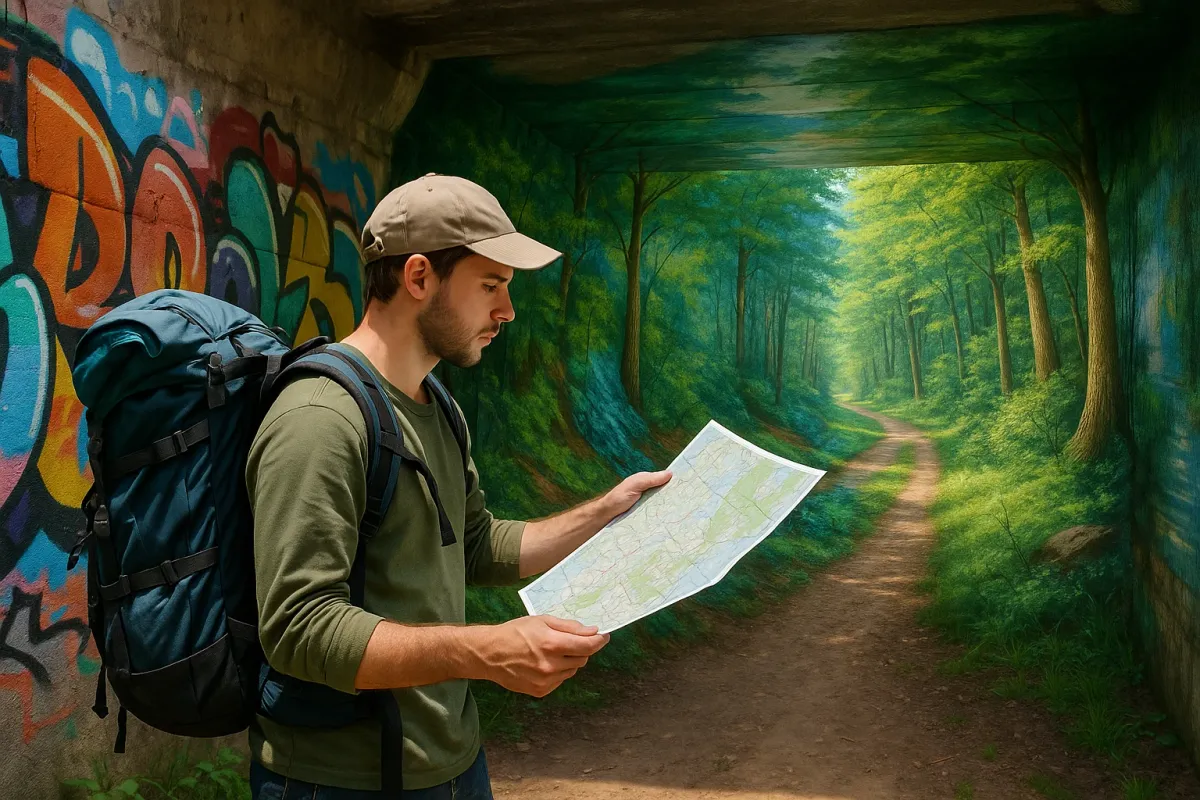
From hovering statues in Dubai to gravity-bending installations in Prague and mind‑bending street art in cities like Lisbon, Melbourne, and Mexico City, public art is quietly becoming one of the boldest adventure frontiers. No tickets. No velvet ropes. Just you, the city, and whatever you’re brave enough to explore on foot.
Below are five ways to turn the global boom in sculptures and street art into your next real‑world quest—no gallery pass required.
Turn Public Art Into Your Urban Treasure Map
Instead of planning your trip around “must‑see museums,” build a route around the wildest public artworks you can find. The sculptures trending right now—from sky‑floating figures in Prague to surreal waterfront pieces in Singapore—are more than photo ops; they’re anchors for entire days of exploration.
Start by searching for “public art trail” or “sculpture walk” for your destination. Many cities quietly publish interactive maps: think Chicago’s Millennium Park, Oslo’s Ekebergparken, or Wellington’s waterfront sculpture walks. Plot three to five pieces across different neighborhoods, then connect them on foot or by bike. The magic isn’t just in the art you reach, but in the surprise cafés, side streets, and viewpoints you discover in between. Treat each sculpture like a waypoint on a fantasy quest—and the city becomes your open‑world game.
Practical tip: Download offline maps and save pins for each artwork; add a rough time goal but leave gaps for detours. Your best stories will come from the places you never meant to see.
Hunt For “Impossible” Sculptures Where Tourists Don’t Bother To Look
The sculptures going viral now often share one thing: they look physically impossible. Figures balances on fingertips, ships “flying” over streets, people dissolving into metal fragments. Copy the curiosity behind that Bored Panda roundup and build your own “impossible sculpture hunt” wherever you go.
Some cities are goldmines for this:
- Valencia, Spain with its futuristic Ciudad de las Artes y las Ciencias
- Dubai, UAE with its hovering rings and mind‑warping Museum of the Future
- Wroclaw, Poland with its haunting “Transition” underground figures
- Reykjavík, Iceland where stark sculptures meet harsh, cinematic landscapes
Ask locals which artworks they find weird, unsettling, or unforgettable. The ones that never make the glossy brochure are usually the ones that hit hardest in real life. Go early in the morning or at night to see how shadows reshape them. Often, the “wow” isn’t the photo; it’s the moment your brain genuinely can’t decide if what you’re seeing is possible.
Practical tip: Search Instagram locations instead of hashtags for your city. Zoom in on pins that have few posts but strange, intriguing thumbnails—that’s where the missed adventures hide.
Build A Day Around One “Anchor” Sculpture And See Where It Pulls You
In that trending article, each sculpture is shown as a standalone spectacle. Flip the script: instead of seeing art as a stop, build your entire day around just one piece that fascinates you. Treat it like the summit of a hike.
Choose a sculpture that’s slightly out of the way—on a hill, beside a river, in an industrial dock, or at the far edge of town. Walk or cycle to it from your accommodation, taking the longest interesting route instead of the fastest one. Along the way, let curiosity overrule the algorithm: turn down the alley with music, follow the smell of bread, pause at a busy basketball court or tiny market.
When you finally reach your “anchor,” don’t rush. Sit down. Watch who comes and goes. How do kids react? How do locals treat it—landmark, meeting point, or background noise? This is where adventure and observation collide: you didn’t just “tick it off,” you lived your way there.
Practical tip: Before you go, jot down three questions about the artwork (How was it engineered? What does it symbolize locally? Who funded it?) and challenge yourself to answer them by the time you leave—by reading plaques, Googling on a bench, or asking someone nearby.
Mix Street Art With Micro‑Adventures: Staircases, Rooftops, And Waterfronts
The most unforgettable photos from that global sculpture roundup have something in common: they’re framed by the outdoors. Your mission is to put your body into that frame, not just your camera.
When you plan an “art day,” blend it with small physical challenges:
- Staircase quests – Hunt for murals painted on outdoor stairs (they’re trending from Seoul to Rio). The climb becomes part of the story.
- Rooftop views – Many cities now allow legal rooftop access via bars, viewpoints, or cultural centers. Watch how street art and sculptures reshape the skyline from above.
- Waterfront wanderings – Harbors, riversides, and sea walls are often open‑air galleries: think Copenhagen’s harbor, Bilbao’s riverfront, or Vancouver’s Seawall. Follow the water and let art surprise you around the bends.
By tying public art to small doses of exertion—walking, climbing, biking, paddle‑boarding—you transform passive sightseeing into active exploring. Every sculpture becomes a checkpoint in a day that leaves your legs humming and your head full.
Practical tip: Wear shoes you’d be okay hiking a short trail in. Adventure is often just one “should we keep going?” away.
Create Your Own “Art Expedition Log” Instead Of Just Posting Another Photo
The Bored Panda article is designed for quick scrolling and quick sharing—but travel doesn’t have to be. Instead of feeding your memories straight into the algorithm, treat your sculpture and street‑art finds like an expedition and document them like a field researcher.
Here’s a simple way to do it:
- Snap the wide shot – Show the artwork in context: the street, the sea, the skyline.
- Take one detail shot – A texture, a reflection, a crack, a shadow—something you’d miss at a glance.
- Write two sentences – One about how it made you feel, one about where you actually are (neighborhood, time of day, sounds, weather).
Keep these in a notes app, a tiny notebook, or a shared album titled “Open‑Air Adventures – [City Name].” When you finally share on social media, tell the story of the hunt, not just the coordinates of the photo. That’s how you turn a viral trend—“50 unbelievable sculptures”—into something more lasting: a living map of the worlds you’ve walked through.
Practical tip: At the end of your trip, highlight your favorite three entries and mark them on a map. Over time, you’ll build your own global “wonder trail” you can keep chasing city after city.
Conclusion
The sculptures going viral today aren’t just internet candy; they’re invitations. They prove that some of the world’s most extraordinary adventures now live in the spaces between skyscrapers and subway stops, where gravity‑defying statues and wild murals wait in plain sight for anyone bold enough to go looking.
You don’t need a safari budget or climbing gear to feel awe. You need a map dotted with strange artworks, a pair of shoes that can handle wrong turns, and the courage to let curiosity pull you down streets you’ve never heard of. Let the world’s most unbelievable sculptures be your starting line—and then see how far your own story can stretch beyond the frame.