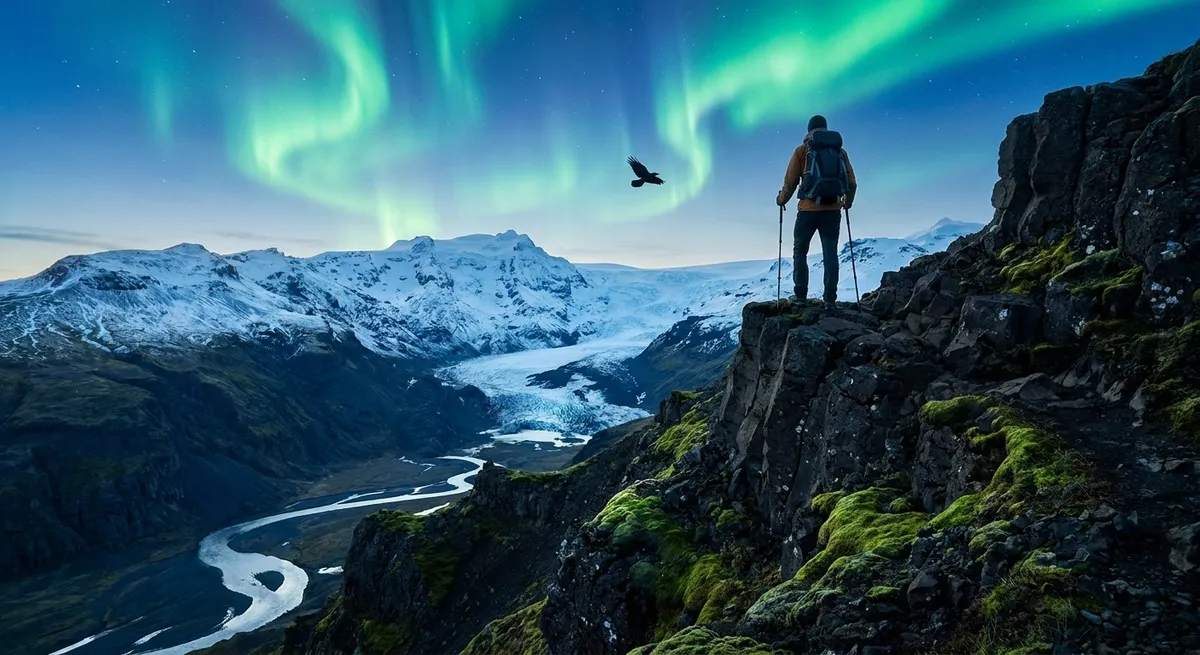
Below are five kinds of destinations that don’t just look good on your feed—they flip a switch inside you. Each one comes with vivid experiences and grounded tips to actually make them happen.
1. Where Land Ends in Sheer Cliffs and Roaring Seas
There’s a particular kind of destination where the continent simply stops—abrupt rock, wild wind, and a horizon that looks endless. Stand on an ocean cliff and you feel it immediately: salt in the air, the weight of the drop, the crash of water that’s been traveling for thousands of miles just to shatter below you.
Think: the storm-beaten coasts of western Ireland, Portugal’s wind-battered Algarve headlands, or the Pacific bluffs of Big Sur. These are places built for slow, soul-stirring walks where every curve of the path reveals another cathedral of stone and sea.
Practical ways to experience this:
- Time your visit for sunrise or sunset. Side light turns cliffs into glowing sculpture and waves into molten silver.
- Walk, don’t rush. Coastal trails like Portugal’s Fishermen’s Trail or parts of the California Coastal Trail let you feel the geography in your legs, not just your eyes.
- Pack layers. Sea winds can turn a warm day into a chilly one in minutes.
- Watch your footing and respect barriers—coastlines are beautiful and unpredictable, especially after rain.
- Embrace “doing nothing.” Sometimes the most powerful moment is just sitting on a rock, watching the tide breathe in and out.
These cliff-edge destinations remind you that the Earth has edges—and that you’re brave enough to stand on them.
2. Cities That Wake Up After Midnight
Some destinations don’t come alive in the sunshine; they wait until the sky goes ink-dark and the streetlights flicker on. Night cities are a different planet—lantern-lit alleys, food stalls glowing with steam, neon bouncing off rain-wet pavement, late trains humming underfoot.
From the late-night ramen bars of Tokyo to the never-quite-asleep boulevards of Mexico City or Madrid’s plazas where conversations stretch past midnight, these urban destinations reward the traveler who doesn’t crash early.
Ways to explore a city built for the night:
- Start with food. Night markets, food trucks, and hole-in-the-wall spots are where you’ll feel the heartbeat of a city after dark.
- Take a night walking tour or food crawl; it’s safer, more social, and you’ll see corners you’d miss alone.
- Use public transit where it’s safe and reliable—many major cities run late-night metro or bus services.
- Save big indoor attractions (museums, galleries) for the hottest hours of the day, then roam outside once the temperature drops.
- Keep your essentials minimal and secure—phone, small wallet, copy of your ID—so you can move freely without worry.
In these destinations, the most memorable moments often happen when you thought you’d be asleep—spontaneous street performances, new friends at tiny counters, and the city skyline glittering like it’s daring you to stay out just a little longer.
3. High-Altitude Worlds Above the Clouds
Travel high enough and the air thins, the trees disappear, and the world turns into a sharp, almost otherworldly panorama. Mountain destinations don’t just give you views—they ask something of you in return: effort, patience, and the willingness to be small in a landscape so big it doesn’t care what’s trending.
Picture the terraced peaks of the Peruvian Andes, the alpine trails of the Swiss or French Alps, or remote Himalayan valleys where prayer flags snap in thin, clear air. Up here, the silence has weight. Every step is deliberate. Every horizon is earned.
How to step into high-altitude destinations wisely:
- Give yourself time to acclimate. Spend a night or two at a mid-level elevation before going higher; your body needs the rehearsal.
- Hydrate more than feels normal and avoid heavy drinking early on; altitude and alcohol do not get along.
- Choose one big exertion a day—a long hike, a climbing day—then give your body time to rest.
- Dress in layers. Mornings may feel like winter; afternoons can surprise you with sudden heat and sunburn.
- Respect your limits. Headaches, dizziness, or nausea are your body waving a red flag. Turning back isn’t failure—it’s smart travel.
High-altitude destinations open up a rare kind of clarity: thin air, sharp light, and the realization that you’re capable of more than you thought—step by step, switchback by switchback.
4. Water Worlds That Demand You Dive In
Some places are best understood not by standing and looking, but by slipping under the surface. These are the destinations shaped by water—coral reefs like living fireworks, glassy lakes ringed by pine, fjords that feel like flooded mountain cathedrals.
Whether it’s snorkeling above a reef, kayaking through bioluminescent bays, paddleboarding on a mirror-still alpine lake, or drifting down a jungle river, these experiences turn you from observer into participant.
To let water destinations rewrite your sense of what’s possible:
- Try at least one activity that requires getting on or in the water: kayaking, snorkeling, stand-up paddleboarding, or even a simple rowboat.
- Learn the basics of water safety; a quick lesson can make the difference between anxiety and pure joy.
- Choose operators or rentals that follow strong environmental practices—no touching coral, no harassing wildlife, no single-use plastics on the boat if possible.
- Pack a lightweight, quick-dry towel and a dry bag; they turn “I guess I’ll just watch” into “Yes, I’m going in.”
- Check local conditions like currents, tides, and water quality; coastal and river environments change fast.
In water-dominated destinations, you don’t just visit a place—you float through it, breathe with it, and carry its weightless calm back home.
5. Places Where the Night Sky Still Belongs to the Stars
Most of us live under a washed-out sky where only the brightest stars fight through city glow. But there are destinations where the night still feels ancient: deserts where the Milky Way drapes across the horizon, national parks where galaxies look close enough to touch, and remote islands where your only streetlight is the moon.
These dark-sky destinations flip your sense of scale: you’re no longer the center of the story; you’re a tiny audience member in a vast cosmic show.
How to chase the world’s wildest skies:
- Seek out areas with official “dark sky” recognition or simply far from major urban centers—deserts, high plateaus, remote parks, and islands.
- Travel during the new moon or when the moon is small; a bright moon can wash out fainter stars.
- Bring or borrow a simple headlamp with a red-light setting to preserve night vision and minimize disruption to wildlife.
- Download an offline stargazing app so you can identify constellations, planets, and the Milky Way even without service.
- Dress warmer than you think you’ll need; stargazing usually means standing or lying still for a while.
Under a truly dark sky, the line between destination and universe blurs. You realize you didn’t just come all this way to see a place—you came to remember you’re part of something enormous.
Conclusion
The world doesn’t only live in guidebooks and bucket lists. It lives in the cliff edge where the wind almost takes your breath, in the side street sizzling with midnight snacks, in the slow climb through thinning air, in the cold shock of river water, and in the quiet gasp when the Milky Way appears like a river of light.
Choose destinations that ask you to participate, not just spectate. Say yes to the path that looks a little wild, the hour that’s a bit too late, the hike that feels just beyond easy, the water that feels just a bit too cold, the night that’s darker than you’re used to.
Those are the places where you don’t just see the world—you discover the braver version of yourself that’s been waiting to meet it.
Sources
- International Dark-Sky Association – Dark Sky Places – Details on certified dark-sky parks and reserves around the world
- U.S. National Park Service – Night Skies – Information on stargazing, light pollution, and where to experience dark skies in U.S. national parks
- Centers for Disease Control and Prevention – High-Altitude Travel & Altitude Illness – Practical health advice for travelers heading to mountain and high-altitude destinations
- NOAA Ocean Service – Coral Reefs – Background on coral reef ecosystems and responsible visitation practices
- European Environment Agency – Bathing Water Quality – Data on water quality for popular coastal and freshwater bathing sites in Europe