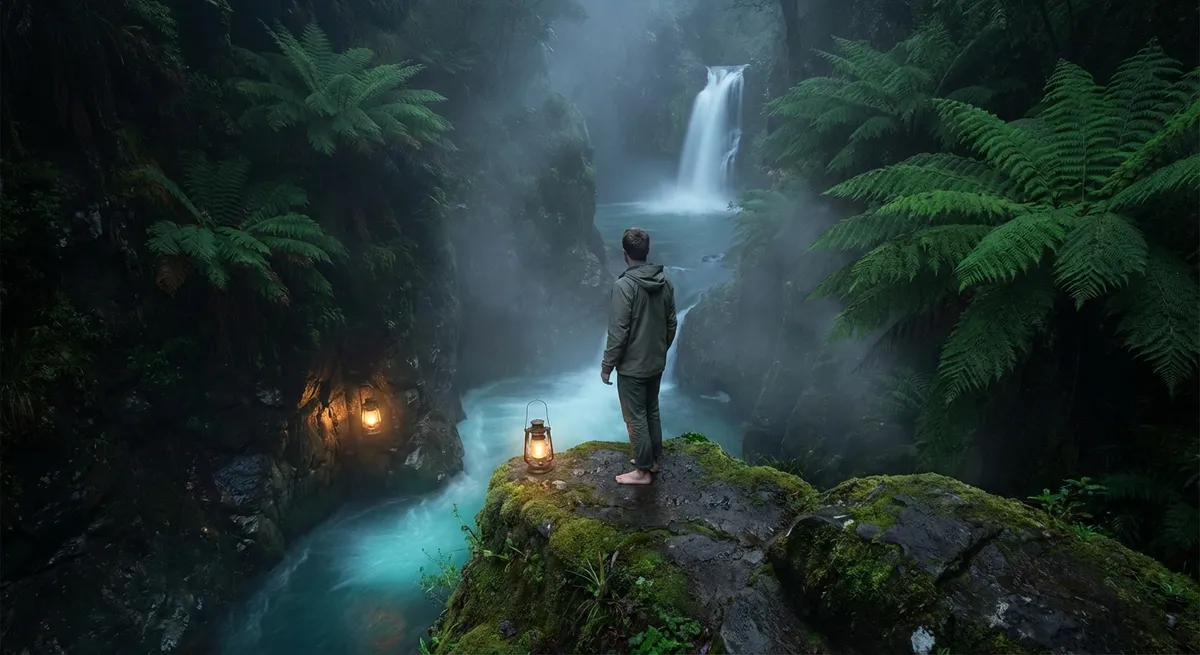
This isn’t about the usual “top beaches” or “best river cruises.” This is about five kinds of water-rich destinations that turn your journey into a story you’ll tell for years: places where the landscape, the culture, and your own sense of courage all start to flow together.
1. Fjord Kingdoms: Where Mountains Dive Into the Sea
Imagine standing on the deck of a small boat as cliffs rise a thousand meters straight out of the water. The air tastes like glacier melt. A waterfall unravels down a sheer rock face like a strand of silver, and for a moment the whole world narrows to a single, echoing splash.
Fjord regions—like Norway’s Nærøyfjord and Geirangerfjord, New Zealand’s Milford Sound, and Chile’s Patagonian channels—feel less like places and more like myth. The drama isn’t just visual; you feel it in your chest. These are destinations where the line between land and sea blurs into a vertical world of stone, ice, and cloud.
What makes fjord travel unforgettable is the mix of big landscapes and quiet, human-scaled experiences. You might kayak along a glassy surface at sunrise with nothing but the sound of your paddle and distant seabirds. Later, you hike above the waterline, looking down at tiny boats threading through a canyon of peaks. In many fjord towns, you’ll find fisher huts turned into cozy stays and local restaurants serving seafood caught hours earlier—cod, mussels, king crab—rooted in generations of coastal tradition.
To go deeper, travel outside the most crowded summer weeks and choose smaller vessels or guided kayak tours over mega-cruises. Dress in layers, keep your days flexible for sudden weather shifts, and don’t rush: fjord destinations reward those who linger, watching fog lift slowly off the water like a curtain rising on different moods of the same wild stage.
2. Desert Oases: Where Water Feels Like a Miracle
There’s a particular kind of wonder that happens when you’ve walked on sun-warmed sand for hours and suddenly hear the sound of running water. Palm leaves whisper overhead, a pool glows green in the harsh light, and everything in you exhales at once.
Desert oases—from Morocco’s palm groves near Skoura to Egypt’s Siwa, Peru’s Huacachina, or hidden wadis in Oman—are proof that life can thrive in the unlikeliest corners. These destinations aren’t just visually striking; they’re invitations to rethink what “enough” looks like. People here have mastered the art of making water last—through ancient irrigation channels, terraced gardens, and deep cultural respect for every drop.
You might ride a camel or 4x4 across dunes at sunrise, then float under date palms in the afternoon. At night, the sky becomes an observatory, black and crystalline, with starlight sharp enough to silence a crowd. Days can be adventurous—sandboarding, trekking, visiting centuries-old mudbrick villages—while evenings slow down around mint tea, long conversations, and the sound of desert wind curling through narrow alleys.
To travel these places responsibly, be conscious of water use: short showers, refilling a reusable bottle, choosing eco-minded guesthouses that invest in local conservation. Let the scarcity sharpen your gratitude—every cool sip, every shaded courtyard, becomes part of a deeper appreciation for how humans and nature negotiate survival together.
3. River Cities: Where Life Moves at the Speed of the Current
Some destinations are best understood not from a lookout point, but from the middle of a river, watching the shoreline slide past like pages turning in a book.
Think of cities like Porto cradling the Douro in Portugal, Budapest flanking the Danube, Bangkok wrapped around the Chao Phraya, or Cairo stretching along the Nile. The river isn’t just scenery—it’s the city’s spine. Markets, temples, warehouses, palaces, and apartment blocks all lean toward the water, drawn by centuries of trade, ceremony, and everyday life.
In a river city, you feel the current in the culture. Take a local ferry instead of a tourist cruise and you’re suddenly inside the city’s daily heartbeat: commuters staring out the window, kids chasing each other between seats, snack vendors weaving through with an effortless balance learned over years. Step ashore and you might wander into a riverside night market, a centuries-old bridge, or a row of cafes glowing gold against the dark water.
Plan your days to intersect with the river at different times: a misty morning walk along the embankment, a mid-afternoon coffee watching boats drift by, a twilight ride when the city lights paint a broken mirror across the surface. When you let the river set your pace, you discover neighborhoods tourists often miss and conversations you never would’ve had if you’d stayed underground on a metro.
4. Hot Spring Havens: Soaking in the Earth’s Secret Heat
There’s something almost rebellious about climbing into a steaming pool while snowflakes drift past your eyelashes—or soaking in mineral-rich water after a long day of hiking until your muscles slowly unclench and your mind quiets.
Hot spring destinations—like Iceland’s geothermal pools, Japan’s onsen towns such as Hakone or Beppu, New Zealand’s Rotorua, or the thermal baths scattered through the Italian countryside—turn relaxation into a cultural experience. You don’t just get in the water; you enter a tradition that often stretches back centuries.
In Japan, the ritual of bathing is as important as the soak itself: rinsing carefully before entering, moving slowly, respecting silence. In Iceland, locals gather in outdoor pools to swap stories and news, even in the dead of winter. In Europe, grand thermal spas feel like cathedrals to wellbeing, their marble halls echoing with footsteps and low conversation.
The practical magic lies in planning your day around these waters rather than treating them as a quick stop. Hike to a hidden riverside hot spring at dawn; visit a public bath in the late afternoon when locals stop by after work. Respect the etiquette—bathing suits or no suits, quiet zones, showers before entering—for a far more immersive, authentic experience. And when you emerge, skin flushed and mind calm, pay attention to how differently you relate to the landscape; it’s hard not to feel more connected to a place when you’ve literally steeped in its underground heat.
5. Waterfall Trails: Chasing the Sound of Falling Earth
You hear them before you see them: a low, distant roar that grows into a rushing thunder as you round each bend in the trail. Everywhere, the air is thicker—cool, misted, pulsing. Then suddenly, there it is: a vertical river breaking free of the earth, exploding into spray and rainbows.
Waterfall destinations—from Iceland’s ring roads to Costa Rica’s jungle cascades, from Croatia’s terraced lakes at Plitvice to the roaring border-straddling Iguazú between Argentina and Brazil—are built for travelers who crave movement. You don’t just stand and look; you hike, scramble, descend, and sometimes swim.
What makes waterfalls so addictive is the sense of pursuit. Each trail offers choices: Do you stop at the first viewpoint or push on to the base? Do you stay dry or wade into the pool, shoes hanging from your fingers, laughing as the cold turns your breath into sparks? Many regions boast networks of falls that can fill days, if not weeks, with exploration—each one different in height, force, and setting.
The best approach is to plan for a spectrum of experiences. Pack shoes that can handle mud and slick rock, quick-drying layers, and a waterproof bag for your phone or camera. Ask locals for lesser-known spots; some of the most memorable falls aren’t on the big tour circuits. And build in time just to sit: let the white noise clear out your mental clutter, watch how the mist turns sunlight into drifting ghosts, and notice how, without trying, your mind starts letting go of things you no longer need.
Conclusion
When you start following water as your compass, destinations reveal a different side of themselves—and so do you. Fjords teach you to stand in awe. Desert oases show you how precious every resource can be. River cities invite you into the everyday flow of local life. Hot springs remind you that rest can be a ritual, not an afterthought. Waterfall trails pull you into motion until your body feels as alive as the landscape around you.
The next time you plan a journey, don’t just ask, “Where should I go?” Ask, “How do I want the world to move me?” Then follow the waterline on the map until you find a place where that answer and the wildness of the planet meet.
Sources
- Visit Norway – Norwegian Fjords – Official tourism information on Norway’s major fjords, activities, and travel tips
- UNESCO World Heritage Centre – Upper Middle Rhine Valley & Other Cultural Landscapes – Database of World Heritage sites, including river and fjord landscapes referenced for cultural and natural significance
- Japan National Tourism Organization – Onsen Etiquette – Guidance on hot spring culture and bathing customs in Japan
- Iceland Travel – Geothermal Pools and Hot Springs – Overview of Iceland’s geothermal bathing spots and practical advice for visitors
- National Park Service (U.S.) – Waterfalls and Safety Tips – Information on waterfall environments and recommendations for safe exploration