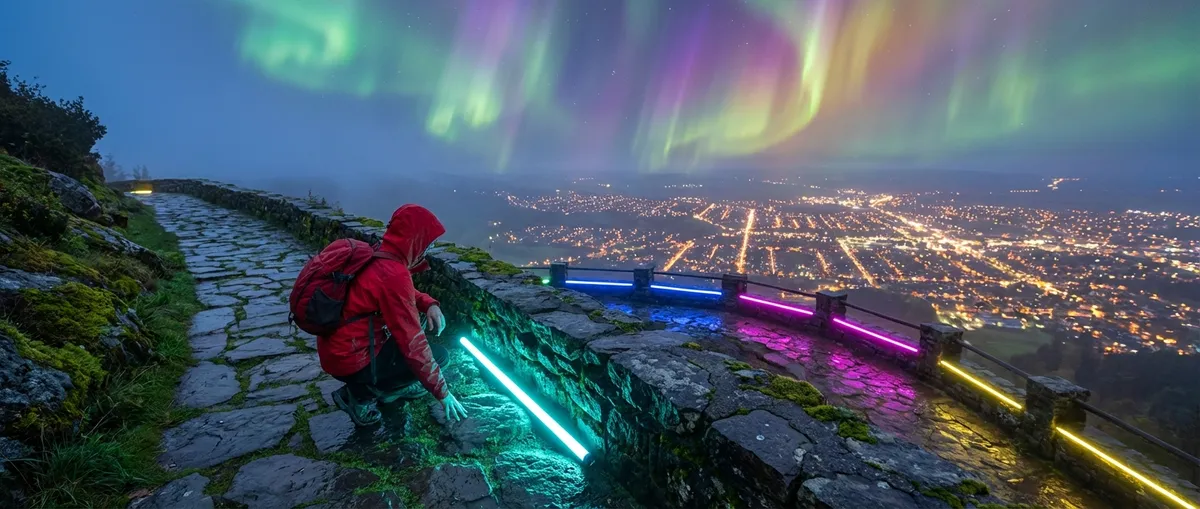
This is your invitation to chase those contrasts. To step into places where the air tastes different, the light hits differently, and time seems to bend around what you’re experiencing. Below are five kinds of destinations that flip the switch on routine and make every hour feel charged with possibility.
1. Cities That Never Sleep, But Still Make Space to Breathe
Not all big cities are just traffic and skyscrapers. Some are like living organisms, pulsing with energy yet carved out with quiet corners you can slip into when you need to catch your breath.
Think of Tokyo, where you can ride a packed train into Shibuya Crossing—the world’s famous scramble of lights and people—then step into a lantern-lit alley for a bowl of ramen that feels like a warm secret. Or New York City, where sunrise walks across the Brooklyn Bridge give way to Broadway lights and rooftop bars that feel like floating islands above the streets.
To keep these mega-cities from overwhelming you, anchor each day with a “calm ritual”: a sunrise walk, a café with a single perfect pastry, a small neighborhood park where locals jog. Use public transport like a pro—metro cards, rail passes, bike shares—because the real magic hides between stops. Follow side streets, street food carts, and tiny galleries. Let the city be big, but keep your days focused and human-sized.
2. Borderlands Where Cultures Blend at the Edges
Some of the most fascinating destinations sit along borders—places where histories tangle, languages overlap, and you can taste two (or more) worlds in a single meal.
In Istanbul, you can ferry across the Bosphorus from Europe to Asia in less time than it takes to finish a cup of tea, watching centuries of architecture slide by. Street calls to prayer echo over tram bells and café chatter. In Tangier, Morocco, you feel Mediterranean breezes and see Spanish signs alongside Arabic, with mint tea and tapas sometimes sharing the same table.
Borderlands ask you to listen more than you speak. You’ll notice how people switch languages mid-sentence, how menus reflect old trade routes, how architecture holds traces of empires long gone. Practical move: take walking tours run by locals—especially those that focus on history or food—so you can decode what you’re seeing, not just photograph it. And cross the border itself when you can; feeling the shift in currency, pace, and vibe in real time is half the adventure.
3. Night-Sky Sanctuaries Far From City Glow
If you’ve never stood under a sky so dark you can see the Milky Way as a pale river, you’re due for a pilgrimage to a true dark-sky destination. These are places where stars reclaim the night and your sense of scale snaps into perspective.
In the Atacama Desert of Chile, some of the clearest skies on Earth stretch out over silent salt flats and lunar landscapes. In Utah or Arizona, USA, national parks double as cosmic theaters where rangers lead night programs under shimmering constellations. Even closer to home, you might find a designated dark-sky reserve just a few hours’ drive from your city.
To make it unforgettable, plan around the moon phase—new moon means maximum stars, while a bright moon turns mountains silver and deserts into glowing oceans of sand. Pack warm layers, even in summer, and give your eyes 20–30 minutes to adjust to the dark. Leave the flash off your camera. Some memories are better as constellations in your head than pixels on your phone.
4. Waterfront Cities Where Land and Water Share the Stage
Destinations built around water move differently. Ferries become buses, canals become streets, and the horizon constantly shifts with tide and light. These places show you how much a shoreline can shape culture, rhythm, and mood.
Wander Venice, Italy, not just in Piazza San Marco but deep into neighborhoods where laundry hangs over quiet canals and local bars serve cicchetti (Venetian tapas) to people who have seen a thousand tourists come and go. Or explore Sydney, Australia, where harbor ferries feel like joyrides, and a simple commute across the water can deliver views of the Opera House and the endless Pacific.
To really feel a waterfront city, move with the water: take a sunrise ferry, kayak at golden hour, or sit on a pier and watch how life gathers at the edge. Time your explorations with tides and sunsets. Carry a lightweight layer for the chill that creeps in off the waves at night. And always, always leave extra time—water cities reward the traveler who’s willing to pause and let the scene unfold.
5. Places That Change Completely With the Season
Some destinations don’t just have seasons—they reinvent themselves. Visit once in summer and again in winter, and you’ll feel like you’ve traveled to two different worlds pinned to the same map.
In Kyoto, Japan, temple gardens burn with red and gold in autumn, then soften into pastels of cherry blossoms in spring. In Iceland, midnight sun road trips give you endless daylight to chase waterfalls and black-sand beaches, while winter brings long nights, frozen landscapes, and the chance to stand beneath the Northern Lights as they spill green and violet across the sky.
Before you go, decide what version of the place you want. Do you want festivals, open trails, and café terraces humming late into the night? Or do you want hushed streets, snow, and steaming onsens or saunas offering refuge from the cold? Use seasonal calendars and local tourism boards to time your trip around what matters to you—migrating whales, fall foliage, desert blooms, or ski season. The same destination can hold several different adventures, depending on when you choose to step into it.
Conclusion
The world isn’t just a list of countries to tick off; it’s a shifting tapestry of light, weather, culture, and sound. Cities that roar and whisper in the same breath. Borderlands where stories overlap. Deserts and mountains that trade sunsets for starlight. Harbors that mirror the sky. Towns that turn into completely different versions of themselves as the year spins.
Your map is alive. The next move is simple: pick a place that feels like it lives between extremes—day and night, land and water, one culture and another, one season and the next. Then follow the lines of light: streetlamps, ferries, desert sunsets, aurora flares, city skylines. Somewhere along the way, you’ll realize you’re not just visiting a destination—you’re stepping into another way of being in the world.
Sources
- Japan National Tourism Organization – Seasonal Travel in Japan – Overview of how Japan’s experiences change with the seasons
- UNESCO World Heritage Centre – Historic Areas of Istanbul – Background on Istanbul’s unique position between continents and cultures
- International Dark-Sky Association – Dark Sky Places – Directory and explanation of global dark-sky parks and reserves
- Atout France – Discovering the Border Regions – Insight into cultural and historical richness in European border areas
- Iceland Tourist Board – Seasons & Climate – Practical guidance on how Iceland transforms from summer to winter and what travelers can expect