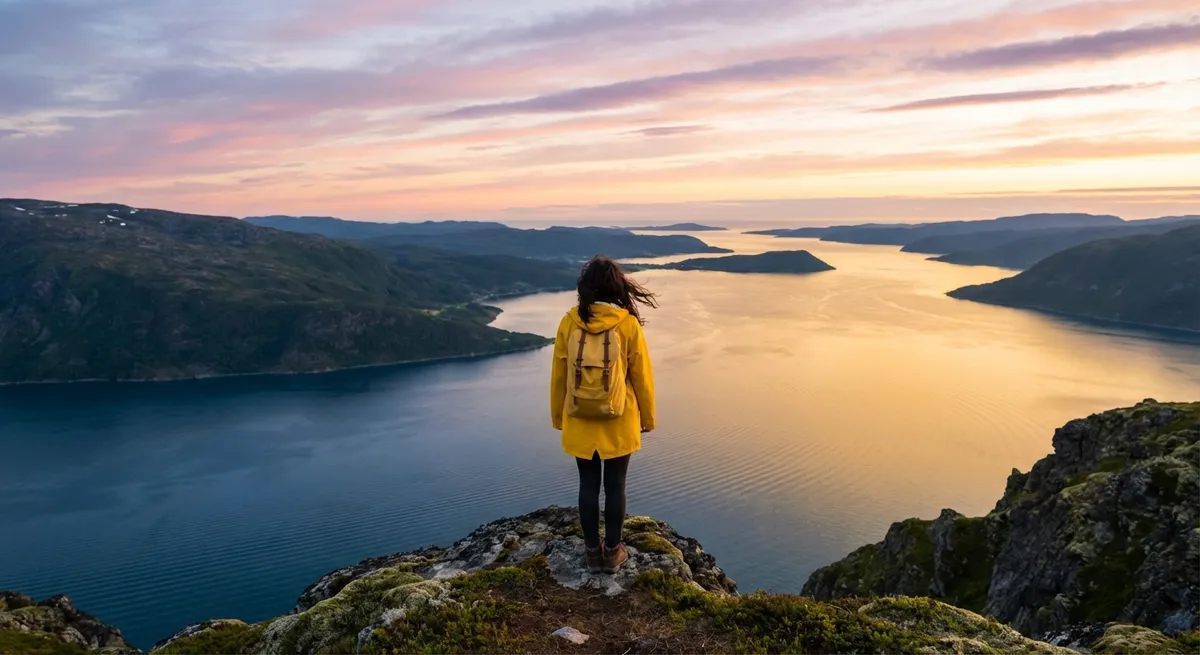
Below are five kinds of destinations—anchored in real places around the world—that can reshape how you travel, and maybe how you live.
1. Places Where the Night Sky Still Wins
There’s a special kind of silence that only appears under a sky full of stars—the kind you can’t find in cities where neon drowns out the Milky Way. Dark-sky destinations remind you that Earth is not the main character; it’s just one small planet spinning under something much bigger.
Think of Atacama Desert in Chile, where the dry air and high elevation make the stars feel close enough to touch. Or NamibRand Nature Reserve in Namibia, a certified Dark Sky Reserve where the horizon disappears and the universe takes center stage. Even closer to home, you can chase the night in places like Big Bend National Park in Texas or Snowdonia in Wales, where light pollution laws protect the sky.
Traveling for the stars resets your pace. You’re suddenly planning your day around moonrise, stargazing windows, and the sweet spot between sunset and full darkness. You’ll learn to layer clothes for cold nights, download stargazing apps, and pack a red-light headlamp to keep your night vision. Most of all, you’ll remember that the real show often starts after everyone else has gone to bed.
2. Cities Built Around Water, Not Traffic
We’re used to destinations defined by cars and congestion, but some cities still flow at the speed of water. These places pull you into a different rhythm—where boats, ferries, canals, and waterfront promenades are the real arteries of movement.
In Venice, Italy, there are no cars, only vaporettos, gondolas, and back-alley bridges that force you to explore on foot or by boat. Amsterdam, Netherlands, wraps you in concentric canals, bikes gliding past as houseboats reflect in the water. Copenhagen, Denmark, has turned its harbor into a literal playground, where locals swim, kayak, and lounge on the waterfront in summer as if the city were a beach.
Traveling through water-bound cities changes how you sense distance. Ten minutes by vaporetto feels different than ten minutes in a cab—slower, more deliberate, more cinematic. You start to notice how cities sound without horns and engines: footsteps on stone, water against hulls, laughter echoing off old facades. Pack shoes that invite walking, a waterproof layer, and an openness to getting lost down side canals where the map stops making sense and the city finally begins to.
3. Landscapes That Feel Like Another Planet (But Aren’t)
You don’t have to leave Earth to feel like you’ve landed somewhere alien. Some destinations strip away the familiar—trees, buildings, even predictable colors—and drop you into landscapes that seem designed by another imagination entirely.
In Iceland, black sand beaches like Reynisfjara, steaming geothermal fields, and moss-covered lava plains make you question what “normal” terrain looks like. Wadi Rum in Jordan, nicknamed the “Valley of the Moon,” surrounds you with towering red sandstone cliffs, wind-sculpted dunes, and desert skies that look like sci‑fi movie backdrops. New Zealand’s Tongariro Alpine Crossing winds past volcanic craters and surreal emerald lakes that seem painted rather than real.
These places ask you to travel more intentionally. Weather can change fast, terrain can be unforgiving, and distances are deceptive when there are no familiar markers. You’ll need solid footwear, layers that can handle wind and sun, and respect for local guides who know what the terrain hides. In return, you get something rare: the sensation of being very small in a very old world, walking through a landscape that looks like it should only exist in film or fantasy.
4. Cultures Where Time Moves at a Different Speed
Some destinations don’t impress with huge sights or dramatic landscapes. Instead, they invite you into a different relationship with time itself. Slow-living cultures reset your internal metronome, showing you what a day looks like when it’s built around connection rather than efficiency.
In Japan’s rural prefectures—like Nara or Kagawa—you’ll find small towns where traditional crafts are still practiced, morning markets roll out at dawn, and evenings revolve around shared meals and hot springs. On Greek islands such as Naxos or Ikaria, meals stretch long into the night, coffee is never rushed, and locals joke that being late is a national sport. In Portugal’s Alentejo region, whitewashed villages nap through the afternoon heat, then quietly reawaken at dusk.
Traveling through these slower destinations means surrendering your urge to “maximize” every hour. Public transport might not run on your preferred schedule. Shops may close in the middle of the day. Wi‑Fi could be patchy. But that’s the point: you trade constant connectivity for unhurried conversations, second helpings at family-run tavernas, and the luxury of watching a sunrise without checking the time. Bring a paperback, a journal, and the courage to leave a few days gloriously unplanned.
5. Borderlands Where Worlds Overlap
Frontiers, crossroads, and border regions are where cultures bump shoulders and blend. These destinations rarely appear as headliners on glossy brochures, but they are where you feel history, migration, and language overlapping in real time.
In Strasbourg, France, you can cross a bridge and switch from croissants to currywurst, French to German, in a matter of minutes—evidence of a region that has changed hands more than once. Istanbul, Türkiye, physically straddles Europe and Asia, its skyline a conversation between minarets, domes, and modern towers. In Tijuana–San Diego, you can walk or drive across one of the world’s busiest borders and see how cuisine, slang, and music cross more freely than passports.
Traveling through borderlands teaches you to read between the lines. Street art, hybrid dishes, bilingual menus, and shared celebrations all tell a story that doesn’t fit neatly in a single national narrative. To lean into this, learn a few phrases in both local languages, seek out markets instead of malls, and talk to people who have lived on both sides of a border. These are the destinations that remind you: lines on a map are recent; human connections are older and stronger.
Conclusion
The destinations that change you aren’t always the ones with the most hashtags—they’re the ones that challenge your reflexes, your sense of scale, your idea of “normal.” Skies so dark you can hear your own heartbeat. Cities where the water, not the highway, decides your route. Landscapes that look off‑planet, cultures that slow your steps, borderlands that refuse simple labels.
You don’t need to see everything. You just need to choose places that ask something of you: a little more patience, a little more curiosity, a little more courage. Pick a latitude that pulls you out of your usual orbit, pack light but travel deep, and let the world rearrange you—one horizon at a time.
Sources
- International Dark-Sky Association – Dark Sky Places – Information on certified Dark Sky Parks, Reserves, and Communities around the world
- UNESCO World Heritage Centre – Venice and its Lagoon – Background on Venice’s unique water-based urban structure and cultural significance
- Icelandic Tourist Board – Natural Wonders of Iceland – Official overview of Iceland’s distinctive volcanic and geothermal landscapes
- Japan National Tourism Organization – Rural Japan Travel Information – Guidance on exploring slower-paced regions and traditional culture outside major cities
- UNESCO World Heritage Centre – Historic Areas of Istanbul – Historical and cultural context on Istanbul’s position between Europe and Asia