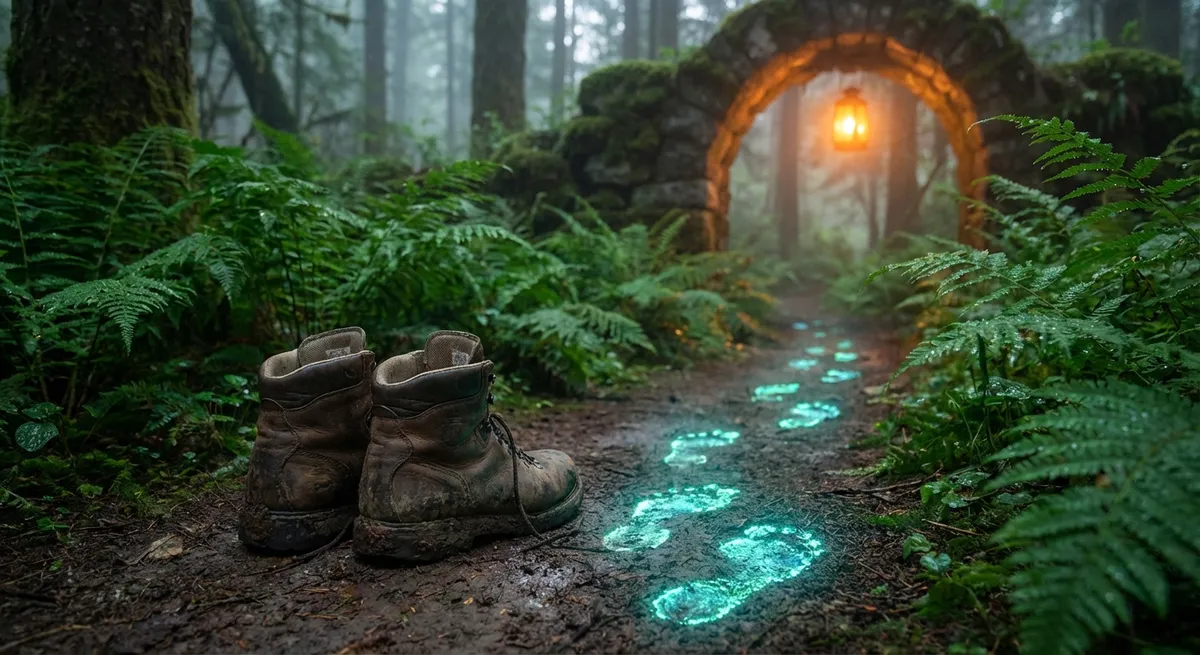
Below are five kinds of adventures that don’t just fill your camera roll; they rearrange how you see yourself and the planet you call home.
1. Chase First Light: Dawn Adventures That Reset Your Senses
There’s a reason explorers and photographers fall in love with sunrise. Dawn has a way of making the world feel freshly created, and you feel newly written into it.
Pick a place where the sunrise changes the entire mood of the landscape—an empty city rooftop, a lakeshore wrapped in mist, the rim of a canyon, or a village pier where fishermen are just pushing off. Set your alarm for an hour before first light, layer up, and walk in the half-dark toward your chosen vantage point. This slow approach—hearing birds before you see them, feeling the temperature shift—primes your brain to notice tiny details you’d normally rush past.
Bring a thermos of something warm, a notebook or voice memo app, and commit to staying offline until the sun is fully up. Watch as shadows thin out and the world sharpens into color. Jot down what you hear, smell, and feel, not just what you see. You’re not just watching a sunrise; you’re learning how to arrive somewhere fully awake, and that’s a skill you can carry to every corner of the globe.
2. Follow Water: Journeys That Flow With Rivers, Coastlines, and Tides
Water is the original travel guide. Rivers have carved trade routes, coastlines have birthed cultures, and tides still write the daily schedule for entire communities. When you travel with water as your compass, you tap into an older rhythm than any itinerary.
Look at a map and trace a line along a river or shore you’ve never followed before—this could be the bend of the Danube through Central Europe, a coastal bus route along Portugal’s Atlantic edge, or a chain of lakes in your home country. Plan your route so you can move roughly in the direction the water flows—by train, bike, ferry, or on foot.
Pause in small towns and harbors instead of just the big-name stops. Ask locals where the water matters most: the market that only opens when the fishing boats return, the café that overlooks the floodplain, the footbridge that becomes a social hub at sunset. Let the water dictate your pace. When you start noticing how rivers shape languages, food, music, and architecture, every bend becomes an invitation to look closer.
3. Step Into Someone Else’s Rhythm: Skill-Building Adventures
Some trips are defined by places; others are defined by what you learn while you’re there. When you chase a skill instead of a sightseeing list, you trade passive observation for full-body participation.
Think about something you’ve always wanted to try in its natural home: learning traditional weaving in the Andes, cooking regional dishes in Vietnam, rock climbing in Greece, tango in Buenos Aires, freediving in the Philippines, bread baking in rural France. Find a local school, cooperative, or guide with strong reviews and clear safety standards. Book at least a few continuous days rather than a one-off workshop; immersion is where the magic happens.
As you fumble through new movements, techniques, and terminology, you’ll also absorb stories about the people who have mastered them. Your climbing instructor might recount local legends about the cliffs. Your cooking teacher may explain how a dish connects to history and harvest seasons. By the end, the souvenir you take home isn’t just a new skill; it’s a new way of moving through the world with patience, humility, and curiosity.
4. Navigate by Stars and Street Food: Night Adventures That Reframe a City
Every city becomes a different creature at night. Neon replaces daylight, street vendors become storytellers, and music slides out of alleys you didn’t notice at noon. Exploring after dark—with intention and awareness—can give you a second, richer version of the same place.
Start with food. Hunt down a night market, a row of late-opening food stalls, or a family-run restaurant where locals linger instead of rush. Eat standing up, sitting on a curb, or at a crowded shared table. Ask what’s in the dish. Ask who usually eats it and when. You’re not just feeding your hunger; you’re tasting how the city relaxes.
Then walk. Join a guided evening walk for safety and context if you’re unfamiliar with the area—think architectural night tours, ghost walks, or photography walks geared toward low-light scenes. Notice what lights are left on: bakeries prepping for tomorrow, corner shops quietly glowing, windows full of laughter. Keep your head up, your valuables secure, and your instincts switched on. When done thoughtfully, night adventures teach you how to read a city’s heartbeat, not just its skyline.
5. Go Quiet: Human-Powered Routes That Stretch Your Limits
There’s a certain kind of adventure that only starts when engines stop. When your movement is powered purely by your own body—walking, hiking, cycling, paddling—you don’t just cross distance; you feel every kilometer in your muscles and in your mind.
Choose a route that’s challenging but realistic for your current fitness level: a multi-day trek with mountain huts, a long-distance cycling trail with village guesthouses, or a canoe route with marked campsites. Research terrain, weather, and necessary permits, and tell someone your plan. Pack lighter than you think you should, but never skimp on essentials: water, navigation, basic first aid, and layers.
Out there, speed stops mattering. You’ll start to measure time in sunrise-to-sunset arcs and progress in “how my legs feel today.” The silence between conversations grows comfortable. You notice patterns in the landscape—how the wind changes with the valley, how birdsong swaps as you gain altitude. The real reward is that quiet click inside when you realize: “I can do hard things, one step at a time.” That knowledge doesn’t stay on the trail; it follows you home.
Conclusion
Adventure isn’t a single epic moment—it’s a steady practice of saying yes when the unknown knocks softly at your door. Maybe your next “yes” looks like meeting the sunrise on a rooftop, or following a river through three countries, or daring to stumble through a brand-new skill in a language you barely speak.
Wherever you go, let your curiosity set the direction and your respect—for people, places, and ecosystems—set the pace. The world is wide, but so are you. Step out and let them meet.
Sources
- UN World Tourism Organization (UNWTO) – Tourism and Culture Synergies - Explores how travel connects with local cultures, traditions, and creative industries
- Leave No Trace Center for Outdoor Ethics - Practical guidelines for minimizing your environmental impact during outdoor adventures
- Centers for Disease Control and Prevention – Travelers’ Health - Up-to-date health, safety, and preparation advice for international travelers
- National Park Service – Planning Your Adventure - Information on trails, safety, and best practices for human-powered journeys in U.S. parks
- Atlas Obscura – Unique Experiences and Places - A curated collection of unusual destinations and activities that can inspire offbeat adventures