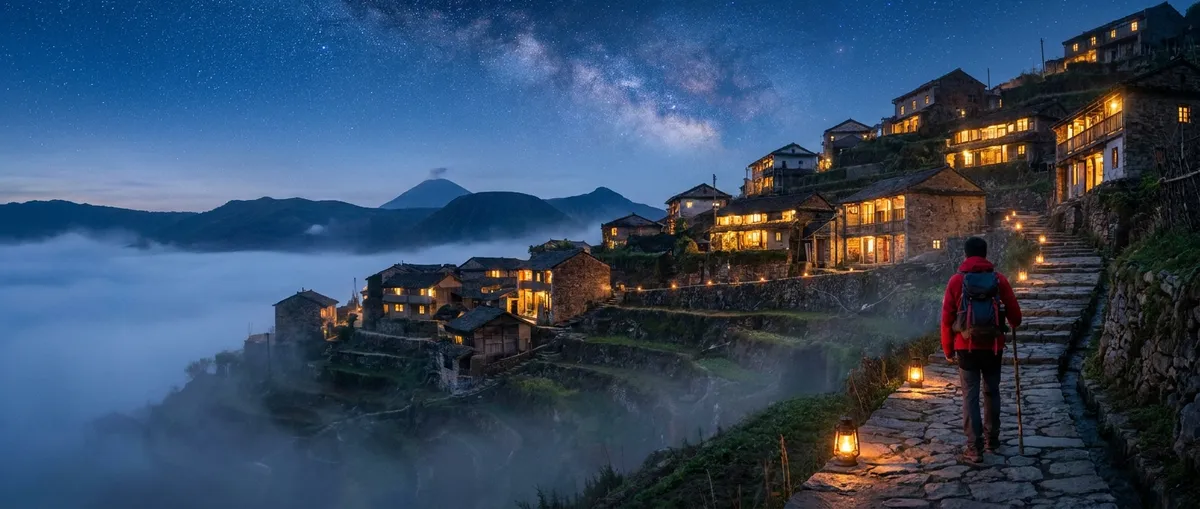
This isn’t a checklist of “must-sees.” It’s a spark list: five kinds of places where the world feels bigger, wilder, and strangely more like home. Pack your courage, your curiosity, and a little room for who you might become along the way.
1. Cities That Never Sleep, But Still Dream
There are cities where the electricity doesn’t just come from power lines—it hums from the sidewalks, the subway platforms, the rooftop bars, and the midnight food stalls. These are places where you can step out your door with no plan and still collide with ten stories before sunrise.
Think of nights spent chasing neon reflections in rain-slick streets, hopping between late-night jazz bars and food markets that refuse to close. Street vendors call your name with sizzling skewers and steaming noodles. A stranger points you toward an underground gallery, where the art spills onto the alley walls. The skyline glows like a promise you’re daring enough to keep.
In these cities, you learn to walk without headphones, to follow the music drifting from side streets, to ride public transport just to see where people spill out at the last stop. Let yourself get lost on purpose. Ask locals where they go when they want to forget it’s a work night. Nighttime in a restless city isn’t about ticking landmarks off a list—it’s about discovering how alive you can feel when everyone around you is awake to possibility.
Practical spark: Book at least one night in a central area, then dedicate an evening with only two rules: no ride-hailing apps and no strict plans. Walk, metro, tram, or local bus your way into serendipity.
2. Wild Coasts Where the Horizon Dares You Closer
Coastlines are where the map runs out, where land restrains itself and lets the ocean take over. These edges of the world have a way of pulling your thoughts out to sea, stripping life back to something salty, simple, and deeply awake.
Picture standing on a stormy headland, the wind tugging your jacket like a playful threat, as waves detonate against black rock. Or waking up in a tiny fishing village where dawn smells like brine and fresh bread, and the harbor boats bob like punctuation marks in the water. Long coastal trails lead to secret coves, blowholes, and cliff-top viewpoints that make your everyday worries feel strangely small.
Here, travel slows down. Your entertainment becomes the rhythm of tides and the ritual of sunrise and sunset. You might learn to read the weather by the shape of the clouds, to recognize seabirds by the half-second flash of wing against gray sky. Wander barefoot between tide pools, or take a dip in frigid water that shocks you straight into the present moment.
Practical spark: Prioritize routes that hug the coast—whether it’s a famous coastal drive, a rugged trail, or a slow train with seaside views. Pack a lightweight windbreaker, quick-dry layers, and shoes you don’t mind getting wet.
3. High Places That Rearrange Your Perspective
There’s a reason humans keep climbing things—from hilltop temples to sky-piercing peaks. High places rewrite your inner map. They remind you how small you are, and somehow that feels like freedom instead of fear.
Imagine winding roads that snake up into mountains, each bend revealing a valley so deep it looks like another world. Cable cars swing over forests and rivers, lifting you into thin, clean air. Alpine villages cling to slopes with an almost stubborn determination, their chimneys puffing quietly under jagged ridgelines. At sunrise, peaks glow pink and gold, as if the sun decided to start its day here, with you.
Up high, your thoughts get quieter. The simple rhythm of your breathing on a trail becomes a kind of moving meditation. You notice details: snowmelt trickling underfoot, wildflowers thriving in impossible cracks, distant bells from grazing animals. Reaching a viewpoint isn’t just about the photo—it’s the reward for every step when you almost turned back.
Practical spark: Look for destinations with well-marked trails or viewpoints accessible by public transit, cable car, or short hikes. Acclimatize gradually at altitude, stay hydrated, and carry layers; weather at the top plays by its own rules.
4. Old Quarters Where Time Walks Beside You
In some destinations, history isn’t hidden behind glass—it’s worn into the cobblestones, layered in the plaster, alive in every crooked doorway and half-whispered legend. Wander old quarters and you’re not just moving through space; you’re moving through centuries.
Think of narrow streets shaded by overhanging balconies, laundry lines strung between windows like colorful banners. Church bells or call-to-prayer echoing off stone walls. Tiny family-run bakeries that have perfected a single recipe over generations. A faded courtyard where elders play cards and children race through arches that have seen empires rise and fall.
In these places, you learn to walk slowly. The thrill isn’t in the big monument at the end of the street; it’s in the chipped tiles under your feet, the carved door frame, the café where the owner knows everyone by name. Nightfall brings lanterns or warm yellow bulbs, and suddenly the old quarter feels like a film set where you’ve been accidentally cast as the main character.
Practical spark: Stay within walking distance of the historical center. Join a locally led walking tour on your first day, then revisit your favorite corners alone at sunrise or late evening when the crowds thin and the streets remember themselves.
5. Borderlands Where Cultures Intertwine
Some of the most fascinating destinations aren’t defined by a single story—they’re shaped by centuries of crossing, trading, blending, and bending lines. Borderlands, crossroads regions, and multicultural hubs hum with layered identities. Here, you don’t just travel to “a country”; you step into a conversation that’s been happening for generations.
Imagine a city where the architecture stacks influences like building blocks: a mosque beside a cathedral, a market selling spices from three continents, street food that fuses techniques and flavors into something entirely new. Languages weave through each other in the air. Festivals collide—one day drums and lanterns, the next day parades and incense. Every meal comes with a history lesson if you’re willing to ask.
In these places, you practice curiosity with humility. You listen more than you speak. You learn that borders can be lines on paper, but they’re also rivers of exchange, shaped by human movement and resilience. The people you meet might carry multiple passports, multiple mother tongues, and more than one “home” in their hearts.
Practical spark: Seek out regions known historically as trade routes, port cities, or frontier towns. Visit local museums and community centers, and eat where the line at lunch is longest. When in doubt, ask: “What food, song, or story here shows how cultures met and mixed?”
Conclusion
The world doesn’t just wait to be seen—it waits to be felt. The destinations that matter most aren’t always the ones with the biggest marketing campaigns or the longest bucket-list clout. They’re the coastal paths where the wind almost knocks you over, the mountain trails that steal your breath, the old streets that invite you to slow down, and the borderlands that teach you how beautifully complicated “home” can be.
You don’t need a perfect plan to find them. You need a willingness to follow the pull: toward late-night city wanderings, cliff-top horizons, thin-air viewpoints, timeworn quarters, and crossroads where cultures braid together.
Let your next trip be more than a getaway. Let it be a turning point. The map is only a suggestion. The story—that’s up to you.
Sources
- [UN World Tourism Organization (UNWTO)](https://www.unwto.org/tourism-data) - Global tourism data and trends that highlight the growing interest in cultural, coastal, and nature-based travel
- [National Park Service – U.S. Department of the Interior](https://www.nps.gov/subjects/travel/index.htm) - Guidance and inspiration for visiting mountainous, coastal, and historic destinations responsibly
- [UNESCO World Heritage Centre](https://whc.unesco.org/en/list/) - Official list and descriptions of cultural and natural sites, including historic quarters and mixed cultural regions
- [Lonely Planet – Travel Inspiration](https://www.lonelyplanet.com/inspiration) - Destination ideas and narratives on cities, coastlines, and high places around the world
- [BBC Travel](https://www.bbc.com/travel) - In-depth stories on border regions, multicultural hubs, and lesser-known destinations shaped by intersecting cultures