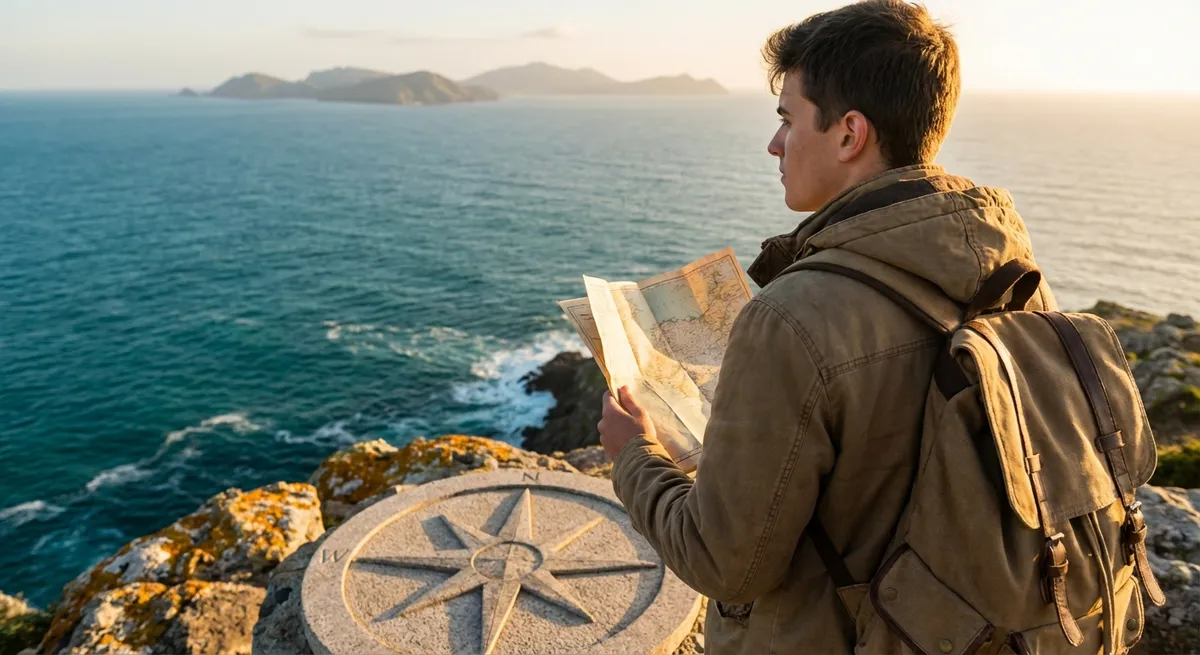
These aren’t just places on a map; they’re turning points. Below are five kinds of destinations that don’t just impress you—they move you. Let them nudge you out of autopilot and into a life lived fully awake.
1. Cities That Never Sleep, So You Finally Wake Up
There’s an electricity that only certain cities carry—the kind that hums through subway tunnels at 2 a.m., flashes off glass towers, and spills out of late-night food stalls onto crowded sidewalks. Think New York, Tokyo, Mexico City, or Seoul: dense, fast, relentless. In places like these, the city doesn’t slow down for you; you learn to move with it.
Instead of racing through “top ten” attractions, let the city script your day: ride the first tram you see, follow the smell of street food into a side alley, step into a bar where you don’t recognize a single song. You’ll start to feel how a city breathes—morning commuter rush, lunchtime street stalls, twilight rooftop bars, midnight noodles.
Practical move: Pick one neighborhood and stay there long enough to become a familiar stranger. Use public transport instead of taxis. Let yourself get a little lost (with offline maps downloaded in advance), and watch how fast a “huge, intimidating city” becomes a patchwork of tiny, human moments: a barista who remembers your order, a late-night bookshop that feels like it exists just for you.
2. High-Altitude Places That Quiet Your Noise
Mountains do something rare: they shrink your worries without making you feel small. Stand on a ridge in Patagonia, the Alps, the Himalayas, or the Rockies, and the world’s volume turns down. Your phone signal drops, your to-do list dissolves, and all that’s left is the sound of your boots, your breath, and the wind.
Altitude forces presence. You notice things you ignore in daily life—how much water your body needs, the rhythm of your steps, the exact color shift when the sun slides behind a peak. The oxygen may thin, but your focus thickens. What felt impossible back home starts to feel simple: one more step, one more switchback, one more sunrise.
Practical move: Respect the altitude. Research acclimatization days, bring layers, and understand local trail conditions before you go. Consider regions like Peru’s Sacred Valley, Switzerland’s Bernese Oberland, or Nepal’s Annapurna region, where trails, villages, and infrastructure support multi-day hikes. And always let local guides lead the way when conditions change—they read the mountains better than any app.
3. Water Worlds Where Time Stops Keeping Score
Some destinations ask questions only water can answer: How long can you float on your back and just watch the sky? What happens when your day is measured not in meetings but in tides? Islands, coastal towns, and lakeside retreats—from the Greek islands to Indonesia’s Raja Ampat to Croatia’s Adriatic coast—offer a quieter, deeper kind of exploration.
Instead of racing through a checklist of beaches, claim just one. Watch how its personality shifts from dawn to dusk: fishermen at sunrise, families at midday, music drifting over the water at night. Try something that makes you slightly uneasy—snorkeling over a reef, paddleboarding into open water, or taking a sailing lesson where you’re trusted with the tiller.
Practical move: Aim to visit during shoulder seasons when the weather is still generous but the crowds thin—often late spring or early autumn. Protect the places you fall in love with: choose reef-safe sunscreen, support marine conservation tours, and follow local rules about wildlife and coral. The more intact these water worlds remain, the more travelers after you will get to feel that same first, stunned silence underwater.
4. Places Where History Isn’t in a Museum—It’s Under Your Feet
Some destinations fold time. Walk the streets of cities like Rome, Jerusalem, Kyoto, or Cusco, and you’re not just “seeing history”—you’re walking through layers of it. Old stones, living rituals, and modern life stack on top of each other like chapters of a book that never quite ends.
In these places, your curiosity becomes your passport. A temple isn’t just a photo backdrop; it’s part of someone’s daily commute and someone else’s sacred memory. A worn staircase isn’t just “pretty for Instagram”; it’s been climbed by generations who never imagined you’d be there, in your time, in your shoes.
Practical move: Before you go, read at least one book or long-form article about the region’s history from a local or academic perspective. When you arrive, balance iconic sites with lesser-known ones: a small neighborhood shrine, a community-run museum, a walking tour led by locals. Ask questions, but listen more than you talk. This isn’t about collecting facts; it’s about understanding how past and present hold each other.
5. Wild Corners Where You’re the Visitor, Not the Main Character
There are still places where human beings are guests, not rulers: national parks, protected reserves, deep forests, deserts, and polar regions. In Yellowstone, the Serengeti, the Canadian Rockies, or the Arctic, the rules change. You move quietly. You keep distance. You follow guidelines, not out of obligation, but out of awe.
Wild destinations tune you to a bigger scale of time. Trees older than your grandparents, glaciers that have been receding for centuries, animals who have never read a single headline about your life—and don’t need to. Standing in front of that kind of continuity can make your own fears feel lighter, not because they don’t matter, but because they’re only part of the story.
Practical move: Travel with outfitters or guides who prioritize conservation and community, not just bucket-list photos. Follow park rules to the letter—stay on trails, keep your distance from wildlife, pack out everything you bring in. Consider adding one “give-back” action to your trip, whether it’s a beach cleanup, a conservation donation, or choosing lodging that’s independently verified for sustainability.
Conclusion
You don’t have to cross an ocean to find a destination that changes you—but you do have to say yes to the unknown. When you choose where to go next, don’t just ask, “What will I see there?” Ask, “Who might I become after I’ve been there?”
Whether you’re chasing neon city lights, mountain ridgelines, coral gardens, ancient streets, or wild horizons, let curiosity be your compass. The world is wide, your time is finite, and somewhere out there is a place that’s already waiting to rewrite what you think is possible.
Go find it—and let it find you back.
Sources
- UN World Tourism Organization (UNWTO) - Global tourism insights, sustainable travel resources, and destination data
- National Park Service (U.S.) - Official information on U.S. national parks, safety guidelines, and conservation practices
- UNESCO World Heritage Centre - Authoritative list and descriptions of cultural and natural World Heritage Sites worldwide
- Centers for Disease Control and Prevention – Travelers’ Health - Up-to-date health advice, vaccinations, and safety information for international travelers
- International Union for Conservation of Nature (IUCN) - Research and guidance on protected areas, biodiversity, and responsible nature travel