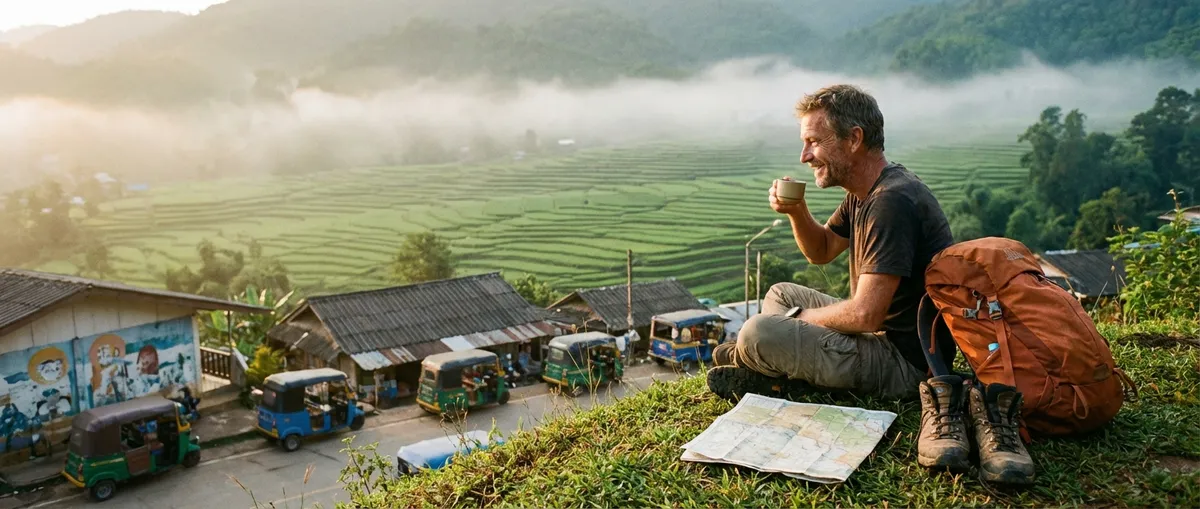
This is your invitation to craft a life rich in sunsets, street food, and strangers-turned-friends, without draining your bank account. Let’s dive into five powerful ways to turn limited funds into limitless adventure.
1. Follow the Off-Peak Rhythm, Not the Tourist Clock
Most travelers move in predictable waves—summer vacations, holiday seasons, long weekends. If you’re willing to travel when others stay home, the world quietly opens up.
Off-peak travel can slash your costs on flights, trains, and stays, but the real magic goes beyond your wallet. Imagine wandering through a normally packed old town where you can actually hear your footsteps echo on the cobblestones, or standing in front of a famous landmark without fighting a sea of selfie sticks. You’ll find locals who have more time (and patience) to chat, quieter cafes where owners remember your name after two visits, and markets where stallholders share stories as easily as they share prices.
To tap into this rhythm, look at shoulder seasons—those sweet spots just before or after peak times. Maybe it’s early spring in Europe, late fall in Japan, or the rainy-but-lush green months in Southeast Asia. Embrace a bit of moody weather in exchange for lower prices and deeper connections. When you move against the crowds, your budget stretches further—and your experiences feel more your own.
2. Turn Transit Into the Heart of Your Story
Most people think of getting from point A to B as a necessary inconvenience. Budget travelers know it can be the most alive part of the journey.
Long-distance buses where families share snacks and stories. Slow trains passing rice fields, rust-red rooftops, and backyard soccer games. Shared minibuses where music blasts through tiny speakers while chickens cluck beneath your seat. These are the places where the line between “tourist” and “traveler” starts to blur.
Instead of booking the fastest option every time, ask: what route will let me see the country instead of just flying over it? Overnight buses or trains can double as accommodation, shaving a night off your lodging budget. Local transport—jeepneys, tuk-tuks, songthaews, ferries—often costs a fraction of private taxis and pulls you straight into everyday life.
Treat transit like a moving classroom. Learn a few phrases in the local language and try them out. Share snacks. Ask other passengers where they would take a friend visiting for the first time. You’re not just crossing distance; you’re crossing into a different way of living.
3. Let Food Markets Be Your Budget-Friendly Feast
In any city, you can follow the neon signs to the fancy restaurants—or you can follow the smells and sounds to where the real life is happening.
Street food and local markets are the budget traveler’s secret superpower. For the price of a single restaurant meal, you might be able to try three or four different local dishes from different stalls. Think skewers sizzling over open coals, steam rising from noodle bowls, fresh fruit cut right in front of you, or bread pulled from a clay oven and slapped into your hands still warm.
Beyond saving money, markets give you a front-row seat to a place’s daily rhythm. Watch how people shop, what sells out first, which stalls have the longest lines. Ask the vendor what their favorite item is instead of just pointing at the most familiar thing. You’ll often end up with something that doesn’t exist on any tourist menu.
To keep things safe and stomach-friendly, follow the locals: choose busy stalls with constant turnover and food cooked fresh in front of you. Carry a reusable water bottle, try local non-alcoholic drinks, and treat each meal like a mini adventure. Your taste buds—and your budget—will both come alive.
4. Trade Hotel Walls for Hostels, Homes, and Human Stories
Where you sleep can either isolate you—or plug you directly into the heart of your destination.
Budget-friendly stays like hostels, guesthouses, and homestays are more than just cheaper options. They’re places where solo travelers find companions for tomorrow’s hike, where a host’s kitchen table becomes your evening hangout, and where maps are covered in handwritten recommendations that never make it onto glossy brochures.
Hostels aren’t just for backpacking twenty-somethings anymore. Many offer quiet private rooms alongside shared dorms, plus coworking spaces, free walking tours, and communal dinners. Homestays and small guesthouses often cost less than big hotels, while giving you something money can’t easily buy: an inside look at how people actually live. You might learn how to cook a local dish, join a family celebration, or pick up new words over breakfast.
Say yes to spaces that encourage conversation: common rooms, rooftop terraces, shared kitchens. These become launch pads for shared adventures—a last-minute sunrise trek, a rented scooter road trip, a night at a local festival you’d never have found alone. The budget choice often turns out to be the richer one.
5. Build Your Trip Around Experiences, Not Expensive Checklists
The fastest way to blow your budget is to treat travel like a shopping spree of must-see spots. The fastest way to make it unforgettable is to ask a different question: How do I want to feel on this trip?
Maybe you want to feel wild and powerful—so you plan around hikes, cliffside sunsets, and cold swims in mountain lakes, most of which are free or low-cost. Maybe you want to feel creatively charged—so you seek out street art, open mics, local theater, and free museum days instead of pricey attractions. Perhaps you want deep calm—long walks through neighborhoods, quiet corners of public parks, sunrise meditations on beaches nobody bothered to Instagram yet.
Pick a few “anchor” experiences that truly matter to you and let everything else be flexible. If your dream is a single scuba dive, cooking class, or day trip, build your budget around it. Cut costs elsewhere by choosing hostel dorms instead of private rooms, taking local buses instead of taxis, or cooking some of your own meals.
When your focus shifts from a checklist of sights to a collection of feelings and stories, you stop chasing what everyone else says is essential—and start crafting a trip that feels fiercely your own, without overspending.
Conclusion
Budget travel isn’t the consolation prize for people who “can’t afford real travel.” It is real travel—often in its rawest, most transformative form.
When you chase off-peak seasons instead of postcard-perfect crowds, treat transit as adventure, eat where the city actually lives, sleep where stories collide, and build your days around experiences instead of expenses, something powerful happens. You stop waiting for the perfect moment and realize that the road is already under your feet.
The world isn’t asking for your perfection, your fancy luggage, or your luxury budget. It’s asking for your curiosity, your courage, and your willingness to say: Let’s see what happens if I go.
Your next journey doesn’t need more money. It needs your decision.
Sources
- U.S. Department of State – Travel Advisories - Official safety and advisory information to help you plan smart, budget-conscious routes
- Lonely Planet – Budget Travel Tips - Practical strategies and insights for saving money while exploring the world
- Nomadic Matt – The Ultimate Guide to Traveling When You Have No Money - In-depth guidance from a well-known budget traveler on stretching funds and finding affordable options
- BBC Travel – Why Shoulder Season is the Best Time to Travel - Explores the benefits of traveling outside peak times, including cost and crowd advantages
- World Health Organization – Travel Advice - Health considerations and tips that help budget travelers stay safe and avoid unexpected expenses