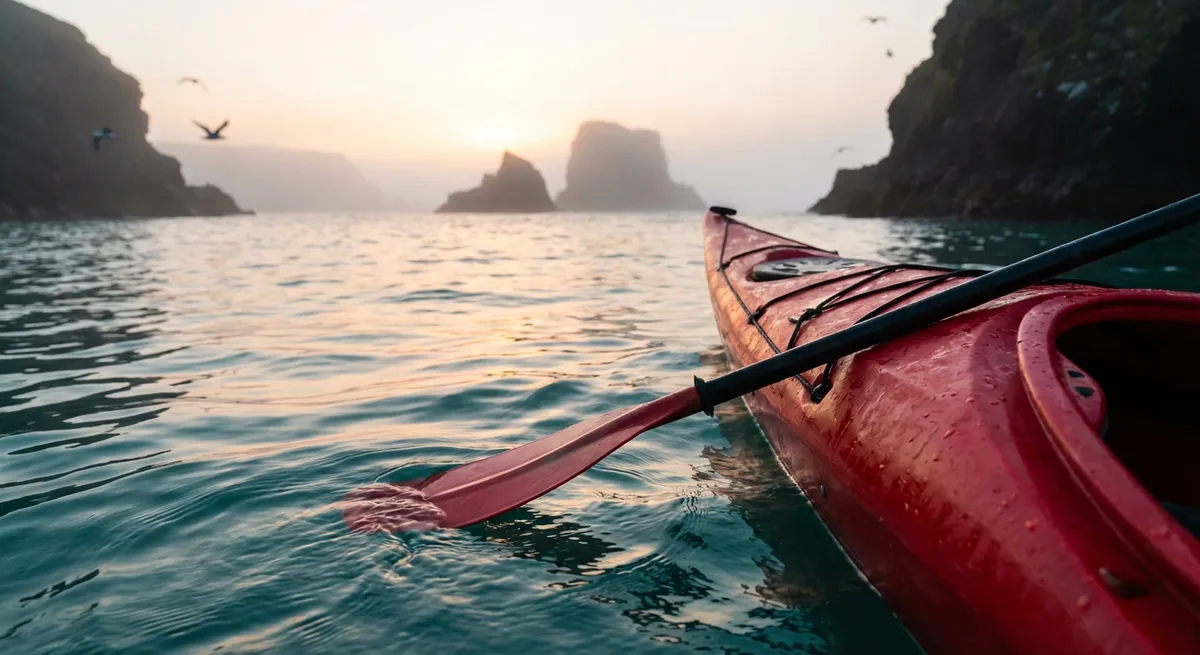
Below are five adventure sparks—experiences that pull you out of autopilot and into a wilder, more awake version of yourself. Each one is both a feeling and a practical starting point, something you can actually plan, book, and live.
Chase First Light: Sunrise Missions That Reset Your Sense of Time
There’s a specific kind of quiet that only exists just before sunrise—the hour when city streets whisper instead of roar, when mountain ridges glow in a secret shade of blue, and when beaches feel like they belong only to you.
Planning a sunrise mission is a simple, powerful way to turn any destination into an adventure:
- Choose your vantage point. Rooftop, hilltop, lighthouse, dune, cliff, or riverside—any place with a clear horizon works. Check local viewpoints on Google Maps or ask hostel staff or café baristas where they go to watch the day begin.
- Rehearse the route in daylight. If you’ll be hiking, biking, or navigating unfamiliar streets in the dark, do a practice run the afternoon before. Note trail markers, streetlights, and safe spots to wait if needed.
- Pack like it matters. Headlamp or phone light, extra layer, small snack, water, and a power bank. In colder climates, a thermos of coffee or tea turns the moment into a ritual.
- Arrive early enough to catch the blue hour. The magic starts 30–45 minutes before sunrise. That twilight window is perfect for long-exposure photos, reflection, or journaling while the world is still half-asleep.
- Turn it into a reset button. Use each sunrise to set one intention: learn a new local word, try a new food, talk to one stranger, attempt a new route. Let the first light nudge you into micro-adventures all day long.
Sunrise missions are low-cost, low-risk, and endlessly repeatable. You don’t need a famous view—only the courage to get up when everyone else is still dreaming.
Follow Local Rhythms: Everyday Adventures in Ordinary Places
Some of the most unforgettable travel moments don’t happen at bucket-list sights—they unfold in grocery aisles, bus stops, public parks, and small neighborhood cafés. When you match your pace to the local rhythm, even a “regular” day becomes an adventure.
Here’s how to turn the ordinary into something electric:
- Start at the market, not the mall. Food markets, night bazaars, and weekend fairs are living classrooms. Watch how people greet each other, what sells out first, and what kids tug their parents toward. Try one thing you can’t name. Ask the vendor how to eat it.
- Use public transit as a moving storybook. Swap one taxi ride for a bus, tram, metro, or shared van. Observe how people queue (or don’t), what they listen to, how they carry their belongings. Transit maps become treasure maps when you pick one unfamiliar stop and simply get off there.
- Sync with local meal times. Eat when locals eat. In Spain or Argentina, that might mean late dinners. In parts of Southeast Asia, early street-food breakfasts. The dishes available at “local time” often never appear on tourist menus.
- Say “yes” to small invitations. A neighbor’s suggestion, a shopkeeper’s shortcut, a barista’s favorite bar—these are informal doorways into the real texture of a place. If it feels safe and public, follow the thread.
- Keep a “micro-adventure” journal. Each day, note three tiny cultural moments you noticed: a gesture, a phrase, a habit. Over time, you build a personal guidebook deeper than any top-10 list.
Instead of hunting for the “most Instagrammable” spot, you’re training your attention to catch the life that happens in between the headline sights. That’s where a destination stops being backdrop and starts being a living character in your story.
Trade Comfort for Perspective: One Night on the Edge of Your Routine
You don’t need weeks in the wilderness to feel like an explorer. Sometimes a single intentional night—outdoors, on a sleeper train, in a high-altitude refuge, or even in a radically different neighborhood—can shake your assumptions in the best possible way.
Think of it as a controlled experiment in discomfort:
- Sleep under a sky that feels bigger than you. Book a mountain hut, desert camp, lakeside cabin, or simple campsite. Check park regulations and weather forecasts carefully. Pack layers, a headlamp, and basics for warmth and safety.
- Try a moving bed. Night trains and ferries turn transit into an adventure. You go to sleep one place and wake up in another with a built-in sense of journey. Bring earplugs, an eye mask, and a chain or cable lock for peace of mind.
- Choose a stay that breaks your pattern. If you always book the same kind of hotel, deliberately flip the script: eco-lodge instead of high-rise, homestay instead of resort, capsule pod instead of traditional room.
- Let the night be analog. For a few hours, ditch screens. Listen to ambient noise: wind in trees, waves, distant trains, unfamiliar city hums. Journal, sketch, or just sit with the strange, lovely fact that you’re not where you usually are.
- Wake up curious, not rushed. The morning after a “different” night is the perfect time for a slow start. Notice how your senses react: Does coffee taste different? Does your body feel more alert? That gentle disorientation is your brain stretching.
One night is small enough to fit into almost any itinerary, but powerful enough to reset how you feel about time, place, and your own resilience.
Move Through the Landscape, Not Just Over It
Speed hides details. Planes leapfrog nuance. Cars blur the in-between. The moment you slow down your movement—by bike, on foot, by kayak, on horseback, even via long-distance train—you stop being a spectator and start being part of the landscape.
Design a stretch of your trip around motion, not just arrival:
- Pick a “string” and follow it. A coastline, a river, a pilgrimage route, an old trading trail, or a chain of small towns—let one continuous line guide several days of travel. The story becomes not just where you went, but how one place led to another.
- Choose your rhythm of movement. Multi-day hikes, bikepacking, hut-to-hut treks, or kayak routes require more planning, but even a single day of slow travel changes your experience. Tools like AllTrails, Komoot, and local hiking clubs can help you find suitable routes and difficulty levels.
- Plan for human moments, not just distances. Build in time to stop at roadside cafés, village squares, or riverbanks. Strike up conversations when you pause, not just when you “arrive.”
- Travel light to move freely. A smaller pack or pannier forces you to prioritize. Focus on layers, quick-dry clothes, and a minimalist kit of essentials. The less you carry, the more routes open to you.
- Respect the land that carries you. Stay on marked trails where required, pack out your trash, follow local guidelines on wildlife and campfires, and choose local guides and operators who prioritize sustainability.
Moving through a place instead of simply dropping in and out changes your sense of distance. You stop measuring your trip in miles or kilometers and start measuring it in conversations, ascents, sunsets, and the satisfying ache in your legs.
Let Serendipity Co-Author Your Itinerary
Adventure isn’t the opposite of planning; it’s what happens in the spaces you leave unplanned. The best trips are co-written—half by you, half by chance, weather, wrong turns, and unexpected encounters.
You can’t script those, but you can make room for them:
- Plan anchors, not walls. Book your key flights, first and last hotels, and must-see tickets. Leave entire days or afternoons with nothing but a neighborhood or rough direction in mind.
- Follow one “clue” per day. A street musician, an intriguing alley, a smell of food, a mural, a snippet of overheard conversation—let one unexpected detail each day decide your next hour. Turn curiosity into your GPS.
- Use questions as your adventure engine. Ask locals: “If you had one free afternoon here, where would you go?” or “What do you do on a day off?” Their answers will often lead you far from the familiar tourist grid.
- Accept that missed plans create better stories. A closed museum might send you into a nearby park where you join a pickup game. A canceled boat trip could lead to a last-minute cooking class. Stay flexible, not fixated.
- Build a post-trip ritual. When you return, sketch a “story map” of your route. Mark the planned stops in one color and the serendipitous detours in another. You’ll see how much of your favorite magic came from the parts you couldn’t predict.
Instead of fighting uncertainty, you’re inviting it into the journey. That’s where the real stories live: not only in what you came to see, but in what you never knew to look for.
Conclusion
Adventure doesn’t wait on perfect timing, a dream budget, or a plane ticket to the far side of the planet. It begins the moment you decide to travel with your senses wide open and your plans just loose enough to let life surprise you.
Say yes to first light. Match your footsteps to local rhythms. Give yourself one night outside your comfort pattern. Let landscapes shape you as you move through them. Leave space in your days for the unplanned and unrepeatable.
The world is already humming with stories. All that’s missing is your decision to step into one—and then another, and another—until “adventurous” stops being something you admire in others and becomes the way you move through your own life.
Sources
- U.S. National Park Service – Hiking Tips - Practical safety guidance for planning sunrise hikes, day walks, and overnight trips
- Leave No Trace Center for Outdoor Ethics - Core principles for low-impact adventures in natural environments
- UN World Tourism Organization (UNWTO) – Tourism and Sustainability - Overview of responsible travel practices and why they matter
- CDC – Travel Health Resources - Official health and safety information for international travelers
- REI Co-op Expert Advice – Backpacking & Camping Basics - Detailed beginner-friendly guidance on gear, planning, and staying comfortable outdoors