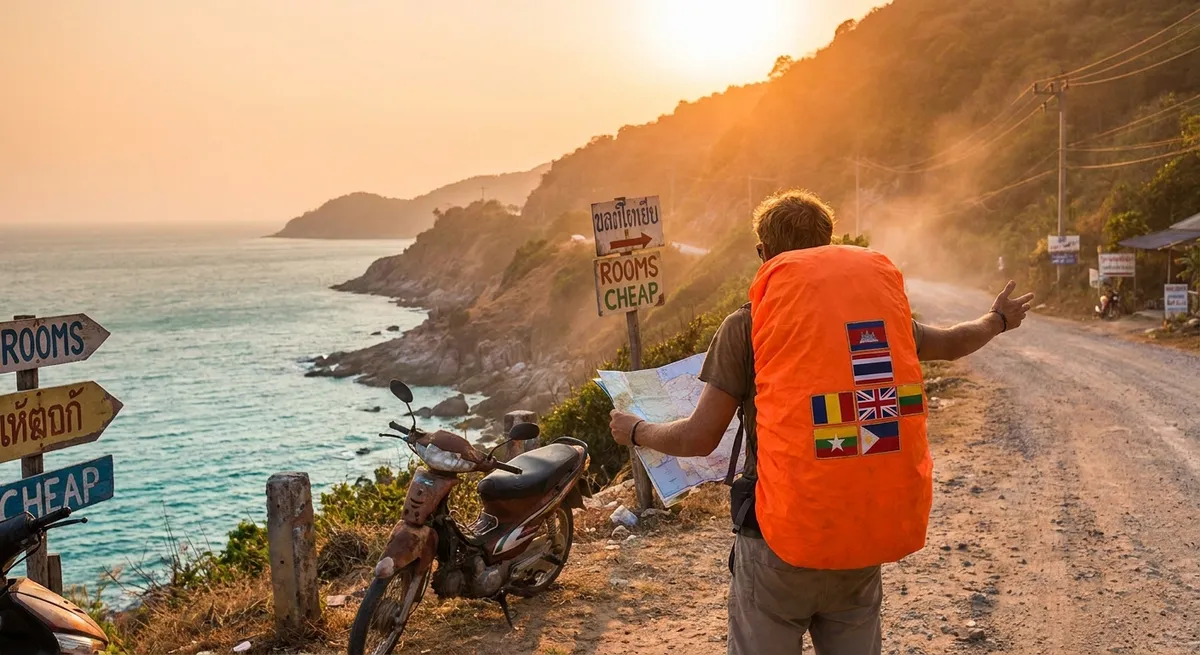
This is your invitation to roam further, spend smarter, and load your days with stories instead of receipts. Let’s rewire how you think about cost, comfort, and what makes a journey genuinely rich.
Reimagine Luxury: Pay Less for What Actually Feels Rich
The secret of unforgettable budget travel is simple: stop chasing price tags and start chasing sensations.
Imagine this: instead of a five-star rooftop bar, you’re watching the sky turn molten gold from a hilltop overlooking a city, a bakery-fresh pastry in your hand and a two-dollar coffee still warm in your pack. The view is just as sweeping, the memory arguably richer—and your wallet barely notices.
Luxury can be:
- The time to wander side streets with no agenda
- The space to linger over a simple meal cooked slowly by a local family
- The quiet of a sunrise when it feels like the world belongs to you alone
On a budget, you buy “feel” instead of “flash.” Choose moments that light up your senses rather than services that impress other people. A night in a cozy guesthouse with a balcony and a creaky floor can be more memorable than a polished lobby you hurry through.
When you plan, ask: What would make this feel deeply alive, even if it’s inexpensive? Then funnel your money into those specific things—maybe a single splurge meal, a local festival ticket, or a train ride through mountains. Strip away the rest.
Let the Cheap Seats Rewrite Your Map
The least expensive routes are often the ones that carry the most surprise.
Budget buses, slow trains, and shared minivans are where real landscapes unfold and real lives brush up against yours. When you swap the quickest option for the cheapest:
- You gain time to actually see where you are, not just leapfrog from attraction to attraction
- You share space with commuters, grandparents, students—people who call this journey “everyday life”
- You discover unexpected stops: villages you’d never heard of, roadside food stalls, markets beyond any guidebook
Instead of thinking, “How fast can I get there?” start asking, “What route shows me the most for the least?” Night buses and trains often double as accommodation, letting you wake up in a new city having paid for both your ride and your “hotel” in one go.
Practical moves:
- Flexible routes: Use multi-stop searches on flight sites, then overland your way between cheaper hubs.
- Public transport passes: Cities from Tokyo to Berlin offer unlimited-day passes that turn an entire metro system into a playground.
- Walking first: Before you open a ride-hailing app, walk 20 minutes. You’ll save money and discover cafés, street art, and small parks that never make the “top ten” lists.
The cheap seats don’t just move you—they immerse you.
Turn Every Meal into a Micro-Adventure
Your budget doesn’t have to shrink your appetite for discovery; it can sharpen it.
The trick: think of food as a daily quest instead of a checklist of “must-try restaurants.” Let your stomach guide you into neighborhoods, markets, and family-run places instead of polished hotspots.
Try this approach:
- Start at the market. Morning markets are a crash course in what a culture really eats. Look for small stalls crowded with locals. Point, smile, and try whatever looks and smells irresistible.
- Follow the lines, not the signs. A busy food counter with a hand-written menu usually beats the empty spot with perfect English and glossy photos.
- Adopt one “local regular” spot. Find an affordable place you love and return daily. You’ll often get extra portions, local recommendations, and sometimes a genuine friendship.
To keep costs low and flavors high:
- Eat your main meal at lunch, when menus and prices are often cheaper.
- Stock up on grocery basics (fruit, yogurt, bread, cheese, nuts) for breakfasts and snacks.
- Bring a collapsible container so leftovers become tomorrow’s budget lunch.
When you treat every meal as an exploration, budget constraints become creative boundaries, not barriers.
Trade Possessions for Access: Sleep Smart, Live Big
Where you sleep is one of the biggest levers in budget travel. Instead of treating accommodation as a mini-resort, treat it as a launchpad.
The magic happens when you stop paying for extras you barely use—hotel gyms, ornate lobbies, room service—and start looking for places that offer access instead:
- A hostel with free walking tours and language exchanges
- A guesthouse where the owner cooks communal dinners
- A farm stay or homestay that lets you join harvests, festivals, or family outings
- Co-living or work-trade stays where a few hours of help can cover your bed
You’re not just buying a bed; you’re buying connection and context.
Budget-savvy tactics:
- Stay slightly outside the hotspot. A 15-minute walk or a short metro ride from the center can slash prices while keeping you in the action.
- Mix styles. Balance a few nights in ultra-budget dorms with occasional private rooms for rest and reset.
- Use loyalty and referral credits. Many booking platforms offer discounts for repeated use or referrals; stack those for big-city stays where accommodation is priciest.
The less you demand from your room, the more your destination can give you.
Design a “High-Impact, Low-Cost” Itinerary
The boldest budget travelers don’t try to do everything; they choose the right things.
Instead of filling your days with paid attractions, build your trip around high-impact, low-cost experiences:
- Sunrise hikes instead of pricey observation decks
- Street festivals instead of exclusive shows
- Free museum days and city-sponsored events instead of every ticketed exhibition
- Self-guided walking routes through historic districts, waterfronts, or street art corridors
Think of your itinerary as a soundboard. Push a few sliders all the way up—those bucket-list experiences you know will stay with you for years—and slide others down to zero.
Practical planning:
- Research free and discounted days. Many museums and cultural sites have weekly or monthly free entry. Build your timing around them.
- Anchor days around one “big” experience. Let everything else be flexible, cheap, and easy.
- Choose experiences that stack. A free walking tour that ends near a market, which turns into an affordable lunch and street performance—one core activity, several rich moments.
When your days are built on intention instead of impulse spending, every dollar you do spend hits harder.
Conclusion
Budget travel isn’t about deprivation; it’s about precision. It’s choosing a sunrise over a souvenir, a conversation over a concierge, a slow bus through the mountains over a flight above the clouds.
When you reframe “cheap” as “clever,” the world tilts open. You discover that your courage, curiosity, and creativity are worth far more than your credit limit. The roads are already out there, shimmering with possibility.
You don’t have to wait until you “can afford it.” You can start where you are, with what you have, and let smart choices carry you into bigger horizons. Pack light. Plan loose. Spend on what truly moves you.
Then go see how far “enough” can really take you.
Sources
- [U.S. Department of State – Travel Advisory & Safety Information](https://travel.state.gov/content/travel/en/traveladvisories/traveladvisories.html) – Official guidance on safety, local conditions, and preparation for international travel
- [European Commission – Your Rights as a Passenger](https://transport.ec.europa.eu/transport-themes/passenger-rights_en) – Clear overview of air, rail, bus, and ferry passenger rights in Europe, useful for budget travelers navigating delays and cancellations
- [Rick Steves Europe – Money-Saving Tips for Travelers](https://www.ricksteves.com/travel-tips/money) – Practical strategies for cutting costs on the road, from transport and lodging to food
- [Lonely Planet – Budget Travel Tips](https://www.lonelyplanet.com/articles/budget-travel-tips) – In-depth advice on inexpensive ways to experience destinations without sacrificing adventure
- [National Park Service (NPS) – Fee-Free Days & Passes](https://www.nps.gov/planyourvisit/fee-free-parks.htm) – Information on free-entry days and passes that can significantly reduce costs for U.S. nature and outdoor trips