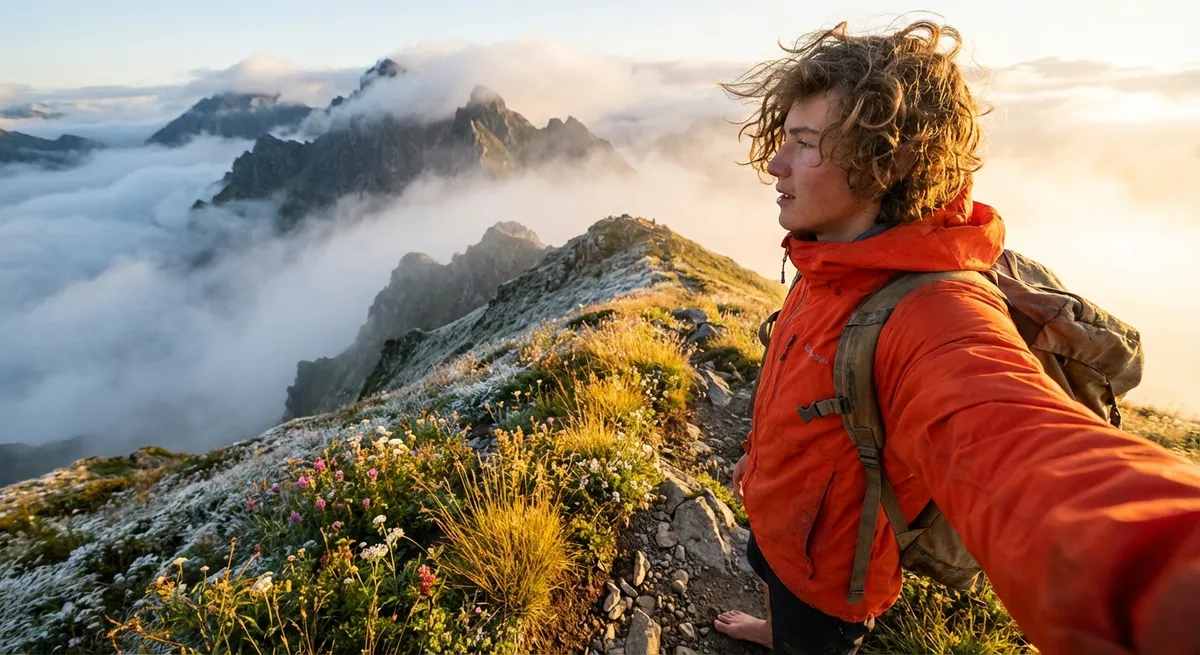
This guide isn’t about ticking boxes on a bucket list. It’s about five powerful “pulls” that certain destinations have—and how to find them anywhere on the map. Think of it as a compass for choosing places that leave a mark long after your return flight lands.
1. The Place Where the Elements Take Over
There’s a certain kind of destination where nature doesn’t just surround you—it dominates the whole experience. Wind that tugs at your jacket, waves that roar loud enough to drown out your thoughts, volcanoes that glow like live embers under starlight. These aren’t backdrops; they’re characters.
Coastal trails in places like Iceland’s Snæfellsnes Peninsula, Chile’s Atacama Desert, or New Zealand’s South Island remind you how small you are—without making you feel insignificant. You walk across black sand beaches where the ocean hammers the shore and realize your daily stress has no scale out here. In mountain regions such as the Dolomites, the Alps, or the Rockies, the air sharpens, and so does your focus: each step is a choice, not a habit.
To tap into this energy wherever you go, seek out destinations that promise extremes: wild coasts, high passes, geothermal fields, deserts, or rainforests. When planning, scan maps for national parks, nature reserves, and UNESCO World Heritage Sites, then anchor your trip around those. Pack layers for unpredictable weather, proper footwear, and an open schedule—because in these places, you travel at nature’s pace, not your itinerary’s.
2. The City That Feels Like a Live-Wire
Some cities don’t just buzz; they crackle. Street food smoke drifts through neon-lit alleys, trams scream and rattle through historic streets, rooftop bars hum above it all. These are destinations that demand you walk a little faster, stay out a little later, and pay closer attention to the world around you.
In cities like Tokyo, Mexico City, Lagos, or Bangkok, the energy is so dense you can almost lean against it. Morning markets feel like orchestras warming up: vendors calling, knives chopping, scooters weaving between shoppers. By night, it’s another universe—floating lanterns on rivers, street musicians under bridges, food stalls that somehow still smell incredible at 2 a.m.
Look for cities with strong public transit, famous markets, and neighborhoods known for art or nightlife—then build your stay around those. Walk until your feet protest, then ride trams, subways, and ferries just to see where you end up. Say yes to at least one experience that scares you a little: karaoke in Tokyo, salsa in Medellín, motorbike taxis in Hanoi, or night markets in Taipei. The point isn’t comfort—it’s electricity.
3. The Quiet Corner That Feels Like an Exhale
Not every life-shifting destination is loud. Some change you quietly, like a deep breath you didn’t know you needed. These are villages tucked into valleys, islands with one main road, small towns whose idea of “rush hour” is two bicycles and a wandering dog.
Places like the Scottish Highlands, the Faroe Islands, coastal villages in Portugal, rural Japan, or lake towns in Slovenia invite you to move slower. Mornings might mean mist hanging over water, the smell of wood smoke, and the soft clink of mugs in a café where everyone seems to know each other. The questions you ask here are different: “How long is the walk to the viewpoint?” becomes “How long can I sit here and do nothing at all?”
To find this kind of stillness, look for destinations that are one step beyond the obvious: stay in a countryside inn instead of the capital, pick a lesser-known island instead of the famous one next door, choose shoulder season over peak summer. Book accommodation with a view you actually want to sit and stare at. Pack a journal, a book, or a sketchpad as intentionally as you pack your camera—these are places made for reflection as much as exploration.
4. The Culture That Invites You to Participate
Some destinations don’t just show you culture; they hand you an apron, a drum, a bike helmet, or a festival costume and say, “Come on, you’re in this now.” These places are full of rituals you can touch: cooking classes in local homes, neighborhood festivals, volunteer-led walking tours, and community markets where you’re not just a shopper—you’re a guest.
Think of cities like Oaxaca, Kyoto, Marrakesh, or Naples, where daily life itself feels like a performance—and you’re welcome in the wings. You can learn to make handmade pasta from someone’s grandmother, join tea ceremonies, try block printing, or cycle through neighborhoods most tourists never see. The goal is not to collect souvenirs; it’s to collect skills and stories.
When researching, look specifically for “community-based tourism,” local workshops, or cultural centers. Book at least one experience run by locals, not global chains. Learn a few phrases in the local language—even a clumsy “thank you” or “this is delicious” can open doors. Be willing to be a beginner, to mess up, to laugh at yourself. The most meaningful memories often come from the moments when you stop watching and start doing.
5. The Route That Turns the Journey Into the Destination
Some of the most powerful places you’ll ever experience aren’t points on a map—they’re the lines between them. Long-distance train rides, multi-day road trips, river journeys, and pilgrim paths have a particular magic: every mile you cover becomes part of the story.
Think of routes like the Camino de Santiago in Spain, the Pacific Coast drive in the U.S., Europe’s night trains, or the river boats through Southeast Asia. On these journeys, you learn the art of the slow reveal: landscapes shifting from city to farmland to forest, languages blending at border towns, sunsets that feel earned because you’ve spent all day chasing them. Strangers you meet once at a rest stop or station become recurring characters as your paths cross again and again.
To design this kind of adventure, choose a line first, then the stops. Look up scenic train routes, historic trails, or coastlines with multiple small towns strung along them. Pack light enough that repacking isn’t a chore, and give yourself at least one “flex day” with no reservations, just to follow wherever the road or rail suggests. Let the journey set the pace: if a place on the way steals your heart, stay. The destination will wait.
Conclusion
The world doesn’t just offer “places to go.” It offers ways to feel: wild, electric, quiet, connected, and in motion. The most unforgettable destinations aren’t just pretty—they pull something new out of you.
When you plan your next escape, don’t just ask, “Where should I go?” Ask, “What do I want this place to wake up in me?” Then follow that feeling—into the storm-beaten coastlines, the humming cities, the still valleys, the open kitchens, and the winding routes that make the map come alive.
That’s where the real trip begins.
Sources
- UNESCO World Heritage List - Official database of cultural and natural sites that can help you identify destinations with unique landscapes and heritage
- National Park Service (US) - Information on protected natural areas, hiking routes, and planning tips for nature-based travel
- Japan National Tourism Organization - Detailed guides to cities, rural regions, and cultural experiences across Japan
- European Travel Commission – Visit Europe - Inspiration and practical information on European cities, scenic routes, and lesser-known regions
- Camino de Santiago – Official Pilgrim Office - Background and planning resources for one of the world’s most iconic long-distance walking routes