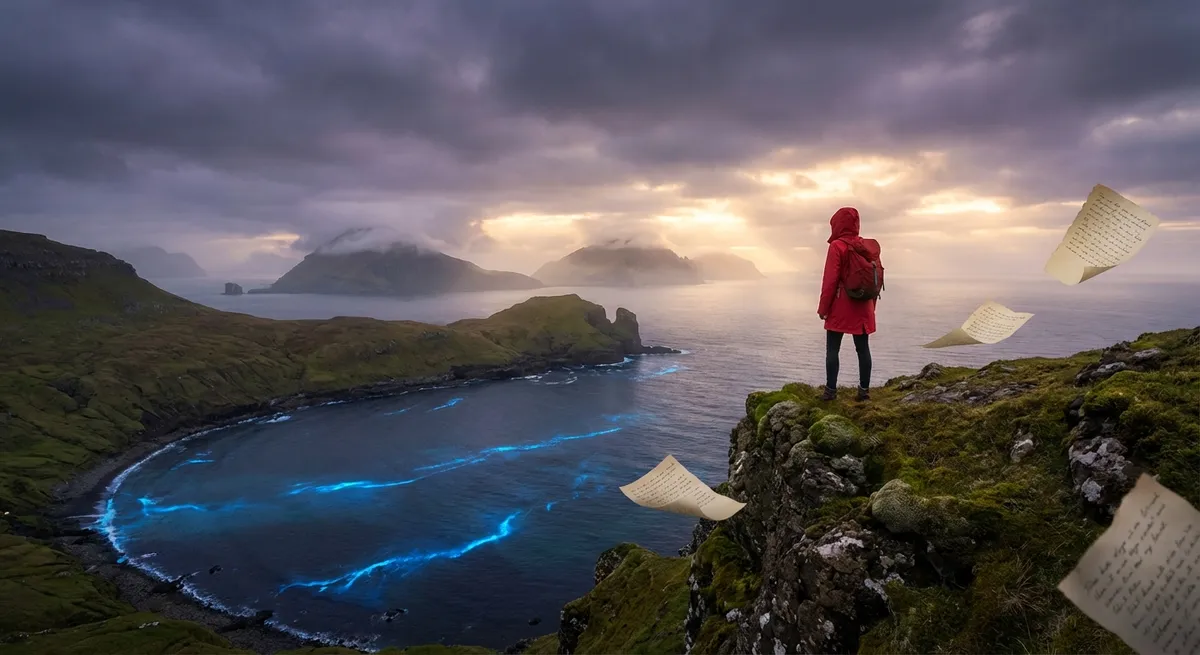
If you’re ready for journeys that linger long after your return flight, these five destination experiences will light a spark under your next leap.
1. Chasing the First Light: Highlands, Plateaus, and Sky-High Sunrises
There’s a specific kind of magic that only exists before most of the world wakes up: mountain air still cold on your skin, the sky dissolving from ink-black to violet to fire, and that quiet realization that you walked yourself to the edge of a new day.
Picture standing at the edge of Peru’s Colca Canyon, the world’s second-deepest canyon, watching condors ride invisible currents as the sun breaks over the ridgeline. Or hiking in the Drakensberg Mountains of South Africa, where basalt cliffs drop into rolling valleys and waterfalls catch the very first rays of morning. High-altitude plateaus like Ladakh in India or the Atacama in Chile feel almost lunar at sunrise—rust-red rock and salt flats glowing like distant planets.
For these destinations, planning is your superpower. Start acclimatizing to altitude a day or two before big hikes, hydrate more than feels natural, and pack layers you can peel off as the sun climbs. Bring a headlamp and start pre-dawn; the trail looks totally different in the darkness, and reaching a viewpoint just as the sky ignites is a reward that no late start can match.
Sunrise travel is about more than photos. It’s about learning that you can do hard things in the dark—literally—and be there in time to watch the world light up around you.
2. Where the Ocean Glows: Bioluminescent Bays and Night Seas
Some waters don’t just reflect starlight—they create their own.
Bioluminescent destinations like Mosquito Bay in Puerto Rico, the glowing lagoon in Vieques, or the sea around Vaadhoo Island in the Maldives feel like science fiction made real. Every paddle stroke or footstep turns the water neon blue as microscopic plankton release light in self-defense. In places like Luminous Lagoon in Jamaica or certain stretches of the Mosquito Coast, motion becomes art; kayaks carve streaks of electric color, and fish become shooting stars under the surface.
To experience this fully, time your visit with a new moon when the sky is darkest. Avoid flash photography and bright headlamps, which kill the magic for everyone and can stress marine life. Choose tour operators who follow sustainability guidelines—small groups, no swimming where it harms the ecosystem, and no chemical sunscreens in the water.
Bioluminescent destinations remind you that the world still has secrets—not hidden in distant galaxies, but rippling quietly under a night sky, waiting for you to step in.
3. Cities That Never Sit Still: Urban Destinations With a Pulse You Can Feel
Some destinations don’t whisper; they roar.
Think of cities like Mexico City, Seoul, or Istanbul—where history and modern life collide on every corner, and the air hums with street food smoke, subway brakes, live music, and a thousand conversations. In these urban jungles, every neighborhood is its own micro-destination: markets that feel like festivals, side-streets turned into galleries, tiny cafes that become your second home by the end of the week.
The trick is not to try to “conquer” the city, but to let it teach you its rhythm. Pick one or two districts a day and go deep instead of rushing across the map. Ride public transit at least once; it’s the fastest way to understand how a city moves. Eat where the lines are longest and the menus shortest. Follow your curiosity down alleys that smell like grilled corn or fresh bread.
A city destination that truly grips you doesn’t just give you sights—it gives you energy, showing you how thousands or millions of lives beat in sync, and inviting you to fall into step for a while.
4. Destinations That Move at the Speed of Footsteps: Long Trails and Pilgrim Paths
There’s a different kind of destination carved not by roads, but by feet.
Trails like Spain’s Camino de Santiago, Japan’s Kumano Kodo, or New Zealand’s Great Walks aren’t just routes—they’re living threads connecting villages, landscapes, and stories. Day after day, you move under your own power: across vineyards and ancient stone bridges in northern Spain, through cedar forests and mossy shrines in Wakayama, or along coastal cliffs with the sea roaring below on the South Island.
These journeys demand intention more than athleticism. You don’t need to be a seasoned thru-hiker to walk them, but you do need to respect the distance. Start training with regular walks at home, break in your boots long before you go, and learn how to pack light enough that your backpack feels like a companion, not a punishment. Booking a few stays in family-run guesthouses or mountain huts keeps you rooted in the local culture instead of sealed away in resorts.
Trail destinations teach you this: arrival isn’t only about reaching the endpoint; it’s about who you become between one sunrise and the next, one footstep and the next village.
5. Edges of the Wild: Remote Destinations That Recalibrate Your Sense of Scale
Some destinations are defined not by what’s there, but by what isn’t.
Standing on the rim of Namibia’s Sossusvlei dunes at dusk, you realize how small one person is against an ocean of sand. Drifting past icebergs in Greenland or Antarctica, the silence feels almost physical. In Patagonia’s Torres del Paine, granite towers pierce the clouds while guanacos graze below, seemingly unbothered by human awe. Remote islands in the Pacific or Indian Ocean—places like the Azores or Raja Ampat—give you coral reefs so vivid and unmarked that they reset what “blue” even means.
These destinations demand respect and preparation. Check entry permits, park regulations, and seasonal weather windows months in advance. Pack with self-sufficiency in mind: backup power, layered clothing, water purification, and a small but solid first-aid kit. Partner with local guides who know the land, the wildlife, and the risks; your adventure is their everyday backyard.
Wild, remote destinations strip away distraction. With no constant signal and little noise beyond wind, water, or wildlife, you remember that you’re part of a much larger story—and that you’re lucky just to be here at all.
Conclusion
The destinations that stay with you longest don’t just look good in photos—they shift the way you measure a “good trip.” They ask you to wake up earlier than is comfortable, paddle into black water, walk further than you think you can, get lost in a new city, or stand somewhere that makes your daily worries feel beautifully small.
You don’t have to hit every continent or chase every trend. Start with the kind of experience that speaks loudest to you right now: a sunrise you earned, a night sea that glows, a city that never sleeps, a path worn smooth by centuries of footsteps, or a wild horizon with more sky than you knew existed.
The map is wide open. The next destination that rewrites your story is out there—waiting for you to say yes and step toward it.
Sources
- UNESCO World Heritage Centre – Camino de Santiago - Background on the cultural and historical significance of the Camino de Santiago routes
- Japan National Tourism Organization – Kumano Kodo Pilgrimage Routes - Official overview of Japan’s sacred pilgrimage network and how to experience it
- National Park Service – Bioluminescence Basics - Explanation of what causes bioluminescent waters and where they appear
- UN Environment Programme – Responsible Marine Tourism - Guidance on sustainable practices for visiting sensitive marine destinations
- Centers for Disease Control and Prevention – High-Altitude Travel & Altitude Illness - Practical health advice for travelers heading to high-altitude destinations