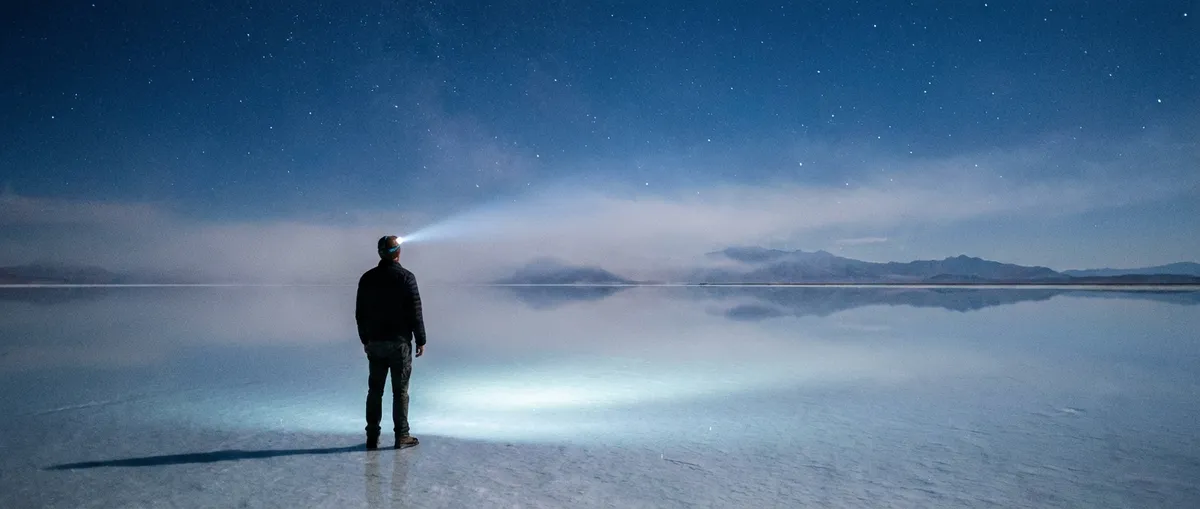
This isn’t about ticking countries off a list. It’s about chasing the kinds of places that stay with you long after you’ve unpacked, where the horizon feels like an invitation instead of a limit.
Oceans That Feel Like Outer Space: Bioluminescent Shores
On a handful of coastlines around the world, the ocean glows like a galaxy spilled at your feet. Step into the shallows and each movement sparks electric-blue light, as if the sea itself is breathing in color. Places like Mosquito Bay in Vieques, Puerto Rico, or the Maldives’ glowing shores don’t just look unreal—they feel like you’ve slipped into another dimension.
The glow comes from tiny organisms called dinoflagellates that produce light when disturbed. That means every paddle stroke in a kayak, every splash of your palm against the water, leaves a brief, comet-like trail. Visit on a moonless night, far from city glare, and your eyes will adjust until the glow looks impossibly bright.
For a better experience, choose small-group night tours that use non-motorized boats; they’re quieter, more sustainable, and let you actually hear the gentle slap of water and the soft gasps of everyone seeing it for the first time. Leave the flash photography behind—your camera won’t catch it the way your memory will, and the darkness is part of the magic.
Cities That Wake Up After Midnight
Some cities hit their stride after dark, when the daytime heat fades and neon reflections ripple across riverfronts and harbor edges. In places like Tokyo, Bangkok, or Mexico City, the late hours aren’t an afterthought—they’re a second daily life, running in parallel.
You might find yourself weaving through a night market with skewers sizzling over open fire, steam rising from noodle stalls and the smoky smell of grilled seafood pulling you down narrow lanes. Street musicians fill corners that felt anonymous at noon. Towering buildings become beacons, their lights mapping out a glowing skyline that feels like a digital dream.
To really feel it, resist the urge to over-plan. Start with one anchor—maybe a bustling night food market or a riverside promenade—and then follow the energy. Duck into tiny bars, rooftop terraces, or 24-hour cafes where locals take a breath after long days. Move slowly, stay curious, and give yourself permission to nap in the afternoon so you can lean fully into the city’s second shift.
Landscapes That Shrink Your Worries: Big-Sky Wilderness
There are destinations where the sky is so vast and clear that your problems feel like they’ve been scaled down to something you can actually handle. Think of the expansive deserts of Namibia, the prairie-like stretches of Montana, or the steppe around Mongolia’s remote camps. These are places where the horizon refuses to stay close.
Here, the adventure is in the stillness as much as in the movement. Long hikes across open terrain reset your internal pace. You can watch storms roll in from miles away—a slow, cinematic display of nature’s patience. At night, the Milky Way unspools overhead like a luminous highway, reminding you how small you are and how freeing that can be.
For travelers, this kind of destination unclutters the mind. Bring sturdy boots, layers for drastic temperature changes, and an offline map; cell signal may barely exist. Join guided treks or stays at eco-lodges or local guesthouses that know how to navigate remote conditions safely. Let the silence do some of the talking. Out there, the measure of a day isn’t by notifications, but by the angle of the sun and the lengthening of your shadow.
Borderlands Where Cultures Braided Themselves Together
Some of the most fascinating destinations sit where borders blur and histories overlap—regions that refuse to fit in a neat cultural box. In these places, cuisines merge, languages intertwine, and architecture carries fingerprints from centuries of arrivals and departures.
Walk through a market in a border city and you might hear three languages in a single conversation, see spices from two continents on one stall, and taste dishes that marry techniques and flavors in a way that could only have evolved here. Think of cities like Tangier, Istanbul, or Tijuana—not as “in-between” spaces, but as vibrant crossroads where different worlds learned to coexist and collide.
To experience this fully, don’t just stick to the famous landmarks. Take cross-border day trips if they’re feasible and safe, or explore neighborhoods where migrant communities have put down roots. Book walking tours led by locals or historians who can decode the hidden layers in street names, building facades, and public squares. Eat at family-run spots that tell you where their recipes traveled from. Borderland destinations turn your journey into a living history lesson, one plate and one story at a time.
Islands That Run on Slower Time
Island destinations have a different clock. Ferries and small planes bring you in, but once you arrive, it’s the tide tables, sunrise, and village routines that really set the schedule. Whether it’s a volcanic island in the Pacific, a windswept rock off the coast of Scotland, or a lush Caribbean hideaway, island life invites you to slow down without feeling like you’ve stopped.
Days might revolve around early swims, simple breakfasts with locally caught fish or fruit, and lazy wanders down single main roads where everyone seems to know each other. Nights settle in with the sound of surf and conversation rather than traffic, and the stars feel closer without the interference of city lights.
To blend in rather than just pass through, travel with intention. Stay in locally owned guesthouses or small inns instead of big resorts. Learn a few phrases in the local language, even if it’s just greetings and thanks. Accept that “on time” can be a flexible concept—ferries may run on their own rhythm, and that’s part of why you came. Island destinations teach you that movement can be gentle and that adventure doesn’t always have to arrive with an adrenaline spike; sometimes it’s in the decision to keep your phone in airplane mode a little longer.
Conclusion
The destinations that stay with you do more than offer a view; they shift your internal compass. A glowing shoreline, a city that breathes hardest at midnight, a sky so big it rearranges your priorities, a borderland that rewrites what “belonging” looks like, an island that teaches you to move slower—these are the places that stretch your sense of distance in the best possible way.
When you choose your next journey, don’t just ask, “Where is it?” Ask, “How will it change the way I see everything else?” Then shoulder your bag, open your map, and let the world pull your sense of far and near into something new.
Sources
- Discover Bioluminescent Bays in Puerto Rico – Discover Puerto Rico - Official tourism guide explaining how bioluminescent bays work and where to see them
- Japan National Tourism Organization: Tokyo Nightlife & Neighborhoods - Overview of Tokyo’s districts, night scenes, and local experiences
- National Park Service: Dark Sky Parks and Stargazing - Information on stargazing, dark-sky areas, and night sky conservation
- UNESCO World Heritage Centre: Historic Areas of Istanbul - Historical context on cultural crossroads and layered urban heritage
- Visit Scotland: Scottish Islands Travel Guide - Practical information on island travel, local culture, and getting around