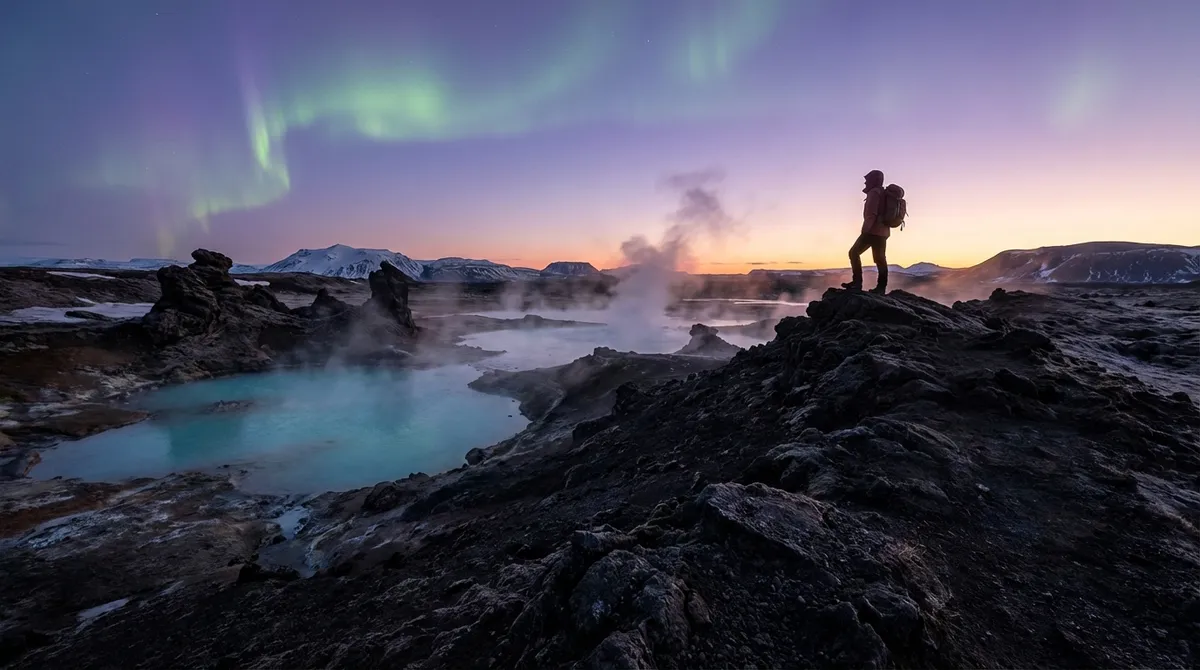
This is your invitation to step into landscapes that don’t play by the rules—five places that look and feel like you’ve slipped off Earth, even though your passport says otherwise.
1. Namibia’s Skeleton Coast: Where the Desert Eats the Ocean
Imagine a place where rolling sand dunes charge straight into the Atlantic, and shipwrecks lie scattered like the bones of old stories. Namibia’s Skeleton Coast is raw, remote, and surreal—a collision between sea, sand, and silence.
Morning fog rises off the cold Benguela Current, sliding over the dunes like dry-ice smoke across a stage. Seals bark in chaotic colonies along the shore, while jackals and brown hyenas patrol the edges. Inland, the desert opens into a vast emptiness broken only by the tracks of oryx and springbok.
What makes it unforgettable isn’t just the scenery—it’s the scale of solitude. This is a place to arrive humbly. Travel with a reputable local operator, respect protected areas, and pack as if you’re going off-grid (because you are: think satellite communication, backup water, layered clothing, and cash). When the wind quiets and you’re standing between a rusting shipwreck and a wall of gold dune, it hits you: this is what “end of the world” looks like—in the best possible way.
2. Cappadocia, Türkiye: A Sky Full of Balloons Over Stone Dreams
Cappadocia doesn’t look built; it looks grown—like the Earth itself decided to sculpt a fantasy novel. Soft volcanic rock has been carved for centuries into homes, cave churches, and entire underground cities. Above ground, “fairy chimneys” spike and twist across the valleys like a petrified forest.
At dawn, the sky blooms with hot air balloons. From the basket, you drift silently above honey-colored canyons and stone pillars glowing pink in the first light. It’s one of the few places where the view below looks as magical as the sky above.
On the ground, stay in a cave hotel to sleep inside the rock itself. Hike through valleys like Rose, Pigeon, and Ihlara to see ancient frescoes etched onto cliff walls. Pack a light jacket for chilly sunrise flights, sturdy shoes for uneven trails, and a scarf or buff for dusty paths. Cappadocia feels like a portal—step through it, and the ordinary rules of landscape no longer apply.
3. Iceland’s Highlands: Walking on Fire and Ice
In Iceland’s remote highlands, colors don’t behave. Mountains shimmer with streaks of orange, teal, and sulfur yellow. Steam vents breathe from the ground. Black sand deserts stretch out beneath glaciers that glow alien-blue in the gloom.
Places like Landmannalaugar and the surrounding highlands look almost digitally enhanced. Rhyolite mountains blaze with mineral colors; geothermal pools steam beside snowbanks; moss carpets ancient lava fields in radioactive green. One moment you’re crossing a river in a lifted bus, the next you’re soaking in a natural hot spring, surrounded by a world that feels painted by a sci-fi artist.
The highlands are wild and fragile. Travel in summer when access roads (F-roads) are open, and never drive off marked tracks. Conditions shift fast: pack waterproof outer layers, insulating mid-layers, high-ankle boots, and a reliable offline map. The payoff? Standing in hot water, watching cold mist curl over rainbow-colored mountains, and realizing there’s nowhere else on Earth quite like this.
4. Atacama Desert, Chile: Under One of the Darkest Skies on Earth
The Atacama Desert is so dry and clear that NASA uses it to test Mars rovers. By day, it’s a dreamscape of salt flats, red-rock valleys, and bubbling geysers. By night, it turns into one of the most spectacular windows into the universe anywhere on the planet.
In the Valle de la Luna (Valley of the Moon), wind-sculpted formations resemble a lunar surface: jagged ridges, cracked earth, dunes frozen mid-slope. Walk across glowing white salt crusts, watch flamingos skim shallow lagoons, and catch sunrise over steaming geysers in El Tatio.
When darkness drops, the Milky Way doesn’t just appear—it explodes overhead. Join a guided stargazing session near San Pedro de Atacama, where high-powered telescopes reveal Saturn’s rings, distant clusters, and nebulae that look like cosmic brushstrokes. Altitude and dryness can be intense: drink more water than you think you need, wear sunscreen and a broad-brim hat in the day, and pack a warm jacket for cold nights. You’ll leave feeling smaller—in the most awe-filled way possible.
5. Raja Ampat, Indonesia: Diving Into a Living Kaleidoscope
If other destinations on this list feel alien above water, Raja Ampat flips the script beneath the surface. This Indonesian archipelago sits at the heart of the Coral Triangle, home to what many scientists consider the richest marine biodiversity on Earth. It’s as close as you’ll get to drifting across a living, breathing alien reef system.
From the deck of a boat, jungle-draped limestone islets rise from electric-turquoise water. Slip beneath the surface and you’re swallowed by color: clouds of anthias fish, swirling barracuda, manta rays gliding over cleaning stations, and coral gardens so dense they resemble psychedelic cities.
Responsible exploration is everything here. Choose eco-minded operators, avoid touching coral or marine life, and use reef-safe sunscreen. If you’re new to diving, consider getting certified before your trip or focus on world-class snorkeling sites in protected lagoons. Bring a rash guard, a dry bag for boat rides, and a mask that truly fits. Emerging from the water, you may find the hardest part is believing what you just saw was real.
Conclusion
The world still has places that feel impossible—destinations where landscapes twist out of expectation and leave you a little breathless, a little changed. You don’t need a rocket to feel like you’ve stepped onto another world; you just need curiosity, intention, and the courage to go where the map looks strange.
From fog-soaked shipwreck coasts to fire-and-ice mountain ranges, from lunar deserts to underwater galaxies, these corners of Earth are waiting for travelers who crave awe more than routine. Pack lightly, travel thoughtfully, and let at least one of these otherworldly places rewrite what you think “Earth” looks like.
Your next planet might just be another country.
Sources
- Namibia Tourism Board – Skeleton Coast - Official overview of the Skeleton Coast, including geography, climate, and travel logistics
- Türkiye Ministry of Culture and Tourism – Cappadocia - Background on Cappadocia’s geology, history, and key attractions
- Icelandic Tourist Board – The Highlands of Iceland - Detailed information on accessing and safely exploring Iceland’s highland regions
- European Southern Observatory – Why ESO Astronomers Use the Atacama Desert - Explanation of Atacama’s conditions and why it’s one of the best places on Earth for stargazing
- WWF – Raja Ampat and the Coral Triangle - Overview of Raja Ampat’s biodiversity, conservation significance, and responsible travel considerations