Below are five kinds of future-forward destinations that don’t just look great on your feed—they upgrade how you think about travel, the planet, and your own next move.
Cities Where Nature Has a Front-Row Seat
In a handful of cities around the world, trees feel like residents, not decoration. Parks are not the escape from the city—they’re the spine that holds it together. Walking here feels like stepping into a prototype of urban life where concrete and canopy actually cooperate.
Think of places with tree-lined bike highways, rooftop gardens, and waterfronts reclaimed from highways. You might ride a metro that emerges into a park instead of a parking lot, or follow a river path that switches from glass towers to wetlands in a few steps. In these cities, sunrise runs come with birdsong instead of traffic horns, and your morning coffee might be sipped beside a restored canal that once was an industrial dead zone.
For travelers, the payoff is huge: better air, calmer streets, and an easy rhythm that makes jet lag feel gentler. Seek out destinations that are famous for urban green belts, waterfront parks, and car-free neighborhoods. When you arrive, walk first. Let your feet map out gardens, riversides, and public squares before you even think about the tourist checklist. The more you move like a local—on foot, by bike, through parks—the more the city’s “future” reveals itself.
Islands That Are Rewriting the Rules of Paradise
The next generation of island escapes doesn’t just trade office walls for palm trees; it trades old ideas of tourism for something more alive and accountable. These are places where coral restoration projects sit next to beach bars, where plastic-free shops share streets with centuries-old markets, and where locals shape tourism rather than just endure it.
On these islands, you might join a guided night swim to see bioluminescent plankton under a sky full of stars, then spend the next morning planting mangroves to protect the shoreline you just swam along. Solar panels glitter on rooftops while fishing boats slip out at dawn. Street food stalls serve recipes passed down for generations, but you’ll also find co-working spaces where remote workers livestream their “office” from a terrace overlooking the sea.
When choosing an island destination, look for signs of a real sustainability plan: protected marine parks, limits on cruise traffic, community-led tours, reef or wildlife conservation programs you can actually visit or support. Once there, aim for locally owned guesthouses and eco-resorts, refillable water stations, and experiences that funnel your money into the community, not around it. The paradise of the future is not a gated resort—it’s an island that thrives because you came, not in spite of it.
Nighttime Cities That Turn After Dark into an Adventure
Some destinations truly wake up just as the sky goes dark—not with chaos, but with creativity. In these cities, night is a separate world: art in alleys, late-night food rituals, glowing markets, and neighborhoods that feel safer and more alive at midnight than some places do at noon.
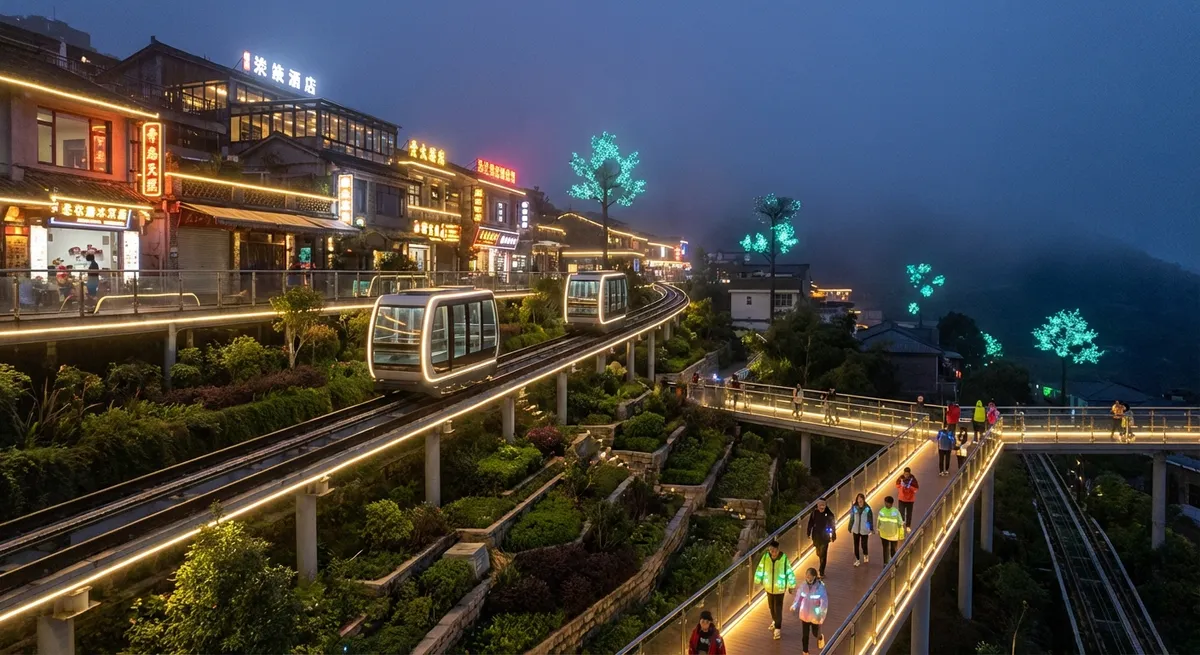
Imagine wandering through lantern-lit streets where cafes spill poetry and live music onto cobblestone squares. Neon signs reflect on rain-wet pavement as cyclists glide past. Street vendors serve dishes that only appear after sunset, and families, students, and travelers mingle in open-air plazas. Night markets buzz with sizzling grills, handmade crafts, and local games you’ll be invited to try just for the fun of it.
Travelers often burn energy by day and retreat by night—but in the most electric nighttime cities, you’ll want the opposite. Check what’s open late, which neighborhoods are known for food streets instead of clubs, and where locals gather outdoors after dark. Join a guided food walk or night photography tour for added safety and insight. And give yourself at least one night to simply wander (with your route loosely planned), following the brightest street, the most inviting sound, or the longest line at a food stall. That’s where stories are waiting.
Regions Where Borders Feel Like Bridges, Not Barriers
There are corners of the world where crossing a border doesn’t feel like leaving—it feels like leveling up. In these regions, a short train ride or bus trip can slip you into a new language, a different alphabet, and a fresh plate of comfort food, all while the landscape quietly stitches it together.
Picture hopping from one country’s medieval old town to another’s seaside village in a single weekend, or watching mountain ranges stretch across multiple nations without caring whose passport you carry. One day you’re wandering a market where the signs swirl in a Slavic script; the next, you’re listening to a romance language echo off cathedral walls. Yet the architecture, the shared dishes, and even the local jokes reveal a long, tangled story that belongs to the whole region, not just one flag.
To tap into this feeling, look for areas famous for open borders or regional rail passes, where multiple countries share a cultural or geographic zone: mountain ranges, river valleys, or seas with centuries of trade routes. Plan your trip around connections, not just single cities—overnight trains, ferries, or border-town buses. Pack light enough that crossing lines is easy and spontaneous. Very quickly, you’ll start to see travel not as a series of isolated stops, but as one continuous, layered story that just happens to change languages every few hours.
Remote Corners Where the Sky Still Wins
There are still places where the night sky is louder than your phone—and they’re some of the most powerful destinations you can visit. These are dark-sky reserves, high deserts, tundras, and far-flung coasts where the Milky Way is so bright it looks almost fake, and where “going offline” isn’t a decision; it’s the default.
In these remote corners, time stretches. Sunsets unfold slowly over wide horizons. The air feels sharper, the silence almost physical. You might wake before dawn to watch the first light roll over snowcapped peaks or lava fields, then spend the day tracing trails through landscapes that look like another planet. At night, bundled against the chill, you tip your head back and feel something both very small and very infinite inside you click into place.
Reaching these destinations usually takes effort: a long bus from the last major city, a ferry across cold water, a muddy track that shakes your baggage into humility. That’s the point. To make the most of it, check dark-sky maps, local weather patterns, and best seasons for auroras, meteor showers, or simply clear nights. Bring layers, a headlamp with a red light setting, and an airplane mode mindset. The future we talk about is full of tech, but the future we actually need might be shaped by places that remind us what it feels like to truly look up.
Conclusion
Destinations like these don’t just fill your passport—they rewrite your expectations. Cities where trees take the lead, islands defending their own paradise, streets that bloom after midnight, regions where borders blur into stories, and wild places ruled by the sky all offer something beyond the usual checklist: they show you where the world could be headed, and where you might want to go with it.
The next time you plan a trip, don’t just ask, “What can I see there?” Ask, “How will this place change the way I see everything else?” That’s when travel stops being an escape—and becomes a preview of the life you’re brave enough to build next.
Sources
- UN World Tourism Organization – Sustainable Destinations – Overview of how destinations worldwide are integrating sustainability into tourism
- International Dark-Sky Association – Dark Sky Places – Directory and explanation of certified dark-sky reserves and parks
- C40 Cities – Case Studies on Green and Climate-Resilient Cities – Real-world examples of cities prioritizing green spaces, clean transport, and climate adaptation
- UNESCO World Heritage Centre – Marine and Coastal Sites – Information on globally important marine and island destinations and their protection efforts
- European Commission – Schengen Area – Details on border-free travel in the Schengen zone and how it shapes regional movement