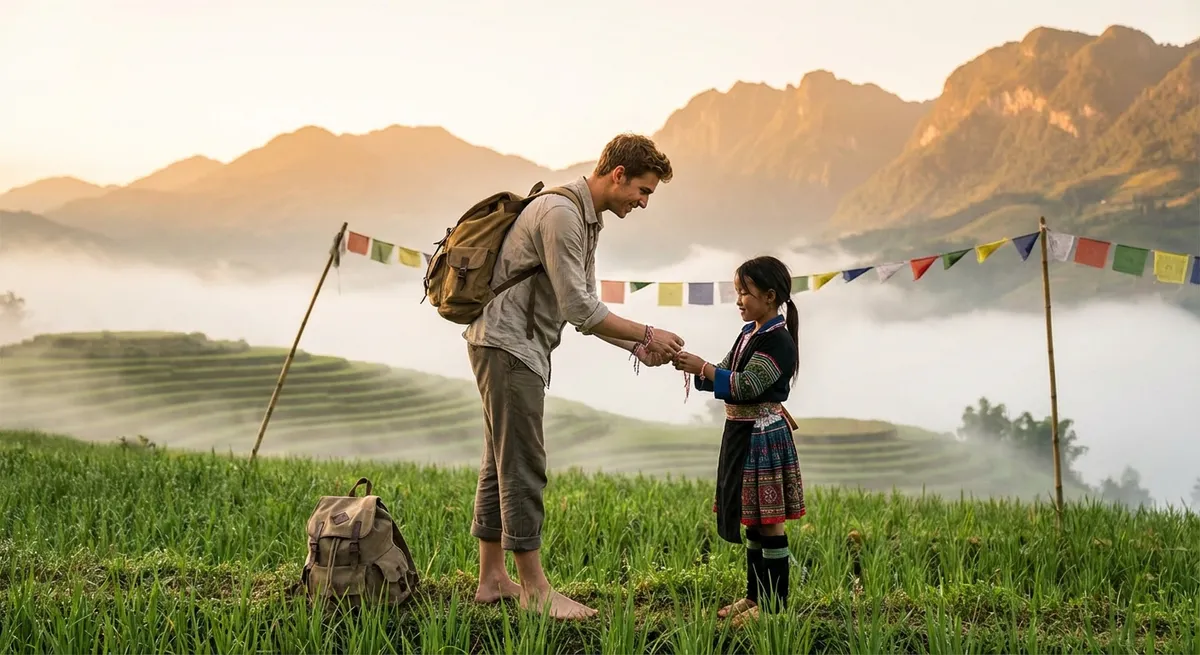
Below are five kinds of destinations that don’t just look good on a map. They pull you into the story, demand that you show up fully, and reward you with the kind of memories that keep you restless—in the best way—for years.
1. High-Altitude Frontiers: Where Every Breath Feels Earned
There’s a specific kind of silence you only hear above the treeline—a hush broken only by your breathing, the crunch of rock underfoot, and the wind carving its way around the peaks. High-altitude destinations like Peru’s Sacred Valley, Nepal’s Annapurna region, or the high passes of Kyrgyzstan test your legs, lungs, and willingness to keep moving when every step feels like work.
These are places where the journey becomes the main attraction: switchbacks etched into mountainsides, prayer flags snapping in the thin air, llamas or yaks sharing narrow trails. It’s not about summiting the biggest peak; it’s about discovering how far your determination can carry you.
For practical planning, acclimatization is your greatest ally. Build in rest days at mid-altitude, hydrate obsessively, and keep your first hikes short and slow. Learn to read your body: headaches, nausea, or insomnia might signal altitude sickness—know when to descend. The reward is immense: sunrises that paint entire mountain ranges in gold, star fields so bright they feel three-dimensional, and a deep, almost shocking sense of pride every time you look back at the valley floor far below.
2. Night-Sky Sanctuaries: Destinations Where Darkness is the Main Attraction
We spend so much of life under artificial light that we forget what the sky really looks like. Dark-sky destinations—like Chile’s Atacama Desert, New Zealand’s Aoraki Mackenzie region, or U.S. national parks such as Bryce Canyon and Big Bend—turn the simple act of looking up into a once-in-a-lifetime event.
Here, the Milky Way doesn’t look like a faint smear; it’s a glowing river running from one horizon to the other. Shooting stars streak past so often you stop counting. Planets cast shadows. And if you time your trip right, you might witness meteor showers, lunar eclipses, or even the aurora dancing at high latitudes in places like Iceland, northern Canada, or Norway.
To make the most of these destinations, check moon phases in advance—new moons bring darker skies and better stargazing. Pack layers (deserts and mountains get cold at night), a red-light headlamp to preserve your night vision, and a tripod if you’re into photography. Many astro-tourism hubs offer guided stargazing sessions with powerful telescopes and local astronomers who bring the sky to life with stories—from ancient myths to modern space missions. You’ll leave feeling both tiny and incredibly connected to something much bigger.
3. Living Culture Corridors: Destinations That Invite You Into the Everyday
Some of the most unforgettable destinations aren’t built around a single famous landmark—they’re woven from daily rituals, markets, festivals, and shared meals. Think of places like Oaxaca in Mexico, Hoi An in Vietnam, Fez in Morocco, or Tbilisi in Georgia: cities and regions where culture isn’t staged, it’s simply lived in front of you.
Morning might start with vendors setting up in narrow alleys, smoke curling from street food stalls, and the rattle of trams or scooters. By midday, you’re wandering craft markets, tasting unfamiliar fruits, or watching artisans work with techniques passed down through generations. Night brings music in tiny bars, lantern-lit streets, or families gathering in public squares until late.
To move from “spectator” to “participant,” look for experiences that let you roll up your sleeves: a local cooking class, a traditional dance or music lesson, or a guided neighborhood walk with someone who grew up there. Learn a handful of phrases in the local language—basic greetings and thank-yous can transform the way people respond to you. Respect dress codes at religious sites, ask before photographing people, and choose locally owned guesthouses or homestays. The real magic is the quiet, unscripted moments: being invited for tea, getting lost in a market, or swapping stories with someone whose life is wildly different from your own—and suddenly not so different at all.
4. Edge-of-the-Map Coasts: Shores That Feel Like the End (or Beginning) of the World
There’s something about distant coastlines that feels like standing at a threshold. Think of Norway’s Lofoten Islands, Scotland’s Outer Hebrides, Tasmania’s wild beaches, or the wind-battered coasts of Patagonia. These aren’t your typical resort strips; they’re raw, jagged, and sometimes moody—with weather that can flip from sun to storm in minutes.
Here, the ocean is not a backdrop; it’s a character. Waves pound black-sand beaches, seabirds launch themselves off cliffs, and fishing boats disappear into fog that seems to swallow the horizon. Days are shaped by tides and wind: one moment you’re kayaking through mirror-smooth fjords, the next you’re hunkered in a cabin listening to rain hammer the roof and feeling more alive than you have in months.
If you’re heading to these edges of the map, embrace unpredictability. Build slack into your itinerary for canceled ferries, delayed buses, or weather-bound days. Pack waterproof layers, sturdy boots, and backups of critical travel documents in dry bags. Instead of chasing a rigid list of “must-sees,” let local recommendations guide you—hidden coves, sea caves, cliff walks, or tiny family-run seafood shacks you won’t find in glossy brochures. These coasts remind you that you’re small, the planet is wild, and that’s exactly why you came.
5. Desert Dreamscapes: Destinations Where Time Slows Down
Deserts have a way of stripping life down to essentials: light, shadow, heat, cold, and space that seems to go on forever. From Jordan’s Wadi Rum and the shifting dunes of Morocco’s Sahara region to the red rock expanses of Utah and Arizona or Namibia’s towering sand seas, desert destinations feel like another planet—without leaving Earth.
Days may begin cold and clear, then climb into blinding, shimmering heat before cooling again under unimaginable stars. Rock formations glow orange and crimson at sunrise, and dunes change shape under the wind, erasing footprints in minutes. Depending on where you go, you might travel by 4x4, camel, or on foot, and sleep in simple tents, Bedouin-style camps, or eco-lodges that disappear into the landscape.
Deserts demand preparation and respect. Hydration and sun protection are non-negotiable: wide-brimmed hat, sunscreen, light long sleeves, and more water than you think you’ll need. Travel with reputable local guides—they know how to navigate shifting sands, read the weather, and share the stories hidden in seemingly empty horizons. The reward isn’t just dramatic scenery; it’s an inner quiet that sneaks up on you when your phone finally has no signal, the world goes still, and you remember what your own thoughts sound like without constant noise.
Conclusion
The destinations that stay with you longest rarely fit neatly into a postcard. They’re the altitude headaches that turned into triumph, the conversations you stumbled through in a new language, the nights you spent under unfamiliar constellations at the literal edge of your comfort zone.
You don’t have to wait for the “perfect time” or the “perfect trip.” Pick a direction—up into the mountains, out toward the desert, along the wild coastline, under a dark sky, or deep into a living city—and let curiosity set the pace. The world is closer than it looks on the map, and every bold step you take away from the familiar is a step into a bigger version of your own life.
Sources
- UNESCO World Heritage Centre - Official list and details of culturally and naturally significant destinations worldwide
- International Dark-Sky Association - Information on certified dark-sky places and why protecting night skies matters
- Centers for Disease Control and Prevention – High-Altitude Travel & Altitude Illness - Practical health advice for traveling to and staying at high elevations
- National Park Service (USA) - Official information on U.S. national parks, including stargazing, desert, mountain, and coastal destinations
- Lonely Planet – Destination Guides - Up-to-date overviews of cities and regions around the world, with insights on culture, logistics, and highlights