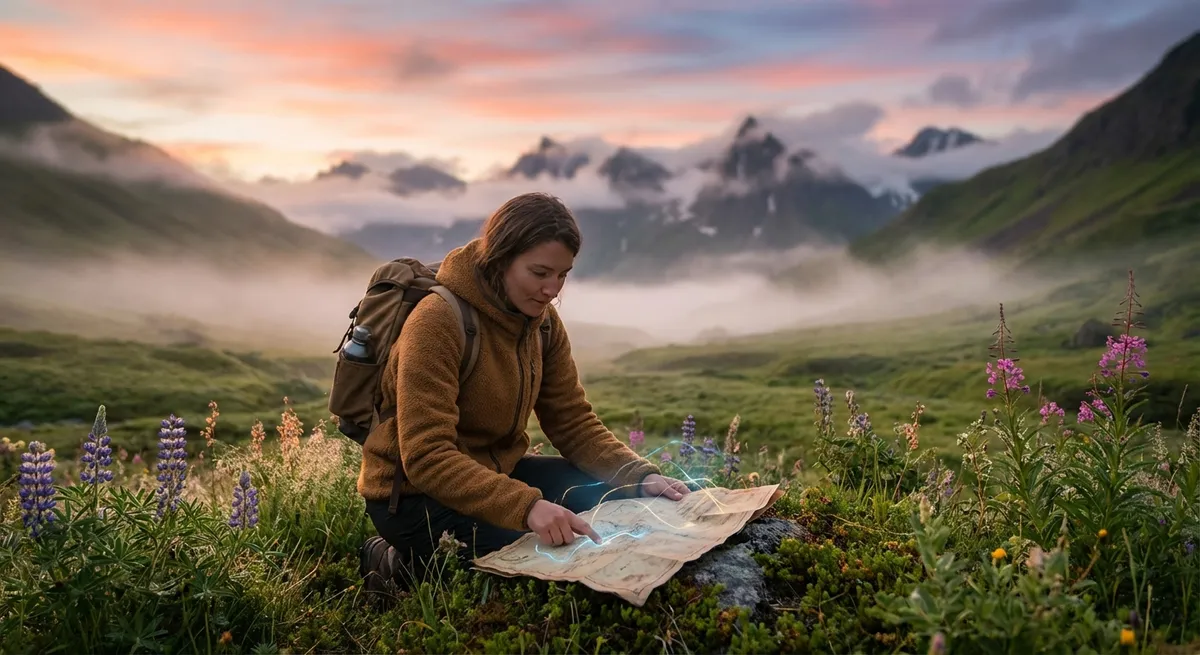
This isn’t about chasing checklists. It’s about chasing moments—those electric flashes of awareness when you realize: I will remember this for the rest of my life.
Below are five kinds of destinations that don’t just give you a trip; they hand you a turning point.
1. Cities That Never Sleep, But Teach You How to Wake Up
There are cities that pulse like a living heartbeat—where neon reflections shimmer on wet pavement, street food smoke curls into the night air, and you feel like you’ve stepped into the center of the world’s conversation. These are the places where the energy doesn’t simply surround you; it charges you.
Think of wandering Tokyo at midnight, the quiet side streets humming behind the bright chaos of Shibuya. Or catching the first light over Istanbul’s skyline as the call to prayer rolls across the Bosphorus. In cities like these, you learn to move with the current instead of against it.
To truly experience them, trade rigid itineraries for wandering with intention. Ride public transit at rush hour and watch the choreography of daily life. Eat where the lines are longest and the menus are shortest. Step into small neighborhood cafés or night markets, where locals decompress, gossip, and dream.
The practical key: stay central enough that you can walk everywhere, but give yourself at least one early morning and one very late night. Cities reveal different souls at different hours: dawn belongs to delivery trucks and dog walkers; midnight belongs to diners, dreamers, and people in no hurry to go home.
2. Wild Landscapes That Resize Your Problems
Some destinations don’t need skyscrapers or nightlife to feel massive—they just need a horizon that goes on forever. Stand on the rim of a canyon, at the edge of a glacier, or beneath a mountain range so tall it seems to lean over you, and your mental clutter shrinks on contact.
Hiking in Patagonia, crossing Iceland’s black sand beaches, or watching the sunset fall into the Grand Canyon invites a kind of silence that’s not empty at all—it’s full of awe. Your phone feels suddenly small, and so do half the worries you packed with you from home.
To feel the full impact of wild places, slow your pace and lower your expectations of comfort. Weather will shift. Trails will be muddier than you wanted. The perfect view might be hiding behind clouds—until suddenly, the sky breaks open and your patience is rewarded.
Bring layers, a reliable map (offline if possible), and a healthy respect for local safety advice. But more than that, bring the willingness to be uncomfortable. Blisters, sore legs, and windswept cheeks are the price of some of the clearest thinking you’ll ever do.
In these destinations, you don’t just cross geography—you cross into a bigger version of yourself, the one who can handle more than you thought.
3. Coastal Corners Where Time Moves With the Tides
There’s a specific kind of magic that only happens where land meets water. Fishing villages, surf towns, and quiet coastal cities have a rhythm that isn’t set by traffic lights, but by tides and sunsets. Life slows down, not because there’s nothing to do, but because you finally feel no rush to do it.
Imagine watching fishermen haul in their nets before sunrise on the Amalfi Coast, or learning to surf in a beach town in Portugal, wiping salt from your eyes as you paddle back out for “just one more wave.” The air smells like sea spray and grilled seafood; laundry flaps between stone houses; the sky glows three different colors before the sun disappears.
To tap into coastal life, set aside time to do almost nothing on purpose. Sit at a café with a view of the harbor. Walk the same stretch of beach multiple times in a day and notice how it changes with the light. Take a boat ride, even a short one—seeing land from the water flips your whole perspective.
Pack light but smart: sun protection, a light jacket for evenings, and shoes that can handle sand, docks, and cobblestones. Be ready to linger over long meals. Near the coast, “fast” is usually not the point. The reward for your patience: sunsets that feel like a daily standing ovation.
4. Ancient Places That Stretch Your Sense of Time
Some destinations feel less like places and more like portals. Walk through narrow stone alleys, stand beneath columns weathered by millennia, or wander ruins half-swallowed by jungle, and you’re reminded you’re just one chapter in a very long story.
Standing in front of Angkor Wat as dawn melts into day, or under the shadow of the Acropolis at golden hour, you can almost hear echoes of markets, prayers, and conversations from centuries ago. These places invite a new kind of humility—you realize how many generations have stood in the same spot, wrestling with the same human questions.
The best way to experience ancient destinations is to combine wonder with context. Don’t just take a photo and move on; learn what—and who—you’re actually looking at. A local guide, audio tour, or small-group walk can unlock the symbolism carved into stones, the myths beneath the architecture, and the choices that shaped what’s still standing.
Go early or late if you can, when crowds thin and the light is soft. Dress respectfully—many sites are still active places of worship or national pride. And give yourself time afterward to sit nearby, journal, or simply let your thoughts catch up.
In ancient places, you start to feel your own life as part of a larger arc—and that realization can quietly, powerfully change how you move through the world.
5. Remote Retreats Where Disconnection Feels Like Discovery
Some of the most transformative destinations aren’t famous at all. They’re mountain lodges at the end of a gravel road, cabins beside unnamed lakes, or tiny islands where the Wi‑Fi is slow, the stars are bright, and the biggest news is the weather.
In these places, the rush of notifications is replaced by the sound of wind through trees, cowbells on distant hills, or waves thudding against rock. You might spend a day doing “nothing”—reading in a hammock, wandering forest paths, watching storms roll across a valley—and realize it’s exactly what you needed.
To find these retreats, look beyond the main city and zoom out on the map. Check smaller towns accessible by regional trains, ferries, or a few extra hours by bus. Eco-lodges, farm stays, and family-run guesthouses often provide the deepest connection to the land and to the people who know it best.
Be intentional about your tech. Download what you truly need (maps, translation, offline guides) and let the rest go. Tell friends and family you’ll be less reachable. Pack a real book, a notebook, a deck of cards—analog companions that fit a slower pace.
In remote retreats, you don’t just escape noise; you hear yourself more clearly. You return not only rested, but recalibrated.
Conclusion
The world isn’t just a list of countries to “do”—it’s a series of living, breathing experiences that can redraw the borders inside you. Electric cities, wild landscapes, quiet coasts, ancient wonders, and remote hideaways all offer different kinds of transformation, if you let them.
The destination matters, but what matters more is how you show up: curious instead of rushed, attentive instead of distracted, open instead of armored. When you travel like that, every journey—no matter the distance—becomes a chance to step into a larger, braver version of your life.
The map is waiting. The question is not just where you’ll go next—but who you’ll be when you come back.
Sources
- UN World Tourism Organization (UNWTO) – Tourism Highlights – Global data and trends on where and how people are traveling
- National Park Service (NPS) – Information on U.S. national parks, safety tips, and guidance for exploring wild landscapes
- Lonely Planet – Travel Guides & Inspiration – Destination overviews, cultural context, and practical advice for cities, coasts, and remote regions
- UNESCO World Heritage Centre – Official list and details of cultural and natural World Heritage Sites around the world
- CDC Travelers’ Health – Up‑to‑date health and safety recommendations for international travel