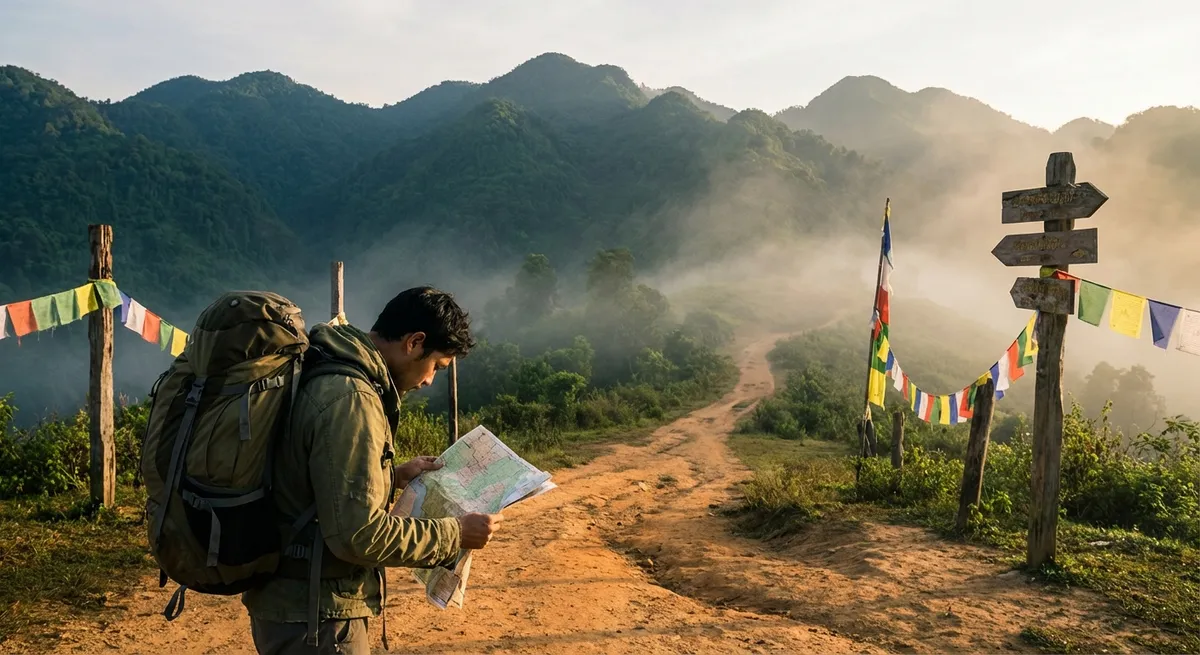
Let’s dive into five powerful destination “types” around the world that don’t just look good in photos—they wake something up in you. Think of them as launchpads for the next version of yourself.
1. High-Altitude Towns Where the Sky Feels Within Reach
There’s a particular kind of silence you only find at altitude—thin air, long views, and a hush that makes your heartbeat sound louder in your ears. Mountain towns and high plateaus across the globe offer that rare combination of raw nature and resilient culture.
Picture cobbled streets clinging to steep hillsides, prayer flags or church bells catching the wind, and horizon lines saw-toothed with snow. Whether it’s a Himalayan village, an Andean town, or an alpine community, these places invite you to slow your steps and deepen your breath. Every staircase feels like exercise, every viewpoint like a small victory.
What makes high-altitude destinations so transformative is how they stretch your limits gently but firmly. You learn to drink more water, listen to your body, and respect weather that can change in an hour. Practical moves: arrive with a rest day built in, ascend gradually when possible, and keep your days flexible so you can adapt to how you’re feeling. In return, you get sunrises that paint mountain ridges in staggering color, night skies so clear you start to grasp how tiny you really are, and encounters with locals whose daily routines would be an expedition for most visitors.
2. Coastal Towns That Live by the Rhythm of Tides
Some destinations are ruled not by clocks but by water. In fishing villages, surf towns, and island communities around the world, life bends around the ebb and flow of the sea. Time slows to match the tide chart, and your internal pace eventually follows.
Imagine waking to the sound of waves slapping gently against boats, watching early-morning swimmers cut clean lines through silver-blue water, and seeing how every conversation seems to pause for the sunset. The ocean becomes a constant companion—sometimes calm, sometimes wild, always bigger than you.
Coastal destinations like these invite you to trade rigid schedules for natural rhythms. You might plan your day around the best snorkel visibility, tide pools at low tide, or the evening fish market haul. Practical moves: check local tide and weather information before you arrive, pack a light layer for ocean breezes even in warm climates, and ask locals where they go to watch sunrise or moonrise—these small vantage points often become your most vivid memories. Soon, your biggest daily decisions boil down to: “Swim now or after coffee?” and “Beach on this side of the peninsula, or that one?”
3. Night-Alive Cities Where Darkness Wakes the Streets
There are cities that truly wake up after sunset—where twilight acts like a curtain rising. Neon reflections in puddles, late-night food stalls steaming under streetlights, music drifting from half-open doors: these destinations show a completely different face once the sun dips.
In these places, you learn that “busy” doesn’t always mean rushing. It can mean people lingering at sidewalk tables, families walking together at 11 p.m., and artists performing in plazas just because the mood is right. Urban nightscapes can be intimidating at first, but approached with awareness and curiosity, they become arenas for some of your best travel stories.
To experience night-alive cities well, balance safety with adventure. Practical moves: research neighborhood safety ahead of time using reputable sources, keep copies of maps offline, and ask your accommodation staff which areas are vibrant but still sensible for late exploration. Join a night food tour or evening walking tour your first night—this gives you local context, orientation, and confidence. After that, you’ll start noticing your favorite late-night bakery, that one corner with the busker you keep bumping into, and the way the same square feels utterly different by day and by night.
4. Ancient Hubs Where Ruins and Daily Life Collide
Some of the most powerful destinations aren’t just historical—they’re alive with people living their present-day stories amid ancient bones of stone and brick. These are cities and towns where a casual commute might pass a thousand-year-old wall, where kids play football in the shadow of ruins, and where layered history peeks out from under modern life.
Wandering through such places can feel like time has folded. You turn a corner and brush up against centuries: a worn temple step polished by millions of feet, a marketplace that’s been in some form of operation since before your country existed, or an alleyway where old and new architecture lean into each other in uneasy harmony.
To connect deeper here, go beyond the postcard angles. Practical moves: hire a local guide at least once to walk you through the less obvious stories behind what you’re seeing, read a short history overview before you arrive, and pair famous sites with “ordinary” spots—a neighborhood café, a corner bakery, a public park. Notice how people actually use these historic spaces today: as shortcuts, meeting points, outdoor gyms. These destinations remind you that history isn’t locked behind museum glass; you’re walking across it, breathing in its dust, and adding your own fleeting footsteps to an unimaginably long trail.
5. Borderlands Where Cultures Blur and Lines Get Fuzzy
There’s a unique charge to standing in a place that sits between worlds. Border regions—whether between countries, languages, or landscapes—tend to be messy, vibrant, and full of unexpected fusion. Street food with flavors from both sides. Road signs in multiple languages. Architecture that refuses to pick a single style.
In these in-between zones, identity is layered. You might meet people who flip between three languages mid-sentence or whose family stories cross multiple flags. This complexity can be confusing if you’re seeking simple narratives—but if you’re open to nuance, borderlands can be some of the most mind-expanding destinations you’ll ever visit.
Practical moves: arrive ready to listen more than you label. Ask open questions about local traditions and how people describe themselves instead of relying on tidy guidebook categories. Pay attention to markets, bus stations, and train depots—these transit points can be the most revealing windows into who passes through and how the region functions. Border destinations teach you that maps are just one version of reality; on the ground, life weaves something far richer than any clean line on paper.
Conclusion
The world isn’t just a checklist of “must-see” spots—it’s a living, shifting terrain of places that can nudge, challenge, and ultimately reshape you. High-altitude towns teach humility and patience. Coastal communities realign you with natural rhythms. Night-alive cities crack open fresh versions of your courage. Ancient hubs anchor you in deep time. Borderlands push you to see beyond simple categories.
You don’t have to chase every famous landmark to have a legendary trip. Choose destinations that demand your presence, not just your camera. Follow the places that make your pulse jump a little, where the map feels more like an invitation than a plan. Somewhere out there, a town, a shoreline, a ridgeline, or a border crossing is waiting to change how you see the world—and yourself.
Sources
- U.S. National Park Service – Altitude Illness - Guidance on understanding and managing high-altitude effects, useful for planning visits to elevated destinations
- NOAA Tides & Currents - Authoritative information on tides and coastal conditions, relevant for travelers exploring oceanfront destinations
- UNESCO World Heritage Centre - Official list and descriptions of cultural and natural sites, including many historic cities and ancient hubs mentioned conceptually in this article
- U.S. Department of State – Travel Advisories - Up-to-date safety information for cities, border regions, and night-time exploration considerations
- MIT Senseable City Lab - Research on how cities function and transform over time, providing deeper context for understanding dynamic urban destinations