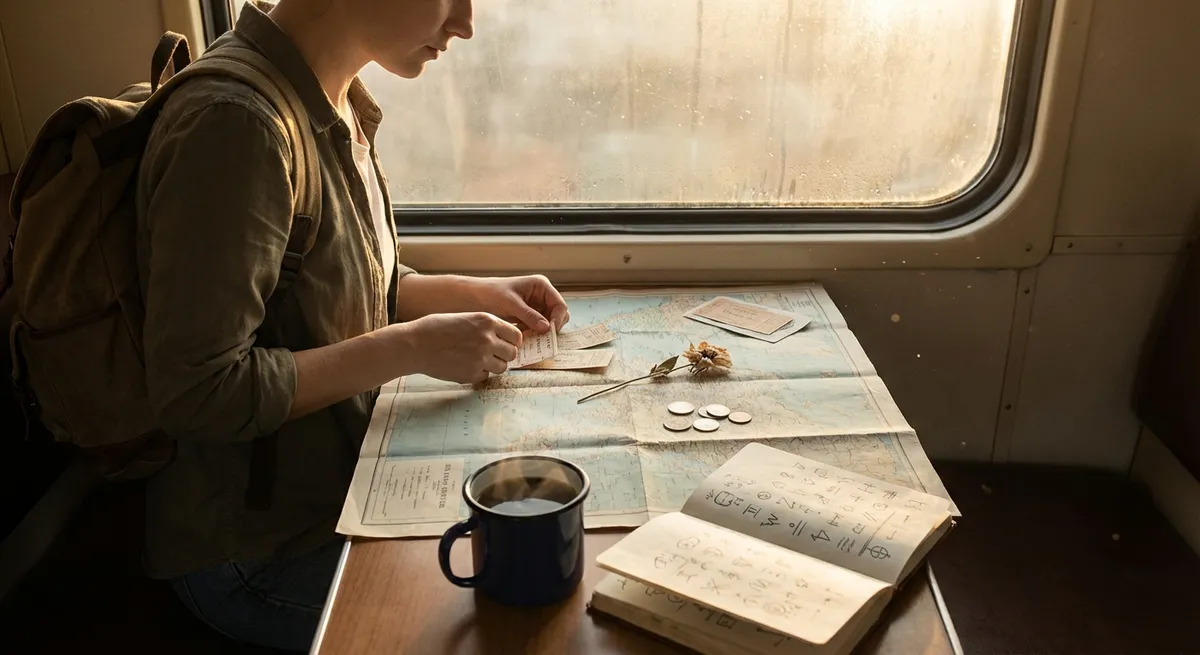
These five travel “rituals” are designed to flip your trips from passive sightseeing to full-contact adventure—no parachute or lottery-winning budget required. Think of them as switches you can flip in any city, on any day, to feel more awake to the world.
1. Land and Walk: Claim the First Hour on Foot
How you arrive sets the tone for your entire trip. Before you sink into your accommodation or the algorithm’s top-rated café, give your curiosity the first hour.
Step out the door and walk with no agenda except noticing. Skip the big avenues at first; follow side streets, corner stores, and wherever you hear music or laughter. Smell what’s cooking, note the street art, listen to the cadence of the local language, and look for the micro-details: laundry colors on balconies, the shape of door knockers, kids’ games chalked on the pavement.
Practical ways to make this ritual work:
- Drop your bags, grab only essentials (phone, small wallet, water), and go.
- Turn off turn-by-turn directions; use your map only as a safety net.
- Pick one “thread” to follow—a color, a sound, a smell—and let it guide you.
- Mark interesting spots on your map to come back to later.
That first hour of unscripted walking plugs you into the real pulse of a place before you fall into routines. You’re not just a visitor checking in; you’re an explorer arriving.
2. Design One “Anchor Experience” per Destination
Travel overload is real. When everything is “must-see,” nothing feels special. Instead of trying to do it all, choose one experience per destination that will be the backbone of your story there—your “anchor.”
Your anchor should pass at least one of these tests:
- It scares you a little (in a good way): a night food tour, a mountain hike, a language class.
- It connects you with locals: a community event, a neighborhood market, a live music night.
- It teaches you something: a guided nature walk, a historical walking tour, a workshop.
Once you’ve chosen your anchor, build gently around it:
- Plan lighter days before and after to avoid burnout.
- Read a bit in advance so you arrive with questions, not just expectations.
- Stay open: if a local suggests a twist (another viewpoint, a better time of day), take it.
By locking in one meaningful experience instead of ten rushed ones, you shift from collecting locations to collecting transformations. A single sunrise summit or late-night street food session can outshine a dozen check-box attractions.
3. Make Eating an Expedition, Not a Pit Stop
Meals are where a place lets its guard down. They’re also your easiest entry into everyday life—if you approach them as adventures, not just fuel stops.
Turn dining into a mini-expedition:
- Time-shift your meals. Try breakfast where locals linger before work, or a late-night snack in a busy plaza. You’ll see different faces and rhythms.
- Order the “mystery option.” Ask, “What do you eat here?” or “What’s the dish most people don’t order but should?” Trust the answer at least once per trip.
- Eat with a mission. Dedicate one meal to street food, one to a market, one to a tiny mom-and-pop spot, and one to a place with a story (historic café, social enterprise, or farm-to-table restaurant).
Practical tips:
- Check local food safety advice, especially for street food and water, and watch where lines form—busy stalls turn over ingredients quickly.
- Learn three food-related phrases in the local language: “What do you recommend?”, “Not too spicy, please,” and “This is delicious.”
- Seek out food markets—they’re like compressed worlds of flavor, tradition, and social life under one roof.
When you treat every meal as a chance to learn, you’re no longer just eating in a new country—you’re tasting its history, its climate, its ingenuity.
4. Trade One Perfect Photo for One Genuine Conversation
Endless photos can create the illusion of connection without the reality of it. What if you traded the quest for the perfect shot for one honest human moment each day?
Make a simple rule: each day, aim for at least one real conversation with someone who lives where you’re traveling.
This doesn’t have to be deep or long. It can be:
- Asking your barista where they’d take a friend who’s visiting.
- Chatting with a vendor about how long they’ve been in that spot.
- Asking a park worker or museum staffer what most visitors miss.
Keep it respectful:
- Be aware of power dynamics and personal space.
- Accept “no” with grace; not everyone wants to talk.
- Follow local customs on greetings, eye contact, and tipping.
Why this ritual matters: landscapes and monuments are powerful, but it’s the people who make a place unforgettable. A three-minute conversation can teach you more about a city’s soul than an hour on a tour bus.
5. End Each Day with a “Field Log,” Not a To-Do List
Most of us remember trips in fragments: “That one beach,” “those mountains,” “that weird bus ride.” A simple daily ritual can turn fragments into a vivid, lasting story.
Before bed—on the train, in a hostel bunk, at a quiet café—take ten minutes to write a short “field log” of the day. Not a diary, not a highlight reel; just three things:
- One detail you noticed (a smell, a sound, a color, a small kindness).
- One feeling you had (curiosity, fear, awe, irritation, gratitude).
- One question you’re leaving with (about the culture, the landscape, or yourself).
You can do this on your phone, in a notebook, or in voice notes. The form doesn’t matter; the reflection does.
This ritual:
- Slows time down so days don’t blur together.
- Helps you notice how travel is changing you, not just where you went.
- Gives you rich material for photos captions, posts, or future storytelling.
When you look back months later, you won’t just see places—you’ll remember the way each day felt, and how you moved through it.
Conclusion
Adventure isn’t hiding at the far end of the world; it’s hiding inside your habits. Land and walk before you “settle in.” Choose one anchor experience instead of chasing everything. Let meals be explorations, not obligations. Trade perfect photos for imperfect, human conversations. Seal each day with a quick field log so the magic doesn’t slip through your fingers.
You don’t need more money, more time off, or more gear to travel like this. You just need to flip these five switches and let the road meet you halfway. The next time you step off a plane, train, or bus, remember: you’re not just going somewhere—you’re rewriting how you move through the world.
Sources
- U.S. Department of State – Travel Advisories - Official safety and destination information to consult before planning explorations and conversations with locals
- Centers for Disease Control and Prevention – Travelers’ Health - Guidance on food, water, and health precautions to keep your culinary adventures safe
- UNESCO World Heritage Centre - Background on culturally and historically significant sites that can inspire meaningful “anchor experiences”
- Lonely Planet – Travel Tips - Practical advice on navigating new destinations, walking explorations, and connecting with local life
- National Geographic – Travel - In-depth stories and examples of immersive travel that emphasize observation, local culture, and reflection