Below are five powerful, practical travel habits that don’t just help you “see” more, but feel more alive while you’re out there.
Start Before You Arrive: Build a Personal Map, Not a Checklist
Most people land with a generic bucket list. You can land with a personal quest.
Before you go, spend an hour building a “curiosity map” instead of a must‑see checklist. Search for three kinds of places: where locals gather (markets, parks, neighborhood cafés), where a city breathes (waterfronts, viewpoints, transit hubs), and where stories live (museums, historic streets, old theaters, community centers). Pin them on an offline map app so you can wander with a loose structure instead of a rigid schedule.
This approach frees you from racing between top attractions and opens space for serendipity around them. When you pin a local market, you might arrive during a festival rehearsal. When you mark a quiet park, you might stumble into a pickup soccer game or tai chi circle. The goal isn’t to control the journey, but to give yourself more doors to walk through once you’re there.
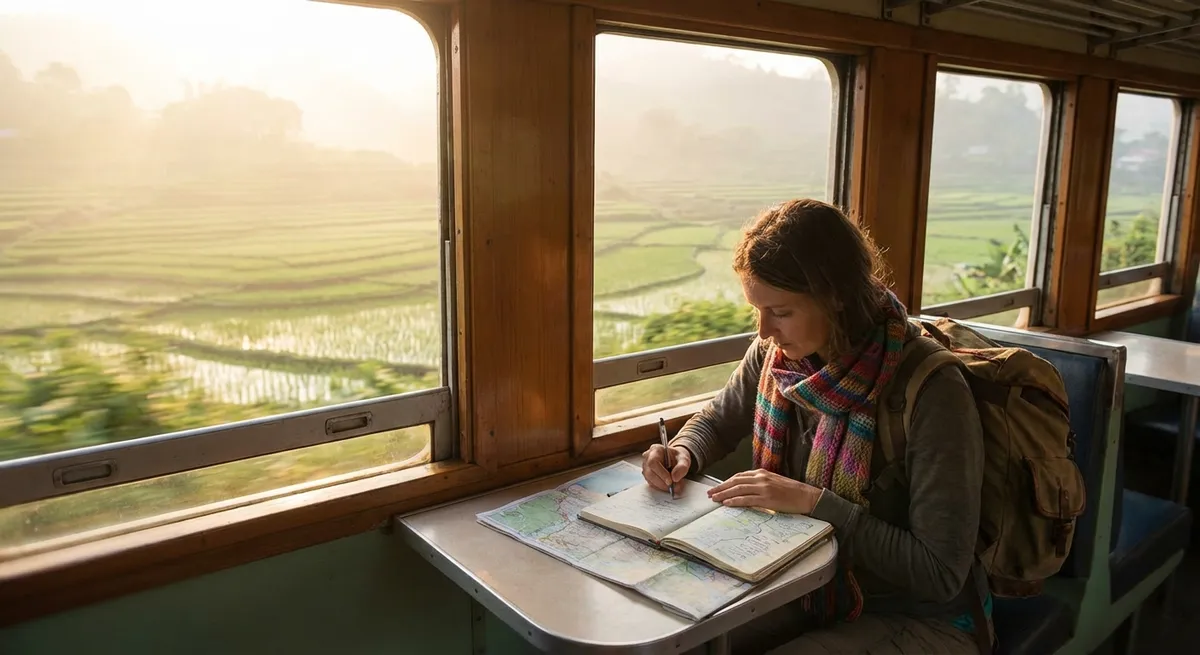
On the plane or train, glance through your pins and ask, “What would make this trip unforgettable for me personally?” Maybe it’s hearing local music live, tasting a dish at its birthplace, or sketching a skyline at sunrise. Carry those questions with you. They’ll guide you more powerfully than any top‑10 list.
Make Mornings Your Secret Weapon
While the world is still waking up, cities and landscapes reveal a side they never show at noon.
Set aside at least one dawn in every destination as “explorer’s hour.” Slip outside before the streets fill: watch fishermen loading boats, bakers sliding bread from ovens, commuters streaming to metro stations, temple bells ringing, or church doors unlocking for the first mass of the day. Light is softer, air cooler, and people less hurried—perfect conditions for feeling a place instead of just photographing it.
Use this quiet window for experiences that feel bigger than your energy: climbing a hilltop, hiking an urban trail, running along a river path, or simply wandering with no plan while the sky changes colors. You’ll often find friendlier encounters too; locals walking dogs or opening shop are more likely to chat than those navigating midday crowds.
From a practical standpoint, early starts mean fewer lines at popular sights, cooler temperatures in hot climates, and more room to breathe in busy cities. Bring layers, water, and a small snack so you can stay out longer if the morning turns magical. Many travelers say their favorite memories—the mist over rice terraces, the first tram rolling through a quiet square—belonged to the hours most people slept through.
Turn Every Meal Into a Cultural Shortcut
Food is more than fuel on the road—it’s the fastest, most delicious way to understand where you are.
Instead of defaulting to the closest restaurant with English menus, treat each meal like a mini‑mission. Ask your accommodation host, barista, or rideshare driver, “Where would you take a friend from out of town?” Not the fanciest spot—the place that tastes like home. These recommendations often lead to crowded street stalls, family‑run diners, or hole‑in‑the‑wall bakeries where you can actually feel the rhythm of local life.
Once you’re there, be brave with your order. Try at least one dish you can’t pronounce perfectly yet. Watch how people around you eat—is bread used as a utensil, are dishes shared family‑style, do people linger or eat quickly? These details are culture in motion. If the staff isn’t slammed, ask them what the restaurant is known for or which dish they’re proudest of; you’ll almost always eat better when you follow their enthusiasm.
Don’t forget markets and supermarkets—they’re treasure maps of daily life. Wander the aisles or stalls, notice what’s piled high and what’s locked behind glass, buy a few unfamiliar snacks, and turn a bench or park into your picnic table. Some of your most vivid memories might become as small and specific as biting into a sun‑warm peach from a roadside stand or sipping a drink a stranger recommended at the next table.
Travel With a Theme to Unlock Hidden Layers
Instead of trying to experience “everything,” give your trip a theme and let it guide your choices.
Your theme can be anything that genuinely excites you: street art, train journeys, mountain viewpoints, coffee culture, old bookstores, live music, coastal lighthouses, local crafts, or even a specific period in a city’s history. Once you choose it, start weaving it into your days: search for murals in each neighborhood you visit, pick cafés where locals linger, or track down one live music spot in every new city.
A theme transforms random exploration into a story thread. Suddenly you’re not just visiting Lisbon—you’re following the trail of tilework across churches, train stations, and tiny alleys. You’re not just passing through Vietnam—you’re chasing different versions of phở from Hanoi to Ho Chi Minh City. This gives your travels a continuity that stretches beyond individual stops.
Themes also make it easier to connect with people. Ask locals about your chosen focus—“Is there a market where crafts are still handmade?” or “Where would you go for the best live jazz?” People light up when they get to share something they love, and the recommendations you’ll get are often more personal and memorable than anything you’d find in a guidebook.
Pack for Connection, Not Just Convenience
What you bring with you shapes the kind of moments you’re ready to invite.
Of course you’ll need the basics, but consider adding a few “connection items” to your bag: a small deck of cards, a compact instant‑print photo printer, a tiny travel game, a notebook with blank pages, or a few postcards from your home city to give away. These objects are conversation starters—bridge builders when you don’t share a language fluently.
Digital tools count too. Download offline maps for your destinations, translation apps, and public transit apps where available. These give you the courage to say “yes” more often—to accept an invitation to a neighborhood you’ve never heard of, to jump on a tram that looks full of locals, to follow a side street without worrying about getting hopelessly lost.
Finally, pack with movement in mind. Comfortable walking shoes, a light daypack, a refillable water bottle, a compact rain layer—these small choices make it easier to say, “Let’s keep going,” when you feel curiosity tugging you down a longer path or up a steeper hill. You’re not just preparing to move through the world; you’re preparing to meet it halfway.
Conclusion
Adventure doesn’t only live at the end of a plane ticket—it lives in how you choose to move once you arrive. When you shape your own map instead of copying someone else’s, rise with the first light, let meals become stories, follow a theme, and pack for connection, the ordinary starts to feel extraordinary.
The next time you set out—from your neighboring city or across an ocean—treat the trip as an experiment: how deeply can you notice, how bravely can you say yes, how open can you stay to detours? The world is wider than any itinerary, and it’s waiting for the version of you who travels with eyes, mind, and heart wide open.
Sources
- U.S. Department of State – Traveler’s Checklist - Practical pre‑departure guidance on documents, safety, and preparation
- CDC – Traveler’s Health - Up‑to‑date health recommendations, vaccinations, and destination‑specific advice
- UNESCO World Heritage Centre - Background on culturally and historically significant sites around the world
- Lonely Planet – Travel Tips - General travel advice, cultural insights, and planning suggestions
- National Geographic Travel - Inspiration and in‑depth stories about destinations, culture, and exploration