Trade Your First Day for a “Soft Landing” Day
Landing in a new country can feel like stepping onto a moving train. Instead of charging straight into must-see mode, dedicate your first day to what pilots call a “soft landing”: low-pressure moves that connect you to the local rhythm without draining your energy.
Walk one main street slowly, stopping at three places that catch your eye for no practical reason—maybe it’s a bakery with fogged-up windows, a bookstore packed with maps, or a corner bar humming with chatter. Let these “anchor points” be your first mental map rather than chasing famous sights. Swap long restaurant dinners for simple, comforting foods your body recognizes (soup, rice, bread) to help reset your system after jet lag. Take a loop tram or bus ride just to watch people commute, noting how they dress, carry bags, or greet each other. You’re not wasting time—you’re syncing your internal clock to the city’s pulse so every day after feels more natural, and less like you’re swimming upstream against the local flow.
Design One “Purposeful Lost” Walk in Every Trip
Getting lost is romantic until you’re tired, hungry, and lugging a backpack. The trick is to get lost on purpose—inside boundaries you choose. Before you arrive, draw a rough rectangle on a map around a neighborhood that interests you. Your only rules: stay within that box, say yes to at least three tiny invitations (a side street, an open courtyard, a pop-up stall), and don’t check navigation unless you truly need it.
Start this walk at a time that feels liminal—early morning when shutters are opening or late afternoon as lights flicker on. Follow sounds: a bouncing basketball, a radio in an upstairs window, the clink of dishes in a back alley kitchen. Follow smells: grilling meat, fresh bread, incense drifting from a doorway. When you hit a small square or park, sit for ten minutes, phone away, and just watch. This kind of wandering turns a city from backdrop into living theater, and you shift from spectator to participant. Later, when you zoom out on the map and realize how small your “lost” zone really was, you’ll be amazed at how vast it felt from the inside.
Build a “Pocket Ritual” That Travels With You
Most trips focus on where you are, not who you are while you’re there. A simple, repeatable ritual—small enough to fit in your pocket—can transform scattered days into a coherent story. It could be as humble as a nightly five-line journal entry, a polaroid or single photo taken from the same vantage point (looking down at your feet, looking up at the sky), or a two-minute audio note recorded right before bed.
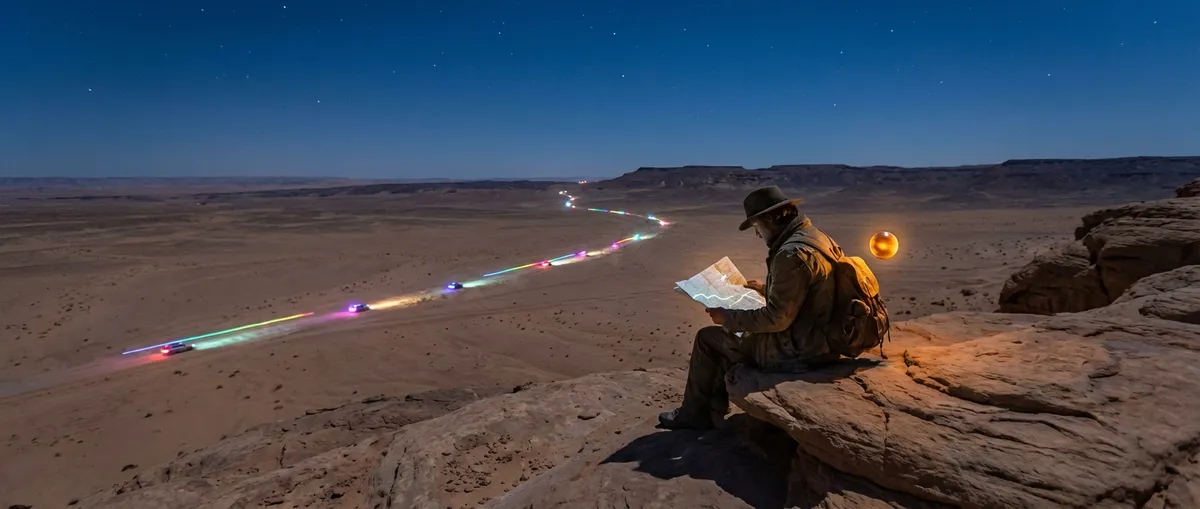
The magic is in the repetition. Do it in a sleeper train bunk, on a hostel rooftop, at the edge of a desert, or beneath a flickering street lamp. Over time, you’ll notice patterns: the way your mood changes after long bus rides, the foods that make you feel brave, the strangers who appear at just the right moment. Your ritual becomes a compass, not for directions on a map, but for the inner route you’re quietly tracing. It also creates bite-sized content that’s naturally shareable—photo series, journal snippets, voice-over reels that chart your evolving perspective rather than just your changing locations.
Ask One Bold Local Question Each Day
Small talk is fine. But the heart of a place lives in the questions tourists rarely ask. Challenge yourself to ask one bold, respectful question to a local every day—something that invites a story, not just information. Skip “What’s the best restaurant?” and try “Where do you go when you need to clear your head?” or “If your city were a person, how would you describe them?”
You can ask a café barista during a quiet moment, a hostel receptionist, a rideshare driver, or a vendor at the market. Be open that you’re traveling and genuinely curious, not trying to mine “secrets” for clicks. Accept that language barriers may turn your question into gestures and laughter—and that’s part of the adventure. These conversations often yield invitations to neighborhood festivals, unlisted viewpoints, or grandmothers’ recipes that never make it to guidebooks. When you share these moments online, you’re not just posting places; you’re amplifying voices, which makes your travel stories feel alive, grounded, and deeply human.
Reserve One Day With Absolutely No Purchases
In a world where trips can feel like moving from one transaction to the next, an intentional no-spend day can reset your sense of what travel is for. Pick a day—mid-trip is ideal—and decide in advance: no money leaves your pocket. That means planning ahead with snacks, water, and transit passes if needed, but once the day starts, the wallet stays shut.
A no-purchase day pushes you toward free layers of a place: public parks, self-guided street art walks, open church doors, seaside promenades, university campuses, local markets where looking costs nothing. It nudges you to pack sandwiches instead of defaulting to restaurants, refill water at public fountains where it’s safe, and linger longer in one spot instead of hopping between paid attractions. You learn how locals use their public spaces and how a city breathes when money isn’t the main language. Paradoxically, this “constraint” often becomes a trip highlight—and a powerful reminder that the richest moments rarely come with a ticket stub.
Conclusion
The best adventures rarely announce themselves with flashing signs and Top 10 lists. They slip in through small decisions: choosing to land softly instead of rushing, to wander inside a self-drawn boundary, to carry a ritual, to ask bolder questions, to step outside the constant hum of spending. When you weave these moves into your travels, every journey starts to feel more authored—less like you’re following a well-worn track, more like you’re sketching your own. The world doesn’t need another identical trip; it needs your version of the story. Pack your curiosity, bend a few rules, and see what unfolds when you travel like your orbit is entirely your own.
Sources
- U.S. Department of State – Traveler’s Checklist - Practical pre-trip planning guidance, including documents, health, and safety considerations that support more intentional travel.
- CDC – Travel Health Information - Up-to-date health advice and destination-specific recommendations to help you plan safe, sustainable adventures.
- UNWTO – Tourism and Culture Synergies - Insights into how travelers can engage meaningfully with local culture and communities.
- Lonely Planet – How to Travel Like a Local - Examples of connecting with local life and moving beyond typical tourist patterns.
- National Park Service – Plan Like a Park Ranger - Field-tested advice on planning days that balance structure with room for spontaneous exploration.