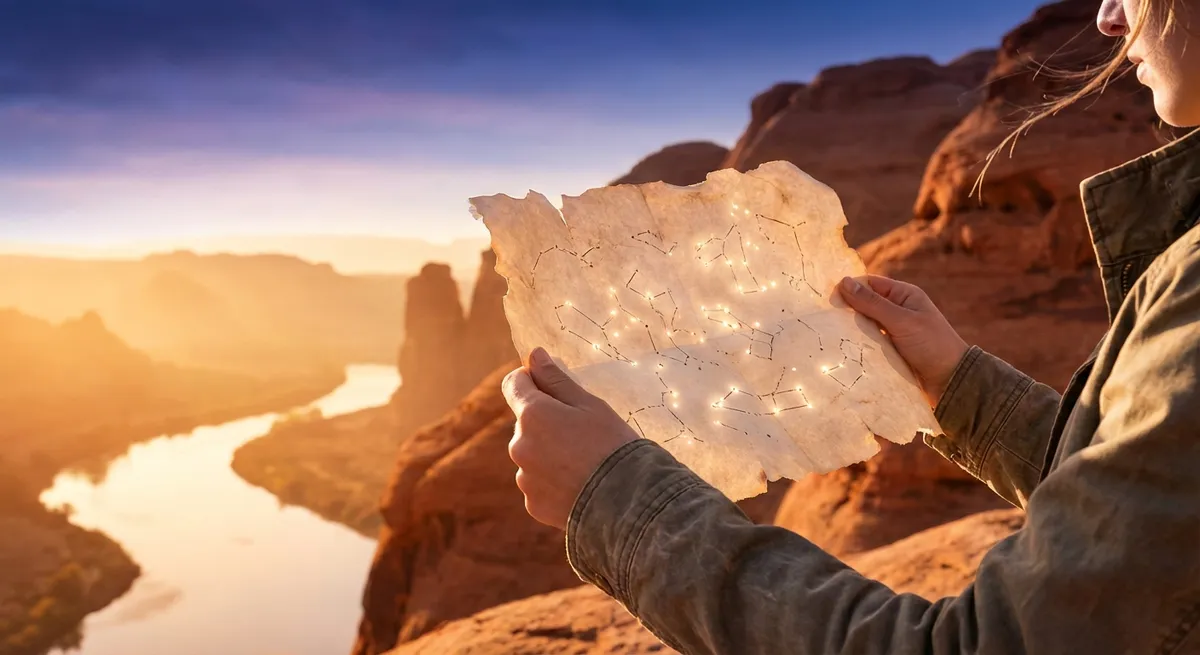
This is your invitation to step into five kinds of adventures—each one a different way to feel more alive, more present, and more connected to the planet beneath your feet.
1. Horizon-Chasing: Where Sky and Earth Blur Into One Long “Wow”
Some places feel like standing at the edge of the world, where the sky stretches so wide it almost swallows you whole. Horizon-chasing is about seeking those vast, open spaces—deserts, endless coasts, high plateaus, and tundras—where your perspective suddenly zooms out and your worries shrink to match.
Imagine walking along Namibia’s Skeleton Coast as fog pours off the Atlantic, or biking through the salt flats of Bolivia where the sky reflects so perfectly that it feels like you’re pedaling through the clouds. In landscapes like these, time slows down. Sunrises become events, not just background. Sunsets demand your silence.
Practical advice: In wide-open environments, preparation is your lifeline. Pack layers for temperature swings, sun protection, and more water than you think you need. Research local guides; in remote areas, their knowledge of weather patterns, safe routes, and cultural customs is priceless. Build in unplanned time—these are places where simply sitting still and watching the light change can be the highlight of your trip.
Horizon-chasing isn’t about checking off a destination; it’s about remembering how small you are in the best possible way, and how much world is still left to explore.
2. Elemental Adventures: Let Nature Set the Rules
Some journeys are less about the itinerary and more about surrendering to the raw elements: wind, water, rock, and ice. Elemental adventures put you in direct conversation with nature—kayaking beside fjords, learning to surf your first clean wave, or hiking along a volcanic ridge as warm steam rises from the earth beneath your boots.
Picture paddling through Norway’s deep-blue fjords at dawn, cliffs rising like ancient walls on both sides, or snorkeling above a coral reef in Indonesia as schools of fish move like shifting constellations. Whether you’re carving down a snowy slope in Japan or canyoning in the Azores, the shared feeling is clear: nature sets the tempo, and you learn to move with it.
Practical advice: Respect the environment and your own limits. Choose licensed guides with strong safety records, read recent reviews, and verify certifications for activities like diving, mountaineering, and whitewater rafting. Invest in proper gear—wetsuits, sturdy boots, or dry bags can turn a risky, uncomfortable day into an unforgettable one. Always check local conditions (tides, avalanche risk, weather warnings) and never ignore the briefing; that five minutes can change how the entire adventure plays out.
Elemental adventures remind you that the world is not a backdrop; it’s a living force that will push you, test you, and—if you treat it with respect—welcome you back changed.
3. Micro-Adventures: Epic Feeling, Short Distance
You don’t need a sabbatical or a round-the-world ticket to feel adventurous. Micro-adventures are compact bursts of exploration packed into one evening, one morning, or one weekend—close enough to be realistic, wild enough to be memorable.
Think: catching a sunrise from a hill you’ve never climbed in your own city, taking an overnight train just to wake up somewhere new for breakfast, or camping in a nearby forest instead of booking another hotel. Pack a thermos of coffee, a headlamp, and a warm layer, and hike to a viewpoint in the dark to watch dawn peel the shadows off the landscape. Or plan a “border day,” where you cross into the nearest neighboring region or country just to wander, eat something unfamiliar, and come back before bedtime.
Practical advice: Treat micro-adventures like real expeditions. Do a quick weather check, tell someone your plans, and pack essentials: water, snacks, a charged phone, and basic first-aid. Use local hiking apps, city cycling maps, or tourism-board websites to discover under-the-radar routes and spots. Set a micro-goal: sleep under the stars once a month, visit a new neighborhood every two weeks, or chase one sunrise and one sunset from a new vantage point each season.
Micro-adventures prove that “I don’t have time” doesn’t have to be the end of the story. They slip adventure into the spaces between your responsibilities—and slowly, they teach you to see your everyday surroundings as a playground instead of a cage.
4. Skill-Based Journeys: Travel That Leaves You More Capable
Some of the richest adventures aren’t about where you go, but what you can do by the time you leave. Skill-based journeys revolve around learning: a new language in a mountain village, freediving in the Mediterranean, photography in the Scottish Highlands, or traditional cooking in Oaxaca.
Imagine spending a week in a coastal town, starting with total clumsiness on a surfboard and ending with the shaky joy of riding your first unbroken wave. Or enrolling in a multi-day trekking and navigation course in the Alps, where you learn to read topographic maps, handle a compass, and understand weather signs. By tying your travel to a skill, you trade passive sightseeing for active growth—and you carry that ability with you long after your suitcase is unpacked.
Practical advice: Look for reputable schools or local experts—surf camps with certified instructors, climbing courses accredited by mountaineering councils, or language schools with strong reviews and small class sizes. Structure your days so you have both focused learning time and space to wander, practice, and rest. Travel light but bring the right essentials for your skill: a notebook for language practice, a camera you’re not afraid to use in the field, or a good pair of shoes for long hours on your feet.
Skill-based travel turns the world into your classroom and your own body and mind into evolving projects. Each trip becomes a milestone not just on the map, but in who you’re becoming.
5. Community-Powered Routes: Let People Be the Highlight
Some of the most powerful adventures aren’t about dramatic landscapes, but the human stories threaded through them. Community-powered routes center local people, culture, and traditions: slow journeys along historic pilgrimage paths, stays with host families, or visits to Indigenous-led tourism projects that share their land and stories on their terms.
Picture walking a historic trail where villages have hosted travelers for centuries, sharing simple meals and stories in kitchens that feel like time capsules. Or joining a community-run wildlife project, where your presence supports conservation and your days are spent learning how people and nature coexist. Instead of consuming a place, you’re participating in it—listening more than you talk, asking questions instead of assuming, and letting locals be the experts of their own homes.
Practical advice: Seek out community-based tourism initiatives through official tourism boards, conservation NGOs, or verified platforms that highlight ethical, locally-owned experiences. Learn basic phrases in the local language; the effort opens doors. Ask permission before photographing people or sacred sites, dress respectfully, and support local economies by choosing family-owned guesthouses, markets, and guides. Always check that wildlife and cultural encounters prioritize dignity, consent, and environmental care over entertainment.
Community-powered adventures leave you with more than just memories—they leave a positive footprint. You step away not only with stories, but with a deeper understanding of how interconnected we all are, and how your choices as a traveler can amplify or erode that connection.
Conclusion
Adventure isn’t a personality trait reserved for the fearless; it’s a practice. It’s the deliberate decision to keep your curiosity louder than your doubt, your sense of wonder bigger than your comfort zone. The world is wide, yes—but so is the unexplored territory inside you: the courage you haven’t tested yet, the skills you haven’t tried to learn, the perspectives you haven’t met.
Whether you’re chasing horizons in a distant desert, sneaking a micro-adventure into your weekend, or learning a new craft on unfamiliar soil, every journey is a chance to redraw the map in your head. You don’t have to wait for the “perfect time.” Start where you are, with what you have, and let the next step be the bravest one you’ve taken so far.
The world is ready when you are. The question is: how far are you willing to let your life expand?
Sources
- UN World Tourism Organization – Responsible Travel Tips - Guidance on sustainable and community-based tourism practices
- Leave No Trace Center for Outdoor Ethics - Core principles for minimizing environmental impact during outdoor and elemental adventures
- U.S. National Park Service – Trip Planning Resources - Practical safety and planning advice for hikes, backcountry trips, and nature-based travel
- British Mountaineering Council – Safety and Skills - Expert resources on navigation, mountain safety, and skill-building for adventure travel
- Adventure Travel Trade Association – Adventure Travel Trends - Insight into global adventure travel patterns and the rise of community-based and skill-focused trips