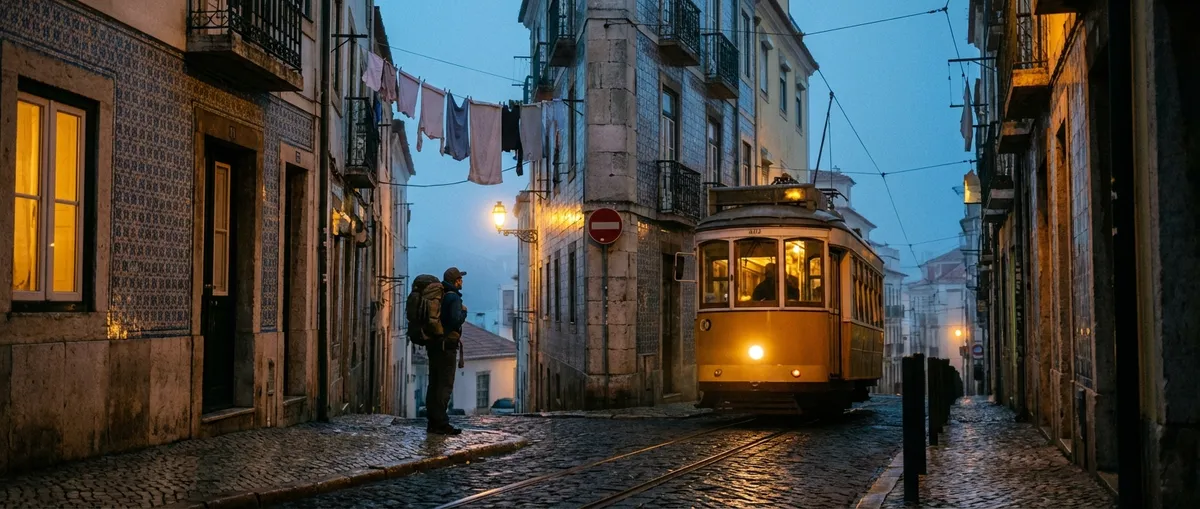
This guide isn’t about the “must‑see” photo ops. It’s about five kinds of places where the atmosphere is so intense, so textured, that being there feels like you’re walking through a living story. Each point is a different type of destination—so you can chase the feeling, not just the name on the ticket.
1. Port Cities Where the Air Tastes Like Departure
Port cities hum with the energy of people leaving and arriving, dreaming and returning. Stand near the water in places like Valparaíso, Marseille, or Busan and you can feel centuries of departure in the salt on the air.
Ships slide in and out, languages clash and melt together, and the streets often rise steeply away from the sea, stacked with staircases, viewpoints, and hidden alleys. These cities are built on trade and transition; as a traveler, you become part of that constant motion.
Make it unforgettable:
- Head to the working harbor at sunrise or just before dusk. Watch cranes moving, ferries loading, and local fishers coming in with their catch. This is the real heartbeat—louder than any souvenir market.
- Look for the oldest quarter near the docks. It’s often where immigrant communities first settled: layered cuisines, hybrid music, street art in multiple alphabets. Eat where port workers and taxi drivers are eating.
- Ride a local ferry instead of booking a full tour. You’ll see the skyline from the water, feel the rhythm of commuting life, and spend coins instead of a chunk of your budget.
- If possible, time your visit with a maritime festival or ship parade—tall ships, naval vessels, and traditional boats tell the story of how this city learned to speak ocean.
Port cities remind you that travel isn’t new: it’s a very old human instinct. When you stand on the edge of a working harbor, every future journey suddenly feels closer.
2. High-Altitude Towns Where the Sky Feels Within Reach
There’s something quietly radical about stepping into thin air and realizing that the sky is not an abstract ceiling—it’s right there, almost tangible. High-altitude destinations like La Paz, Leh, or Cusco have a way of slowing you down and sharpening your senses.
In these towns, streets climb like staircases, clouds pass eye‑level, and sunlight feels more direct. Your breath may come shorter, but your awareness grows wider. Life has adapted here: architecture, food, rituals, and daily rhythms all bend toward the mountain.
Make it unforgettable:
- Give yourself at least a day just to acclimatize. Drink water, move slowly, and use that “pause” as an invitation to simply sit, watch, and listen in a main square or teahouse.
- Seek out local viewpoints reached by foot or funicular rather than long drives. Even a short climb can deliver a view that resets your internal map of “near” and “far.”
- Try the foods that evolved for altitude: hearty stews, local grains, herbal teas. These dishes are like edible survival guides, honed over generations.
- Visit a market at first light. Altitude dawns can be crystal clear; the first hour of commerce is often practical and unfussy, all function and purpose, before the tourist layer wakes up.
- Pack layers and a light scarf or buff: sunny plazas can feel like summer, shaded alleys like late autumn. Learning to flow with that shift becomes part of the adventure.
High-altitude towns teach you humility with every staircase and reward you with vistas that feel like looking over the edge of the ordinary.
3. River Cities That Flow Like Living Maps
Follow a river and you follow a story. River cities—think Budapest on the Danube, Cairo on the Nile, or Porto on the Douro—grow along curves instead of straight lines. Bridges become anchors, embankments become promenades, and neighborhoods stretch in long, meandering bands.
Here, your sense of direction isn’t north, south, east, or west—it’s upstream or downstream. The water becomes your compass; cafés, markets, and parks arrange themselves around that shifting ribbon of light.
Make it unforgettable:
- Walk one bank in one direction and return on the opposite side. You’ll see two totally different personalities of the same city: workers’ shortcuts on one side, grand facades on the other.
- Cross every pedestrian bridge you can. Each one frames the river differently—sunsets, skylines, or industrial silhouettes—and offers a distinct soundtrack of buskers, cyclists, and commuters.
- Instead of a full cruise, try a public riverboat or commuter ferry if available. It’s cheaper, less staged, and threaded into real daily life.
- Seek out spots where the city touches the river most intimately—laundry steps, fishing corners, or tiny docks with old boats. The smaller the access point, the more local the story.
- Visit the river at three times: early morning, midday, and late evening. You’ll see it change from mirror to highway to shimmering stage.
River cities whisper that no place is fixed; everything moves, bends, and reshapes itself—just like you do when you travel.
4. Desert Gateways Where Night Feels Ancient
Some destinations sit at the edge of vast deserts—Marrakesh before the Sahara, Alice Springs before the Outback, Wadi Rum’s camps between rock and sand. These places feel like thresholds between the human world and something older, quieter, and more patient.
The days can be bright and busy—markets, buses, excursions—but when the sun drops, the sky expands into a dome of stars that makes city nights feel small and cluttered by comparison. In desert gateways, you feel time stretching both backward and forward around you.
Make it unforgettable:
- Choose at least one night to stay just outside the city, in a desert camp or rural lodge, to escape light pollution. Ask about stargazing; some places have guides who know constellations and local legends.
- Wake before dawn to watch the color shift from indigo to gold across rock and sand. This transition is slow enough to feel, fast enough to be thrilling.
- Travel with respect: stay on marked paths, pack out all trash, and dress for both heat and chill—a desert evening can drop from warm to cold shockingly fast.
- Listen for silence. Away from generators and traffic, there’s a level of quiet where your own heartbeat and breathing become part of the landscape.
- Share tea or coffee with your hosts if invited. Desert hospitality traditions often run deep: a simple cup can open the door to stories about migration, survival, and family histories tied to this terrain.
Desert gateways show you how small you are on the planet—and somehow, that smallness feels liberating rather than frightening.
5. Night-Shift Cities That Wake Up After Dark
Some cities only reveal their true shape when the sun goes down. Neon reflections on wet pavement in Tokyo, late‑night food stalls lighting up in Mexico City, or music spilling out of doorways in Lisbon—the night shift has its own geography.
In these places, evening isn’t an afterthought; it’s the main event. Entire micro-economies bloom after dusk: street chefs, musicians, vendors, buskers, night markets, and late trains. You’re suddenly part of a city that feels lighter, more spontaneous, and a little bit electric.
Make it unforgettable:
- Start your evening in a quiet neighborhood bar or café where locals gather to reset after work. Watch how the city’s energy gradually climbs.
- Follow the food: night markets, street corners with queues, and simple joints with plastic stools are often the best taste of a city’s soul after dark.
- Keep your navigation simple at night. Pick a main street or area as your “spine,” and explore short side detours so you can always find your way back without stress.
- Ask locals or your accommodation for realistic safety advice: which transport options to use, which areas to avoid, how late the metro runs. Feeling informed is the foundation of feeling free.
- End your night somewhere high if possible—a hill, rooftop bar, or public viewpoint. Looking down at the city lights is like reading a glowing map of all the scenes you’ve just walked through.
Night‑shift cities prove that destinations are not static: they reinvent themselves every few hours, and if you’re willing to shift your schedule, you get to see both versions.
Conclusion
The world is full of “top ten” lists and bucket‑worthy landmarks, but the destinations that stay with you are usually the ones that feel alive in your memory: the port where you tasted your first sunrise, the mountain town where stairs became meditation, the riverbank where you walked until your thoughts cleared, the desert where the stars felt close enough to touch, the street where a late‑night meal turned into new friends.
Instead of chasing every famous dot on the map, chase these feelings: departure, altitude, flow, threshold, and night. Let them guide you to port cities, high‑altitude towns, riverfront skylines, desert gateways, and nocturnal streets that will become part of your personal mythology.
The next time you plan a trip, don’t just ask, “Where should I go?” Ask, “What do I want to feel?” Then point your compass toward the kind of destination that answers that question—and step into the story waiting for you there.
Sources
- UN World Tourism Organization – Tourism Highlights – Global tourism trends and data that inform how destinations evolve and attract travelers
- UNESCO World Heritage Centre – Detailed information on culturally and naturally significant sites around the world, including historic cities, river landscapes, and desert regions
- National Geographic – Travel – In-depth destination features and photo essays on ports, deserts, high-altitude towns, and more
- NASA – Nighttime Lights and Earth at Night – Visual exploration of how cities transform after dark, with satellite imagery and analysis
- Centers for Disease Control and Prevention – Travelers’ Health – Practical guidance on staying healthy in various environments, including high-altitude and desert destinations