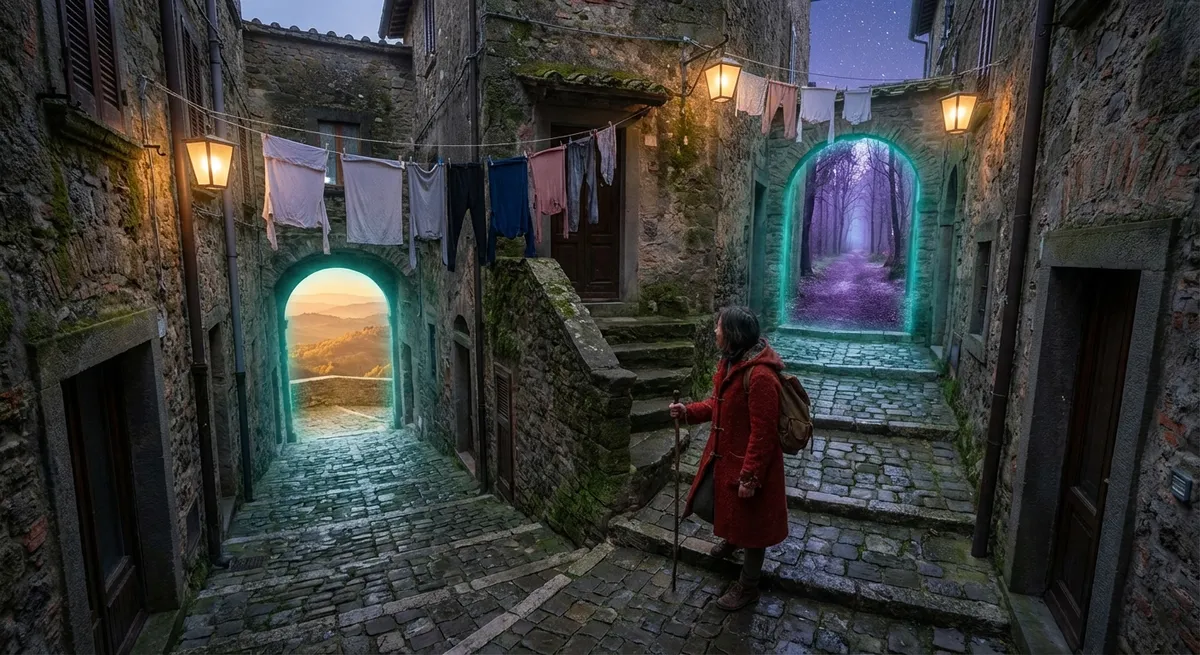
Let’s walk through five places around the world where the everyday feels cinematic, the details feel alive, and each corner invites you to wander a little further than you planned.
Lisbon: The City That Moves to the Rhythm of the Hills
Lisbon doesn’t unfold in a straight line—it rises, dips, curls, and climbs. It’s a city built on seven hills where your calves earn the views and the reward is always an endless wash of terracotta rooftops meeting the wide silver-blue Tejo River.
You feel its character in the rumble of the yellow tram 28E grinding up cobbled streets, in the laundry swinging like flags between pastel buildings, in the scent of grilled sardines curling through maze-like alleys. Sunrise here belongs to early risers leaning over miradouros (viewpoints) in neighborhoods like Graça and São Pedro de Alcântara, watching the city change color from blue to gold.
At night, Alfama’s tangle of streets hides tiny taverns where fado singers pour heartbreak into the room so intensely that even the clink of glasses goes quiet. Days can be unhurried and simple: climb Belém Tower, taste a still-warm pastel de nata dusted with cinnamon, wander the futuristic riverfront at Parque das Nações, then follow the echo of street musicians into the twilight.
Practical move: Pick one hilltop neighborhood per day and walk it slowly—Graça, Alfama, Bairro Alto, or Príncipe Real. Lisbon rewards the traveler who trades speed for curiosity and lets their route be shaped by the next inviting stairway.
Kyoto: Where Everyday Moments Feel Like Time Travel
Kyoto is not a museum piece preserved behind glass; it’s a living city constantly shifting between centuries. A commuter in a suit might step off a train beside a woman in a silk kimono; a glowing FamilyMart convenience store can sit across from a 400-year-old temple garden.
The magic lies in the contrast. At Fushimi Inari Taisha, thousands of vermilion torii gates wrap around the mountain like a painted tunnel, and the steady climb turns every step into a small pilgrimage. In the Arashiyama Bamboo Grove, light rarely hits the ground; instead, it filters down in long, soft shafts that make the whole walkway feel like a quiet, green cathedral.
But Kyoto’s real power shows up in the spaces between famous spots: a tiny kissaten (coffee shop) where the owner still brews by hand; a side street in Gion where you might glimpse a geiko gliding past; a vending machine glowing on a silent lane beside a mossy shrine. Visit in shoulder seasons—late November for flaming maple leaves or early April for shy cherry blossoms—and you’ll see the city shift into something storybook.
Practical move: Anchor your days with one major temple area (like Higashiyama, Arashiyama, or Fushimi) and then leave extra time to get lost in nearby residential streets. Kyoto’s quiet corners are where the time-travel feeling really hits.
Mexico City: A Megacity That Feels Like a Mosaic of Worlds
Mexico City is vast, but it doesn’t hit you as a chaotic blur—it arrives in layers. Each neighborhood feels like its own self-contained universe, stitched together by tree-lined avenues, taco stands, and the hum of a city that never quite sleeps.
In Coyoacán, blue-painted walls and cobbled streets wrap around Frida Kahlo’s Casa Azul, and the plazas fill with artists, families, and vendors selling elotes and churros. Condesa and Roma feel like leafy, bohemian enclaves where cafes spill onto sidewalks, bikes roll past art deco buildings, and street dogs nap in sun patches. Then there’s the Centro Histórico, where the Zócalo opens like a stone sea surrounded by cathedrals and colonial architecture.
Beyond the city’s heart, you can board a flat-bottomed trajinera at Xochimilco and float through ancient canals while mariachi bands play from neighboring boats. Or head to Teotihuacan, just outside the city, and climb the Pyramid of the Sun to look over the remnants of a civilization that predates the Aztecs.
Practical move: Think of Mexico City as a series of hyper-local adventures. Pick one or two neighborhoods per day and explore on foot—stop at markets (like Mercado de la Merced or Mercado Roma), hop between street-food stalls, and use the Metro or rideshares to bridge the distances in between.
Tbilisi: Where Old-World Charm Meets Untamed Edges
Tbilisi, the capital of Georgia, feels like a place caught mid-transformation. The city sprawls along the Kura River, its hills dotted with crumbling fortresses, Soviet-era blocks, and glassy modern structures that look like they’ve landed from the future.
In the Old Town, wooden balconies lean over narrow lanes, and sulfur baths still steam beneath brick domes near Abanotubani. Climb up to Narikala Fortress—whether by cable car or steep stairway—and you’ll stand eye-level with the giant Mother of Georgia statue, watching the sun slip behind layered rooftops and distant ridgelines.
What makes Tbilisi unforgettable is the way creativity threads through it: wine bars tucked into old cellars serving amber qvevri wines, street art blooming on forgotten walls, and design shops repurposing Soviet-era aesthetics into something defiantly new. Day trips can carry you into the wine region of Kakheti or the mountain trails of Kazbegi, but it’s always Tbilisi’s ragged elegance that pulls you back.
Practical move: Base yourself near the Old Town or Vera neighborhood and let your days ripple outward—mornings in cafes, afternoons in galleries or sulfur baths, evenings in hidden courtyards sipping local wine and listening to the city buzz around you.
Cape Town: A City Pinned Between Ocean and Mountain
Cape Town feels like a place written in bold strokes—sharp mountain peaks, sprawling coastlines, and weather that can flip a sky from postcard-blue to cinematic storm in an afternoon. It sits between the Atlantic and Table Mountain, and that geography shapes everything.
Cable-car up or hike the trails to the top of Table Mountain and you’ll see the city scatter out like a toy set: Lion’s Head to one side, Camps Bay curving along the ocean, Robben Island sitting small in the distance. Down at sea level, the V&A Waterfront hums with restaurants and live music, but turn a corner and you can be watching penguins shuffle down the sand at Boulders Beach.
Drive Chapman’s Peak at sunset and you’ll snake along cliffside roads carved high above the waves. Wander between colorful houses in Bo-Kaap, learning how spice and community shaped the neighborhood. Or push further: into the vineyards of Stellenbosch and Franschhoek, or down to Cape Point, where the land finally runs out and the wind feels feral.
Practical move: Pair high-energy days (like summit hikes or long coastal drives) with slower recovery days in a single area—Sea Point promenades, Camps Bay beaches, or wine-country picnics. Cape Town is intense in the best way; pacing yourself lets you really absorb it.
Conclusion
The world is full of famous landmarks and postcard-perfect viewpoints, but the destinations that stay with you do something deeper—they change your internal settings. A Lisbon stairway that leads to a surprise terrace. A Kyoto lane that smells of incense and rain. A Mexico City taco stand that ruins you for all other meals. A Tbilisi courtyard lit by one lone bulb. A Cape Town sunset that makes every other horizon feel smaller.
You don’t have to chase distance to feel far away—you just have to step through the right doorway and give yourself permission to wander without rushing. Pick one of these cities, arrive with a loose plan and a curious heart, and let the streets show you who you are when you’re far from home.
Sources
- Visit Lisboa – Official Tourism Site – Practical information on Lisbon neighborhoods, viewpoints, attractions, and cultural experiences.
- Kyoto City Official Travel Guide – Detailed coverage of temples, districts, seasonal highlights, and travel tips for Kyoto.
- Mexico City Tourism – Official Site – Neighborhood overviews, major sites, markets, and cultural activities in Mexico City.
- Tbilisi City Hall – Tourism Information – Background on Tbilisi’s history, districts, and key visitor attractions.
- Cape Town Travel – Official Destination Website – Guides to Cape Town’s natural landmarks, neighborhoods, activities, and day-trip ideas.