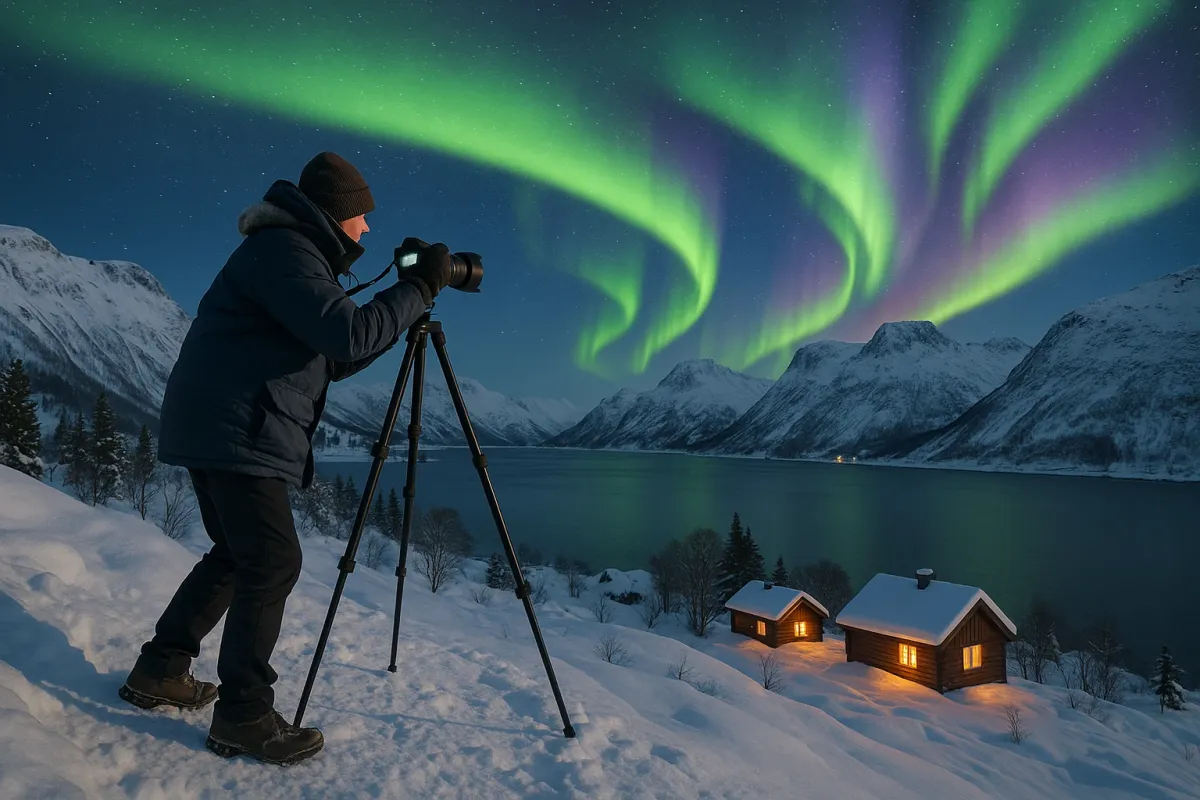
This isn’t just a pretty headline—it’s a wake‑up call for adventure. The same solar activity lighting up news sites right now can shape your next big trip, if you know how to chase it. Here’s how to turn this moment into a real‑world, aurora‑hunting journey you’ll remember every time the sky starts to shimmer.
Follow the Solar Storms, Not the Souvenir Shops
Right now, geomagnetic storms are front‑page news. When agencies like NOAA’s Space Weather Prediction Center and the European Space Agency start issuing aurora alerts, that’s your cue to plan, not just scroll. Instead of randomly picking a “pretty winter destination,” build your route around the auroral oval—the ring around the poles where the lights most often appear—currently dancing over hot spots like Tromsø (Norway), Rovaniemi (Finland), Abisko (Sweden), and Reykjavík (Iceland).
Treat the forecasts like a treasure map. Apps and sites displaying Kp indices, cloud cover, and real‑time aurora probability let you pivot on the fly: one night you’re leaving the light‑polluted city behind, the next you’re chasing a gap in the clouds along a frozen fjord road. Adventure here is about agility. Book flexible stays, rent a car where roads are maintained, and stay ready to move with the storm instead of anchoring your hopes to one viewpoint and one perfect night.
Make Night Your Playground, Not Your Afterthought
Aurora trips flip your daily rhythm on its head—and that’s part of the thrill. While the recent solar storm had people staying up until 2 or 3 a.m. just to catch the show, seasoned aurora chasers already live by this rule: the night is your main event, not a side quest.
Plan your days with intention. Sleep in, keep afternoons mellow, and fuel up on hearty local food—think reindeer stew in Lapland, fish soup in northern Norway, or geothermal greenhouse tomatoes in Iceland. Then, when most travelers are heading back to their hotels, you’re layering up, filling a thermos, and stepping into the kind of dark stillness city life never offers. Snow crunching under boots, the hiss of wind over a frozen lake, maybe the distant bark of sled dogs—and then, suddenly, a faint smudge of green that grows into a curtain of light. You’re not just witnessing a phenomenon; you’re learning how it feels to let the dark be where the magic lives.
Trade City Lights for Campfires and Glass‑Roofed Cabins
This week’s viral aurora photos mostly have one thing in common: they weren’t taken from the middle of a big city. Light pollution washes out the sky, so the real adventure means leaving neon behind for headlamps and starlight. The upside? The places where the sky comes alive are also where wild experiences are waiting for you.
In Finnish Lapland and northern Sweden, glass‑roofed cabins let you watch the aurora from beneath a duvet, frost lacing the windows while the sky burns green and violet above you. In Norway, you can base yourself in a tiny fishing village on the edge of a fjord, where reflections of the aurora ripple on black water. Iceland offers farm stays far from Reykjavík’s glow, where you step out of a hot tub into air so crisp it feels drinkable, just in time for a solar flare to ignite the clouds from behind. When you choose darkness, you don’t just see better—you feel more. The world narrows to firelight, shared stories, and the possibility that at any moment the sky might start to move.
Let Winter Adventures Power Your Aurora Hunt
The people booking last‑minute flights during this solar storm aren’t just standing around in parking lots staring up. They’re turning aurora trips into full‑throttle winter adventures—and you can, too. The beauty of chasing the Northern Lights is that your days can be just as epic as your nights.
Mush a team of huskies through snow‑blanketed forests, the only sound their paws whispering across the trail. Snowshoe up to a ridge above a frozen valley to scout tomorrow night’s lookout point in daylight. Ride a snowmobile over a plateau in northern Norway where mountains drop straight into the sea, then return after dark to see those same peaks silhouetted against dancing green. In Iceland, pair aurora hunting with hiking across black‑sand beaches and steaming geothermal fields shaped by the same restless sun and Earth that create the lights you’re chasing. Each activity turns “waiting for the aurora” into “living an expedition” where every hour adds texture to the story you’ll bring home.
Travel Like a Sky‑Scientist: Gear, Timing, and Mindset
Today’s headline‑worthy solar flare won’t last forever, but the sun is heading through an active phase, which means the coming seasons could be rich with aurora potential. To ride that wave, travel like someone who respects both the science and the wildness of the experience.
Pack with purpose: moisture‑wicking base layers, serious insulation, windproof shells, and boots that actually keep your toes warm at −20°C. For photography, a tripod and a camera or phone with manual settings will let you capture what your eyes can barely believe—wide aperture, high ISO, and longer exposures are your friends. Time your trips for peak darkness and clearer skies: late autumn through early spring, with new moons and shoulder seasons often offering quieter, more intimate encounters than the busiest holidays. Most importantly, hold your expectations the way you hold the night sky: open, patient, and curious. Even on nights when the solar wind calms down, you still walked under more stars than you ever see at home. You still listened to the silence of snow. You still showed up.
Conclusion
Right now, somewhere above the Arctic Circle, tonight’s aurora forecast is loading on a guide’s phone while guests zip up their parkas and step into the cold with nervous excitement. This week’s solar storm might be making headlines, but for those people—and for you, if you choose it—it can be something more: a catalyst.
You don’t have to wait for the “perfect” conditions or the biggest storm of the decade. You just have to decide that the next time the sky makes the news, you’ll chase it instead of just sharing it. Book the flight north. Embrace the dark. Let the cold bite your cheeks and the solar wind write its story above you. Adventures don’t always start on the ground—sometimes, they begin when you look up and decide to follow the light.