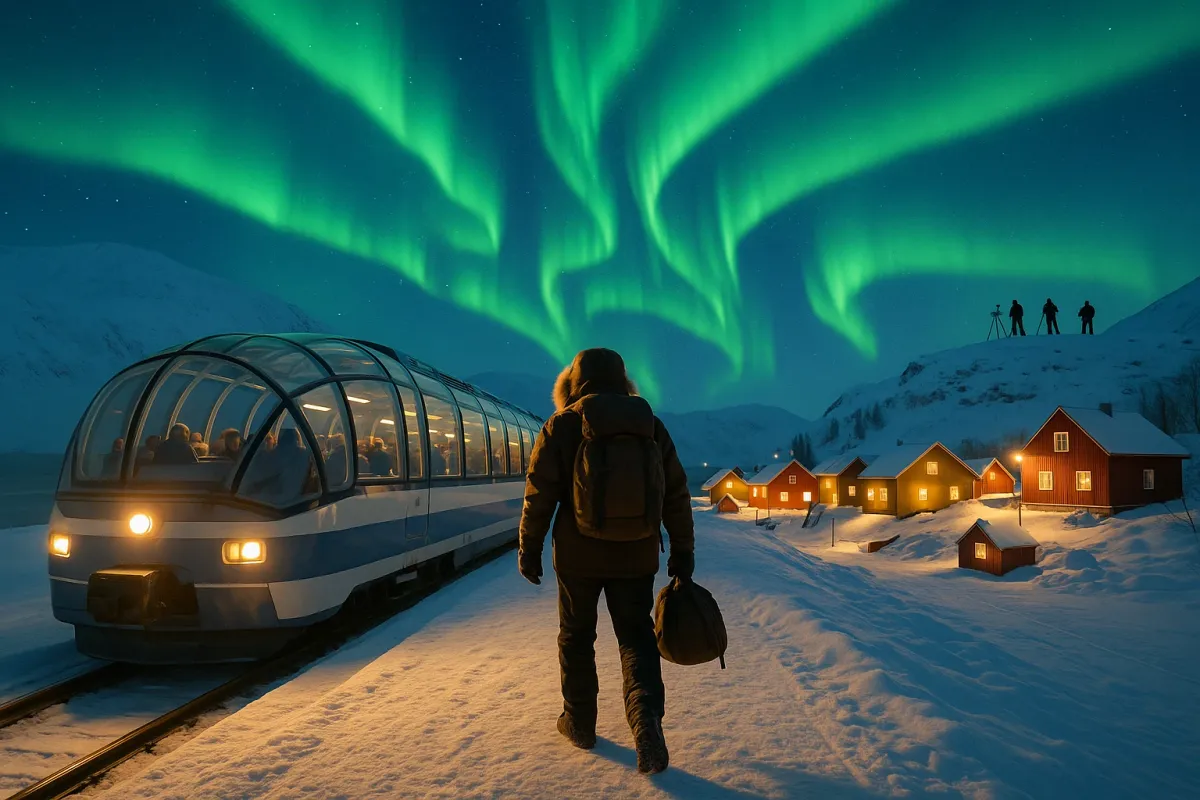
If you’ve ever thought, “One day I’ll see the aurora,” that “one day” might need to move way up your list. The conditions happening right now are rare, powerful, and already shaping where adventurous travelers are booking their next flights. Here’s how to ride the 2025 aurora wave—and where to go when you’re ready to step under the brightest skies of your life.
Follow the Solar Storms: Why 2025 Is a Once‑in‑Years Window
The sudden spike in Northern Lights travel this year isn’t random—it’s science. We’re near the peak of Solar Cycle 25, a period when the Sun hurls more charged particles toward Earth. Space weather agencies like NOAA’s Space Weather Prediction Center and the European Space Agency have been flagging stronger geomagnetic storms, and social media has done the rest: every time a big storm hits, Instagram and TikTok flood with surreal green and purple skies from people who, until recently, didn’t even know what a Kp index was.
Practically, this means two things for you as a traveler. First, your odds of seeing a display on a short trip are significantly better this winter than in the quiet years in between solar peaks. Second, the aurora is pushing farther south than usual—so cities like Edinburgh, Reykjavik, and even parts of northern Germany and the northern U.S. occasionally get surprise shows. To make the most of this moment, watch space-weather alerts like you’d watch a flight deal: apps such as My Aurora Forecast, Aurora Alerts, and websites like SpaceWeatherLive can help you time your trip to coincide with increased activity. Think of it as planning around a cosmic concert tour—one that doesn’t come through every year.
Beyond Iceland and Norway: Rising Aurora Hotspots You Haven’t Booked Yet
Iceland and Norway are still the headliners of aurora travel, and they’re busier than ever this season—Reykjavik hotel bookings and Tromsø tours have surged as viral Northern Lights content circles the globe. But if you’re craving a little more quiet and a lot more space, this year’s boom is shining a spotlight on some less-hyped, breathtaking destinations.
In Finnish Lapland, towns like Rovaniemi and Levi are leaning into aurora tourism with glass‑roofed igloos, husky safaris, and snowshoe treks that end in steaming saunas under the stars. Across the border, Swedish Lapland’s Abisko remains a cult favorite among serious aurora chasers because of its uniquely stable microclimate—clouds tend to split around the lake, leaving clearer skies when other regions are socked in. Meanwhile, Canada’s Yukon and Northwest Territories are finally getting the global attention their skies deserve: Whitehorse and Yellowknife have reported increased winter bookings as travelers from Europe and Asia chase less-crowded Arctic experiences. Even smaller spots—like Alta in Norway or Kiruna in Sweden—are trending upward in bookings, as people seek dramatic fjords and frozen forests minus the major city vibe.
Design Your Own “Aurora Basecamp” Experience
The newest Northern Lights trend isn’t just about where you go, but how you stay. All over the auroral zone, hotels and adventure lodges are racing to create “aurora basecamp” experiences—places where everything from your bed to your breakfast is crafted around late-night sky‑watching. This winter, glass igloo villages in Finland, bubble hotels in Iceland, and panoramic cabins in Northern Norway are going viral precisely because they turn the whole night into an event.
When you plan your own basecamp, look for three things: dark skies, a wide northern view, and on‑site activities that keep the day just as magical. Imagine waking up in a heated cabin near Abisko, taking a snowmobile across a frozen lake at midday, then soaking in a hot tub as green curtains unfurl overhead at midnight. Or picture a stay near Whitehorse, where your lodge includes photography lessons by day and bonfires under the aurora by night. Prioritize lodgings that offer aurora wake‑up calls, flexible late‑night meals, and shared spaces where travelers trade stories—because some of the best memories will come not just from the sky, but from the people who watched it with you.
Travel Like a Sky Chaser: Practical Tactics That Maximize Your Odds
Seeing the Northern Lights is never guaranteed, but right now, strategic travelers are stacking the odds in their favor. Trip length matters: aim for at least three to five nights in an aurora zone to give yourself multiple chances across different weather patterns. Location matters even more—choose destinations that combine strong geomagnetic latitude with easy access to dark, rural areas. Even in famously bright places like Reykjavik, a 30–60 minute drive can transform your horizon from city glow to pure starlight.
Pack like an explorer, not a weekend shopper. Layers are your lifeline: start with a moisture‑wicking base layer, add insulating mid‑layers (fleece or wool), and top everything with a windproof, waterproof shell. Don’t neglect extremities—thermal socks, insulated boots, glove liners under mittens, and a serious hat can be the difference between staying outside for 15 minutes and staying long enough to catch a display that peaks an hour after everyone else goes in. Consider renting a car if you’re comfortable with winter driving; being able to chase a gap in the clouds 40 kilometers away can turn a “no show” night into an unforgettable one. And if you don’t want to self‑drive, local aurora tours in Iceland, Scandinavia, and Canada often include real‑time cloud analysis and flexible routes—the guides are basically professional sky hunters.
Turn Your Aurora Trip Into a Story Worth Telling
This year’s Northern Lights surge isn’t just altering flight paths; it’s reshaping how travelers tell their stories. Viral posts from solo adventurers, couples, and families under electric green skies are inspiring others to step outside their comfort zones and into the cold. If you go, think about your trip as a story arc, not just a bucket‑list checkbox: what challenge are you overcoming to get there—fear of the cold, first solo trip, first time above the Arctic Circle? Build that into your journey.
Bring a camera that lets you switch to manual mode (even many phones now support long exposures), and learn a few basic settings before you fly—low ISO noise, 10–20‑second exposures, and a tripod or stable surface can turn a faint arc into a vivid memory. But don’t live only through the lens; give yourself at least one “no cameras” night where you simply stand in the snow, breathe, and let the sky happen. Share your experience when you come home, not just as a highlight reel, but as an invitation: explain the patience, the false alarms, the moment you almost gave up before the sky exploded. In a year when the aurora is rewriting what winter travel can look like, your story might be the spark that sends someone else north.
Conclusion
Right now, the universe is putting on a rare performance, and travelers are responding—booking cabins in Lapland, flights to Whitehorse, and night tours out of Reykjavik and Tromsø at a pace that would have seemed unlikely just a few winters ago. The Northern Lights boom of this solar maximum isn’t just another trend; it’s an invitation to rethink what adventure looks like in the depths of winter.
If you’ve ever promised yourself you’d chase the aurora “someday,” consider this your nudge from the cosmos. Watch the solar forecasts, pick your patch of Arctic sky, build your basecamp, and give yourself enough nights to let the magic find you. The world is heading north; this is the moment to step into the cold, look up, and let the sky rewrite what travel means to you.