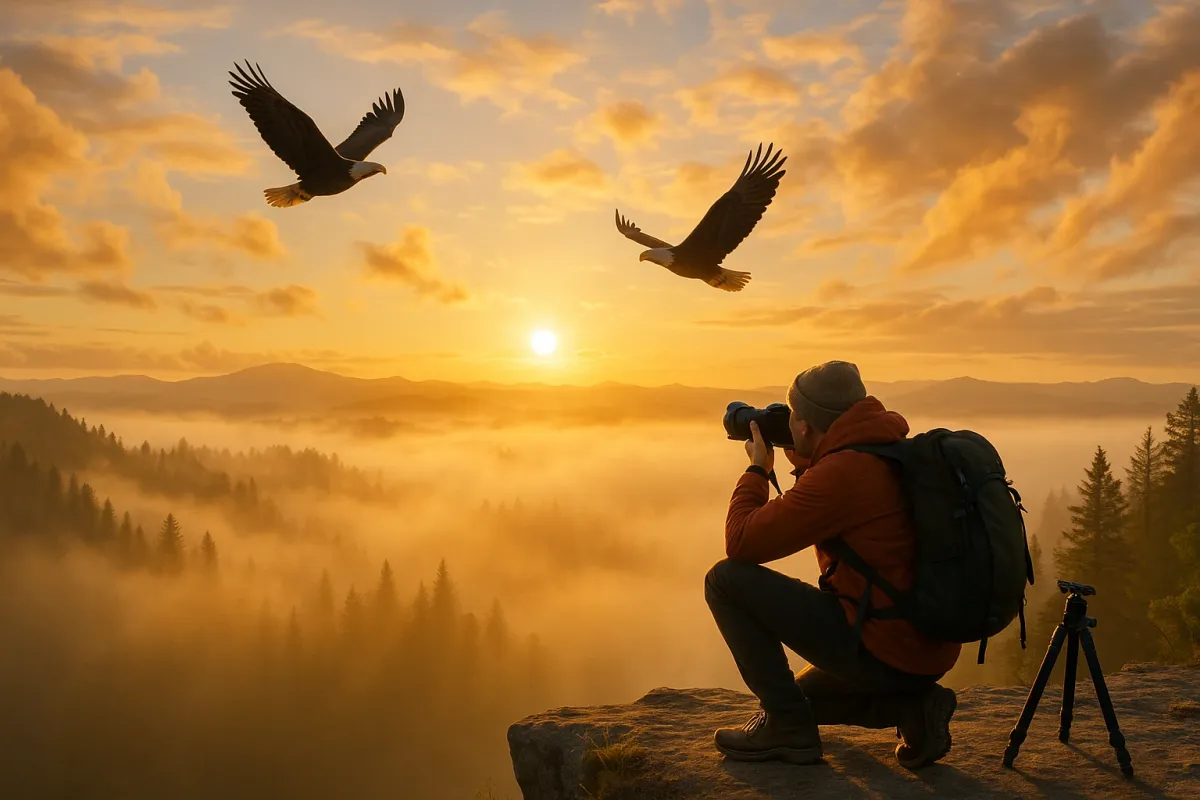
So instead of just double-tapping those viral images, what if you let them rewrite your travel plans? Inspired by the real Nature Photographer of the Year 2020 winners, here’s how to turn their award‑winning moments into your own wild, camera-ready adventures—regardless of whether your “camera” is pro gear or just your phone.
Follow the Light: Sunrise and Sunset as Your Travel Compass
Look closely at those winning shots from Nature Photographer of the Year: hardly any of them were taken at noon. They’re drenched in gold, blue, and soft pink—the colors of the “golden” and “blue” hours right after sunrise and just before or after sunset. That isn’t an accident; it’s strategy. The best nature photographers plan their entire day around chasing light, not just landmarks.
Adopt their rhythm on your next trip. Pick one location each day that you want to see in peak light—a mountain ridge, a city park, a frozen lake, a coastal cliff—and time your arrival for dawn or dusk. Use sunrise and sunset apps to plan your move, then build the rest of your day around that anchor moment. Wear layers, bring a headlamp, and pack something warm to drink. The bonus? Crowds thin out, wildlife stirs, and even familiar destinations look like they’ve been dialed up to epic. You’re not just “going to a viewpoint”; you’re hunting a specific light, like the pros do.
Go Where the Animals Still Rule
Many of the 2020-winning images are powerful because they were captured where animals still call the shots—brown bears fishing in rushing rivers, birds threading through coastal storms, snow‑dusted deer emerging from fog. These aren’t zoo portraits; they’re moments from places where humans are guests, not hosts.
You can design travel around the same principle. Instead of just adding a safari or whale-watching tour as a side activity, make wild habitats the actual centerpiece of your trip. Research national parks and reserves that appear in award‑winning photography: places like the Scandinavian forests, the African savannahs, or wetlands along major bird migration routes. Choose local guides with conservation credentials—many of the pros whose work wins contests partner with such guides for safety and ethical access. Learn basic animal behavior before you go, so you can read the landscape rather than just stare at it. The goal isn’t just to tick off sightings; it’s to feel that electric awareness you get when you know you could turn around and see something unforgettable at any second.
Treat Weather as Your Co‑Pilot, Not Your Enemy
Scroll through the 2020 winners and you’ll notice something odd: the “bad” weather is doing most of the storytelling. Elements like driving rain, snow squalls, ground fog, or high winds turn simple scenes into drama. Those shots didn’t happen on blue-sky beach days; they happened because someone leaned into the forecast instead of hiding from it.
Adventure like that. When you plan a trip, don’t only circle the perfect, sunny days—circle the ones that look moody or volatile, too. Pack a lightweight rain shell, a waterproof phone pouch, and a quick-dry base layer so weather becomes a feature, not a crisis. If a storm is rolling in, pick high‑contrast places: coastal cliffs, dune fields, open plains, or high viewpoints where you can safely watch clouds muscle through the sky. Obviously, know your limits and respect local safety warnings—but within those boundaries, let the elements reshape your plans. Some of your most shareable, goosebump-inducing memories will come from the days you almost stayed inside.
Shrink Your World: Focus on Tiny, Overlooked Wonders
One of the most striking threads in the Nature Photographer of the Year 2020 gallery is how often the big picture disappears. Instead, you get moss forests on a fallen log, frost crystals on a leaf, or the reflection in a single droplet of water. Macro and close-up images have exploded on social feeds because they feel like secret worlds—and they’re often found within a few steps of where people are already standing.
Bring that mindset to your travels. Instead of sprinting from “must-see” view to “must-see” view, deliberately carve out time to stay put and zoom in. Sit beside a stream for half an hour and explore nothing but the stones at your feet. Check the underside of leaves after rain. Watch how light slides across a single rock as clouds move. A basic phone camera can get surprisingly close if you tap to focus and steady your hands. Creatively, this is where your trip becomes yours; no one else will photograph that exact droplet, that exact cluster of lichen, that exact pattern of sand. It’s also one of the best ways to find calm and presence in the middle of a high-energy adventure.
Travel Like a Storyteller, Not a Collector
The winning photographs from 2020 don’t just say, “Look how beautiful this is”; they say, “Something happened here.” A fox crossing a frozen field, a wave collapsing around a surfer-sized rock, auroras unfurling over a sleeping cabin—each frame has a before and after that we feel, even if we don’t see it. That’s what makes them linger in our minds and on our feeds.
Let that idea shape how you move through the world. Before you head out each day, ask yourself: “What is today’s story?” Maybe it’s “The day we chased fog up the mountain,” or “The long wait by the tide pools,” or “The storm that almost sent us home.” Instead of snapping hundreds of near-identical photos, shoot in chapters: the approach, the challenge, the surprise, the quiet moment after. Jot a few notes in your phone when you stop for a snack. Later, when you share, pair a handful of images with a short narrative rather than a generic caption. You’ll inspire others to travel more intentionally—and remind yourself that the real adventure isn’t the single, perfect shot. It’s everything you did, felt, and learned on the way to getting it.
Conclusion
Right now, as the Nature Photographer of the Year 2020 images surge through our feeds again, they’re doing more than filling screens with beauty—they’re broadcasting coordinates, seasons, moods, and possibilities. You don’t need to be an award‑winning photographer to follow those signals; you just need to be willing to wake up early, dress for the weather, pay attention to small things, and move through wild spaces as a respectful guest.
The next time one of those jaw‑dropping photos stops your scroll, don’t just hit “like.” Ask yourself: “Where was this taken? When? How could I feel this for real?” Then start planning. The world those photographers revealed is still out there, shifting with each sunrise and storm, waiting for you to step into the frame.