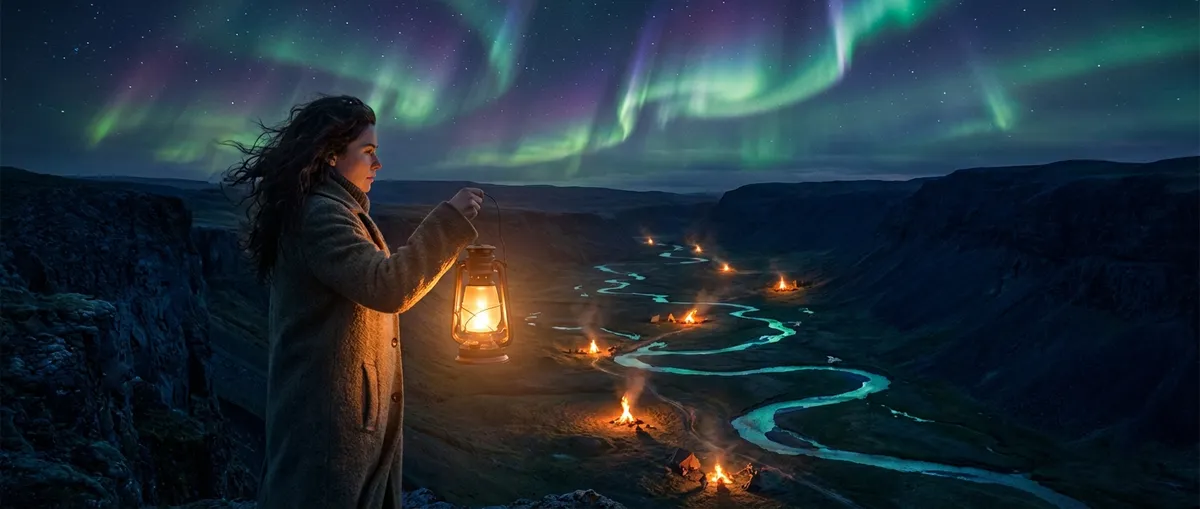
This isn’t about quitting your life and vanishing into the wild. It’s about weaving adventure into the life you already have—turning weekends, holidays, and even work trips into chapters you’ll talk about for years. Below are five powerful ways to say that first yes, each one designed to pull you toward the edge of your comfort zone in the best possible way.
Trade the Screen for a Skyline: Sunrise and Sunset Summits
There’s a moment at the top of a hill, rooftop, dune, or mountain when the world goes quiet. The sky is still blue-black, the city or forest is hushed, and your breath clouds the air. Then the horizon catches fire, light spills over everything, and you realize: all of this happened while most people were still asleep.
Chasing sunrise or sunset from a high point is one of the simplest adventures you can claim almost anywhere on earth. In cities, it might mean finding a public rooftop, a hilltop viewpoint, or a bridge over a river. In nature, it could be a short pre-dawn hike to a lookout or an evening scramble up a coastal bluff. You don’t need advanced skills—just a headlamp or phone torch, layers for warmth, and a sense of timing.
The practical magic is in the planning. Use local sunrise/sunset times, check trail conditions or rooftop opening hours, and scout your route in daylight first if possible. Pack a thermos of coffee or tea, a light snack, and something to sit on. Start walking while it’s still dark, let your eyes adjust, and watch the world slowly reveal itself.
The payoff is huge compared to the effort. You’ll often have popular viewpoints almost to yourself, better lighting for photos, and a feeling of having stolen extra hours from the day. More importantly, you’re training yourself to move toward beauty instead of scrolling past it. Once you feel the difference between watching a sunrise on your phone and watching it ignite the sky above you, you won’t forget it.
Follow the Flow: Water Adventures That Don’t Need Extreme Skills
Whitewater rafting and deep-sea diving make great highlight reels, but you don’t need extreme sports creds to build an unforgettable adventure around water. Rivers, lakes, coasts, and hot springs offer a sliding scale of wildness—from calm and meditative to heart-thumping and wild—so you can choose your level and still feel the rush.
Kayaking or stand-up paddleboarding on a gentle river or harbor gives you a totally new angle on a place. Cities like Copenhagen, Vancouver, and Sydney have paddling routes that reveal hidden corners and waterfront neighborhoods you’d never see on foot. Even in smaller towns, outfitters often rent gear by the hour and offer beginner-friendly lessons, so you can start with zero experience and still feel safe.
If you’re near the coast, look for tide pools, snorkeling spots, or coastal walks that hug the water’s edge. You might spot seals, rays, or schools of bright fish in surprisingly shallow areas. Inland, lakes and reservoirs often have designated swim zones or rental options for canoes and pedal boats. For a softer, more contemplative adventure, natural hot springs and thermal pools let you soak under open skies, sometimes ringed by snow, forest, or desert.
Safety is part of the adventure, not a buzzkill. Check local weather and current conditions, wear a life jacket when recommended, and go with guides if you’re unsure. Let them handle the technical side while you focus on the feeling—the rhythm of your paddle, the curve of the coastline, the sound of water echoing off canyon walls. When you build a day around water, time stretches; you’ll remember the way the light hit the surface long after you’ve dried off.
Sleep Somewhere Unexpected: Transforming One Night into an Adventure
You don’t have to travel halfway around the world to feel like you’ve stepped into another life. A single night in an unusual place can flip your sense of normal upside down—and that’s where adventure lives.
Think beyond standard hotels. Look for mountain huts, lighthouse stays, eco-lodges accessible only by boat, desert camps, treehouses, farm stays, or cabins deep in the forest. Even in cities, you might find historic houseboats, artist lofts, or tiny home villages. The more the place challenges your routine—shared dining tables, no Wi-Fi, outdoor showers, wood stoves—the more vivid the experience tends to be.
Sleeping somewhere unexpected changes how you move through the day. If you’re staying in a mountain hut, your “check-in” is a hike over ridgelines as the weather shifts. A night in a desert camp might begin with a sunset camel ride and end with you lying awake under a blanket of stars so dense it feels like static. On a farm, dawn might arrive with the sound of roosters and the smell of fresh bread from the main house.
Practical moves help you relax into the strangeness. Read reviews, understand how remote the place is, and ask hosts about what’s included (bedding, food, heating). Pack a headlamp, a portable battery, earplugs, and layers—it’s amazing how much calmer you feel when you can see, stay warm, and sleep. Embrace small inconveniences as part of the story; future you will care more about the meteor shower you saw from that cabin porch than the finicky water pressure.
Turn Food into a Quest: Eat Your Way Through a Neighborhood
Adventure doesn’t always look like cliffs and rivers. Sometimes it looks like steam rising from a market stall, a busy corner café with no English menu, or a tiny bakery with a line that wraps around the block. Turning food into a quest transforms an ordinary day in a city—any city—into a sensory treasure hunt.
Start with one neighborhood known for its food scene, markets, or immigrant communities. Make it your mission to learn the story of that place through what people eat. Follow your nose and your eyes: Where are locals lining up? What’s sizzling on the griddle? What’s displayed proudly in the front window? Try something you can’t pronounce or haven’t seen before, and ask the seller how to eat it properly.
Instead of hitting one restaurant, snack your way through the area. A coffee from a corner café, a street snack from a vendor, a shared plate at a busy lunch spot, dessert from a family bakery. Each stop becomes a mini adventure, especially when you talk to the people who make and serve the food. Ask where their ingredients come from, what dish they’d order for themselves, or what they eat at home when they’re tired.
If you want more structure, you can join a guided food tour run by locals; they often weave in history, architecture, and hidden alleys you’d miss on your own. Or create your own “theme”—only dishes you’ve never tried before, only street food, only desserts, only vegetarian options. Document your journey in photos or notes, not just to post later, but to remember the flavors and faces.
Food adventures connect you quickly and deeply to a place. You’re not just passing through; you’re sharing something that people there care enough to make every day. And when you return home, you can chase that memory in your own kitchen, turning your next grocery run into the continuation of the story.
Say Yes to the Unknown Day: One Day with No Fixed Plan
We often pack our trips so tightly with must-sees that there’s no room left for the unexpected. But some of the most electric memories come from the days that weren’t planned at all—the mornings that began with “Let’s just see what happens.”
Designate one day of your trip (or staycation) as your “yes to the unknown” day. Set a loose starting point—maybe a train station, a central square, a ferry terminal, or a city park—and a simple rule: follow whatever genuinely sparks your curiosity. Hear music down a side street? Go there. See a flyer for a local event? Check it out. Notice a tram going somewhere you’ve never heard of? Buy a ticket.
To keep chaos from turning into stress, build a soft container around your spontaneity. Have some basic tools: an offline map, a phrasebook or translation app, emergency cash, and a note with your accommodation address. Check local transit hours so you can get back, and tell someone what general area you’re exploring. The idea is not to be reckless—it’s to create space for serendipity.
These unplanned days are where you stumble into things that rarely make it into guidebooks: a neighborhood festival, a stranger’s invitation to join a pick-up game, a hidden courtyard café, an overlooked gallery, a conversation on a bench that shifts how you see the world. You might “miss” a famous landmark that day, but what you gain is something far more personal and impossible to duplicate.
Adventure thrives on uncertainty. Saying yes to one unstructured day teaches you that you can handle not knowing exactly what comes next. Over time, that confidence bleeds into the rest of your life, making you braver not just as a traveler, but as a person.
Conclusion
Adventure isn’t waiting on a faraway mountaintop or in a remote jungle. It’s waiting in your next sunrise, your next river, your next strange bed, your next unfamiliar dish, your next unplanned turn. It begins the moment you decide that ordinary days are worthy of extraordinary choices.
You don’t need a perfect plan; you need a spark and a single bold yes. Yes to climb in the dark for a better view of the light. Yes to step onto a river you’ve only ever crossed by bridge. Yes to sleep where the stars feel dangerously close. Yes to eat where the menu scares you a little. Yes to wander without a script and trust that something good will find you.
Pack your curiosity. Pack your courage. The rest you can figure out as you go.
Sources
- National Park Service – Trip Planning and Safety Tips - Practical guidance on preparing for outdoor adventures, including hiking and sunrise/sunset visits
- American Hiking Society – Hiking Basics - Covers essential skills, gear, and safety for day hikes and summit walks
- U.S. Coast Guard – Boating Safety Resource Center - Important information on life jackets, small craft, and water safety for kayaking and paddling
- UNESCO – Intangible Cultural Heritage and Food Traditions - Explores how culinary traditions connect to culture and place
- Lonely Planet – Responsible Travel and Local Experiences - Insights on engaging with local communities and creating authentic, low-impact adventures