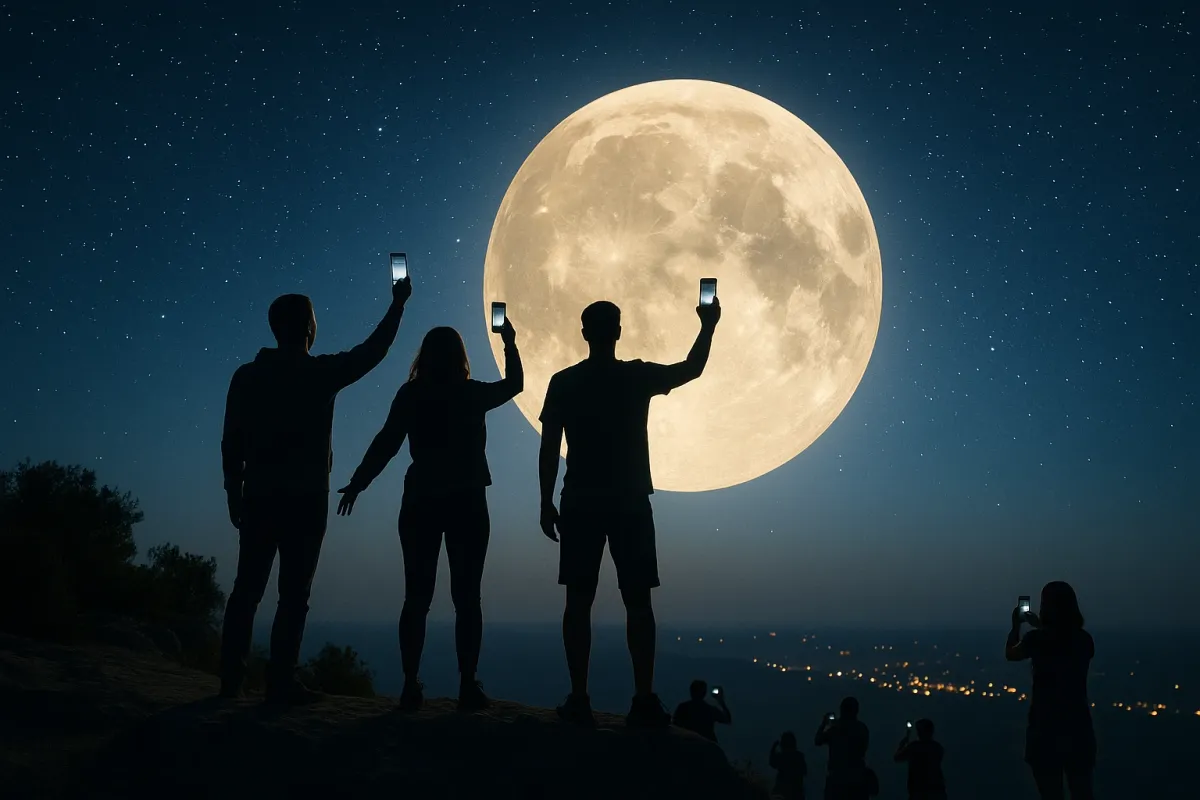
This isn’t just a photography story—it’s a destination story. As these images circulate across Instagram and X, travelers are tagging locations, mapping viewpoints, and booking trips around moonrise calendars. Cities, coastal towns, and remote highlands are suddenly on bucket lists not for their brunch spots, but for their horizons. If you’ve ever wanted a trip that feels a little bit earthly and a little bit cosmic, this is your sign to start traveling by the light of the moon.
Turn Any City Skyline Into A Lunar Stage
Right now, photographers around the world are recreating that “huge moon over the city” shot using tall landmarks as props. Think full moons balancing on TV towers in Berlin, rising behind Tokyo Skytree, or sliding between skyscrapers in New York and Dubai. The viral lens-only images are inspiring people to ask a new kind of travel question: “Where does the moon rise here—and where can I stand to make it unforgettable?”
To do this on your own trip, start by treating your city like a movie set. Choose an iconic structure—a cathedral dome, a bridge, a mountain-backed old town—and then use an app like PhotoPills, The Photographer’s Ephemeris, or even timeanddate.com to check moonrise direction and timing for your travel dates. Scout a spot a few kilometers away with a clear line of sight so the moon looks huge relative to the skyline. Suddenly, that quiet park, rooftop bar, or riverside walkway becomes the most magical spot in town for one brief, electric hour.
Follow The Moon To Coastal Lookouts And Lighthouses
The photographer’s supersized images have also sparked a rush to the coast, where lighthouses and sea cliffs are becoming dream backdrops for lunar shots. From Portugal’s rugged Atlantic watchtowers to New England’s weathered beacons and Greece’s island lighthouses, travelers are organizing evening hikes and sunset picnics that roll right into moonrise.
If you’re coastal-bound in the next month or two, plan at least one evening around a lighthouse or cliffside viewpoint. Arrive before sunset to walk the trail in daylight and choose your composition—maybe the moon will appear just above a white tower, or seem to rest on the horizon line where ocean meets sky. Pack a headlamp for the walk back, a light jacket (sea breezes get cold fast after dark), and hot drinks in a thermos. You don’t need pro gear to enjoy it—your phone, your eyes, and the sound of waves under a rising moon will do the rest.
Escape To High Ground: Mountains, Plateaus, And Desert Ridges
The current fascination with unedited moon illusions is also driving travelers higher—literally. Elevated destinations from the American Southwest to the Canary Islands and the Alps are benefitting from this renewed obsession with clear skies and clean horizons. When you’re above urban haze, every moonrise feels like a private performance.
On your next trip, look for places that combine altitude with wide-open views: desert ridges in Jordan or Utah, volcanic slopes in Tenerife, terraced hills in rural Vietnam, or viewpoints above alpine valleys in Switzerland and Austria. Many of these spots now offer guided “full moon hikes” or night walks timed with lunar phases—ask local outfitters or check tourism boards when planning. The practical perk: cooler temperatures, fewer crowds, and a sky so star-studded that the moon looks like it’s punching a hole through the darkness.
Discover Dark-Sky Parks Before Everyone Else Does
As more people discover that mind-bending moon photos can be done without editing, official dark-sky destinations are stepping into the spotlight. Certified dark sky parks in places like Slovenia, New Zealand, the U.S., and Spain are reporting increased interest from travelers who want both starfields and dramatic moonrise moments in one trip.
If you’re craving an adventure that feels truly off-grid, weave one of these places into your itinerary. Look for International Dark Sky Association (IDA) certified parks and reserves—many now offer night-sky programs, astrophotography workshops, and moon-focused events timed around full or supermoons. Book accommodations nearby (cabins, rural guesthouses, or campsites) and give yourself at least two nights: one for deep, inky darkness and Milky Way watching, another for that bright, cinematic moon climbing over mountains, forests, or dunes.
Turn Your Next Trip Into A “Moon Mission” (Without Overscheduling It)
The beauty of this new moon-obsessed travel wave is that it doesn’t require you to become a technical photographer or pack heavy gear. The trend is about how we plan and experience destinations: slowing down, staying up, and letting the night sky dictate at least one chapter of the journey.
On your next adventure, choose one place to be your “lunar base”—a coastal town, hilltop village, big city rooftop, or countryside cabin. Check the moon phase before you book if you can; aim for a waxing gibbous or full moon if you want that bright, oversized presence. Plan your days as you normally would, but leave one evening intentionally open. When the time comes, step back from the restaurant strip, climb to a viewpoint, and watch how your destination transforms under moonlight. Whether you come home with a viral shot or just a quiet memory of silver-lit streets and mountains, you’ll have traveled in sync with the sky, not just the schedule.
Conclusion
As that “not Photoshopped” moon series races across the internet, it’s doing more than blowing minds—it’s quietly rewriting travel wishlists. Travelers are choosing destinations not just for what’s on the ground, but for what rises above the horizon. City skylines become lunar stages, lighthouses turn into cosmic watchtowers, and forgotten viewpoints suddenly feel like front-row seats to the universe.
You don’t need astronaut training, a $10,000 lens, or a physics degree to join in. You just need curiosity, a sense of adventure after dark, and the willingness to chase the moon wherever it leads next. Your next destination might already be waiting—bathed in moonlight, ready for you to look up.