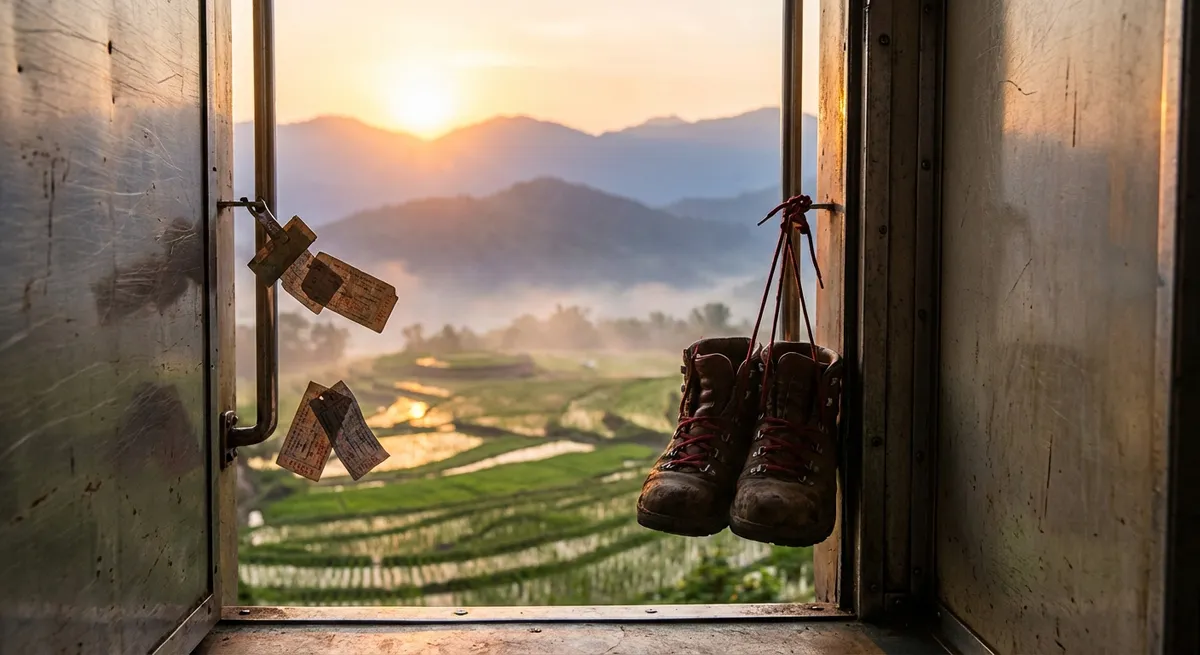
Think of this as your invitation to travel wide, spend less, and collect moments that feel richer than any luxury stay.
1. Sleep Where Stories Happen, Not Where Money Disappears
Your accommodation can be a portal to connection—or a sealed-off bubble that drains your budget.
Instead of defaulting to big hotels, look for places where conversation travels farther than your credit card. Hostels with communal kitchens, family-run guesthouses, co-living spaces, and farm stays can slice your lodging costs while multiplying your memories. In shared spaces, you’re not just booking a bed—you’re stepping into an instant web of recommendations, spontaneous group adventures, and the kind of late-night talks that make a city feel like home.
Many budget travelers pair paid stays with more unconventional options: overnight buses or trains that double as transport and a night’s “accommodation,” or occasional volunteering stints that offer room and board. You might find yourself harvesting olives in Greece, caring for dogs in Patagonia, or helping at a surf camp in exchange for a place to sleep.
Prioritize location and community over luxury. A simple room near a local market can be far richer than a polished hotel far from real life. Your tiny, well-chosen base becomes the launchpad for giant days.
2. Let Local Food Be Your Guide—and Your Secret Budget Weapon
Your taste buds can plot the most budget-friendly itinerary you’ll ever follow.
Skip the tourist strip with laminated menus and chase the aromas locals line up for: street food stalls, hole-in-the-wall cafés, morning markets, and family-run lunch spots. These kitchens don’t spend on flashy decor; they spend on fresh ingredients and recipes perfected over generations. You get flavor, authenticity, and a bill that leaves plenty of room in your budget for more adventures.
Shop where residents shop. A simple routine—fresh fruit from a market, bread from a local bakery, snacks from a neighborhood grocery—can turn breakfasts and some lunches into low-cost rituals. When you do splurge on a sit-down meal, make it count: ask your host, your barista, or a bus driver where they love to eat.
Cooking occasionally can save you a surprising amount. A hostel kitchen or apartment stove lets you turn local ingredients into a shared feast with other travelers—instant community, tiny price tag. Your food choices become a map of your journey: one steaming bowl, one street-side skewer, one market picnic at a time.
3. Move Slow Enough for Magic (and Savings) to Appear
Speed is expensive. Slowness is where both savings and serendipity live.
Instead of racing through five countries in seven days, sink into one city or region and get to know it like a friend. Weekly apartment rentals often cost less per night than quick hotel stays. Slower travel also reduces transportation costs—the longer you stay, the more each bus or train ticket “stretches” across your days.
When you’re not sprinting between attractions, you can walk more and pay less. Wander old neighborhoods instead of booking back-to-back tours. Ride local buses or trams as much for the people-watching as the savings. Many cities offer day passes or transit cards that dramatically drop your cost per ride once you commit to exploring at human speed.
Staying longer gives you time to discover free or low-cost treasures: public parks at golden hour, neighborhood festivals, sunset viewpoints, open-air concerts, and art districts that don’t charge admission. Let yourself linger. The longer you stay in one place, the more you stop “consuming” it and start living inside it.
4. Turn Free Experiences into the Heart of Your Trip
Some of the world’s most powerful travel moments cost nothing but your attention.
Before you arrive, look up free days or reduced-price hours for museums, cultural sites, and galleries. Many cities offer no-cost walking routes past iconic landmarks, riverside promenades, and historic districts where the architecture is your open-air museum. Download offline maps, mark scenic routes, and let your feet do the exploring.
Nature is the ultimate budget attraction. Hiking local trails, swimming in public beaches or lakes, watching sunrise from a hilltop, or simply sitting under a tree in a city park can reset your sense of wonder without touching your wallet. Nighttime brings its own free show: stargazing in rural areas or wandering safely through lively town squares where street performers turn sidewalks into theatres.
Seek out community spaces—libraries, public courtyards, outdoor markets, university campuses—where life unfolds in the open. The more you tune into the rhythm of daily life, the less you feel like you’re “missing out” by skipping expensive tours. You’re not on the sidelines; you’re in the story.
5. Build a Flexible Plan That Protects Your Budget (and Your Freedom)
The most empowering budget trips are not chaotic; they’re intentionally loose.
Start with a simple framework: rough dates, a few “anchor” destinations, and a clear daily spending range. That structure guards your budget. Then leave wide blank spaces for improvisation. Flexibility lets you chase last-minute deals, respond to local tips, or stay an extra week in the place that unexpectedly captures your heart.
Use comparison tools and fare alerts to book big expenses—like flights or long-distance trains—strategically. For everything else, keep options open. If a city feels too pricey, you can pivot to a smaller town nearby. If a hostel crowd feels out of sync with you, you can shift to a quieter guesthouse without rewriting your entire trip.
Track your spending as you go, not as a guilt exercise but as a compass. When you see where your money actually flows—coffee, transport, attractions—you can adjust quickly, trimming in areas that don’t matter to you and investing in the ones that make your soul hum. The magic combination: a clear budget and the courage to improvise within it.
Conclusion
Budget travel is not the consolation prize for people who can’t “afford” the real thing. It is the real thing: raw, vivid, and stripped down to what matters most—curiosity, courage, and connection.
When you choose simple beds over polished lobbies, markets over malls, and slow days over frantic checklists, you unlock something money can’t buy: the feeling that the world is, quite literally, open to you.
Pack light. Plan just enough. Then step out the door knowing that the size of your budget has nothing to do with the size of the life you’re about to live.
Sources
- U.S. Department of State – Travel Advisories – Official safety guidance and country-specific information for planning responsible budget trips
- Lonely Planet – Budget Travel Tips – Practical strategies for saving money on accommodation, transport, and food
- Rick Steves – Money-Saving Travel Tips – Advice on cutting costs in Europe while still having meaningful experiences
- Hostelling International – Global network of hostels offering budget-friendly, community-oriented accommodation options
- National Park Service – Information on U.S. national parks, many of which offer low-cost or free outdoor experiences ideal for budget travelers