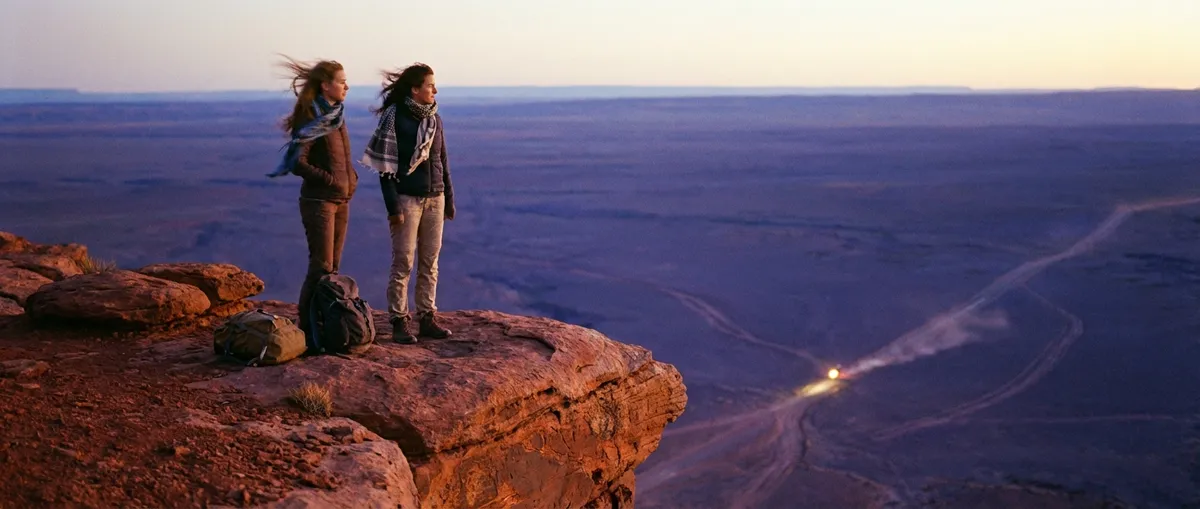
This isn’t about reckless risk or postcard perfection. It’s about saying yes to the unknown on purpose, learning to follow curiosity like a compass, and coming home with stories that feel too wild to fit in a caption. Below are five adventure mindsets and experiences that turn any trip—from a weekend escape to a cross-continent trek—into something unforgettable.
Follow the Sound of the Unfamiliar
Adventure often begins with a sound you don’t recognize—market vendors calling in a language you’re still learning, drums echoing through a side street, the rush of a river you haven’t seen yet. Instead of walking past, let that sound pull you in.
Find a local market and wander until you’re no longer sure which way is “out.” Listen for where people are laughing the loudest or where a crowd is forming. That’s usually where the story is. Buy food you can’t pronounce. Ask the vendor how to eat it properly, and let them teach you. You’re not just tasting a dish; you’re tasting someone’s daily life.
In nature, follow sound with the same curiosity. Hear distant waves? Take the path that heads toward them, even if it isn’t the one with a signpost. Hear birds erupting from the canopy? Pause, look up, notice how alive the landscape is without you as the main character. Adventure grows when you stop trying to control every moment and start letting the world introduce itself.
Practical tip: Pack a lightweight scarf or bandana. It’s a sun shield, makeshift bag, picnic cloth, temple cover, or eye mask on noisy buses. Small, simple gear like this makes it easier to say “yes” to whatever sound pulls you off your original route.
Trade Perfect Views for Imperfect Moments
The internet trains us to chase the “best view” of every destination: the overlook everyone’s seen, the alleyway everyone photographs. But the most electric travel moments are rarely the ones framed perfectly; they’re the ones that surprise you.
Skip one “must-see” photo stop and spend that time sitting where locals actually hang out—a park bench, a neighborhood café, a ferry instead of the sightseeing cruise. Watch the way kids argue over a soccer ball, how people carry groceries, the evening rhythm as lights snap on across an apartment block. You’re not just looking at a city; you’re experiencing how it breathes.
When you do seek out dramatic views—sunset ridgelines, clifftop lookouts, rooftop terraces—consider staying after most people leave. The blue hour after sunset, or the early chill before sunrise, often feels more intimate and less staged. This is when conversations start, when another traveler offers you a thermos of tea, or a local points out the constellation they grew up with.
Practical tip: Give yourself “unscheduled hours” on every trip. No apps, no reviews, no route. Let coincidence curate your adventure. That’s often when the imperfect but unforgettable magic appears.
Turn Transit into the Adventure, Not the Inconvenience
Most travelers treat buses, trains, and ferries as dead time—the boring stretch between “real” experiences. Flip that script. Transit is where stories collide: strangers, landscapes, and unexpected detours.
Instead of booking the fastest route, sometimes choose the most revealing one. Take the local bus that stops in every village, the slow train that clings to the coastline, the shared taxi where your backpack rides on the roof and everyone shares snacks. Watch what people eat on the move, how they dress for a long journey, what they do to pass the time. This is the nervous system of a place, and you’re riding inside it.
Delay or cancellation? Use it. Talk to the person next to you—ask what they’d do in your shoes with a few spare hours. Follow one reasonable suggestion. These micro-detours often lead to the small museum you never read about, the alleyway café that becomes “your spot,” or a last-minute hike above the town that ends up tattooed on your memory.
Practical tip: Always carry a “delay kit”: downloaded offline maps, a charged e-reader or small paperback, reusable water bottle, snacks with protein, and a lightweight layer. When you’re equipped for surprises, they feel like invitations, not emergencies.
Let the Elements Rewire Your Senses
Real adventure doesn’t always need epic distances—it needs full contact with the elements. When you let a landscape fully surround you—wind, cold, heat, altitude, waves—it rearranges what you think you can handle.
Seek water that isn’t chlorinated: a glacial lake, tidal pool, or jungle river (always checking local safety advice first). The first shock of cold or the tug of a current wakes up every nerve ending. You step out feeling fierce, alive, slightly stunned that you actually did it. That sensation lingers longer than the memory of any infinity pool.
Do the same with elevation and weather. Hike until the air feels different in your lungs. Stand in light rain instead of rushing indoors. Walk a coastline in full wind and taste the salt on your lips. These small, deliberate exposures recalibrate you. They remind you that you’re built for more than office air and screen glow.
Practical tip: Pack one piece of “real” adventure gear, even on urban trips—a compact rain jacket, trail shoes instead of fashion sneakers, a swimsuit no matter the season. When you’re physically ready, you’re more likely to accept spontaneous invites: a night hike, a dawn swim, an unplanned detour up a muddy trail.
Say Yes to the Invite You Almost Refuse
On every trip, there’s a moment when someone offers you an experience that’s just outside your comfort zone: join us for a home-cooked meal, come listen to live music in a neighborhood you haven’t heard of, wake up at dawn for a climb, try a local ceremony you don’t fully understand. Your first instinct is often to say no: too tired, too early, too far, too unknown.
That edge—that tiny hesitation—is usually the doorway to your best stories.
You don’t say yes blindly. Check that it’s safe, trust your gut, tell someone where you’re going. But if it passes those checks, practice choosing curiosity over comfort. The dinner you almost declined becomes a memory of laughing in a kitchen full of steam and spice. The early wake-up turns into a sunrise shared with strangers who somehow feel like friends. The small local festival becomes the night you danced badly but wholeheartedly, under lights that will never make it onto any “Top 10 Attractions” list.
Practical tip: Give yourself a simple rule: on every trip, intentionally say “yes” to at least one reasonable invite you would normally turn down. Make space for it in your schedule. Adventure loves that kind of deliberate openness.
Conclusion
Adventure isn’t a distant continent or a price tag. It’s a way of moving through the world that starts the second you loosen your grip on certainty. When you follow unfamiliar sounds, trade perfect views for raw moments, let transit become a stage instead of a chore, lean into the elements, and say yes to the invites that scare you a little—you start living like the map is negotiable.
You’ll come home with more than souvenirs. You’ll carry new reflexes: to look up instead of down, to listen before judging, to trust that the best parts of any journey can’t be pre-booked. That’s the Hop Next mindset—each step forward, an open question; each horizon, an invitation.
The next adventure doesn’t start at the airport. It starts the moment you decide you’re willing to be surprised.
Sources
- U.S. National Park Service – Trip Planning and Safety – Practical guidance on preparing for outdoor adventures and staying safe while exploring natural environments
- Centers for Disease Control and Prevention – Travelers’ Health – Official health and safety advice for travelers, including destination-specific recommendations
- UN World Tourism Organization (UNWTO) – Tourism for Sustainable Development – Insights on responsible, sustainable travel practices that support local communities
- Adventure Travel Trade Association – Adventure Travel Trends Snapshot – Research on current adventure travel behaviors and what modern travelers seek in active, immersive experiences
- REI Co-op Expert Advice – How to Plan a Trip – Practical tips on gear, logistics, and preparation to make spontaneous adventures safer and more rewarding