This guide is for travelers who are ready to feel awake again. Not just entertained. Not just relaxed. Fully, wildly, undeniably alive. Below are five adventure sparks—each one vivid enough to change you, and practical enough to actually do.
1. Follow the Water: From Hidden Waterfalls to Wild Coastlines
There’s something about moving water that rewires your brain on the spot. The thundering roar of a waterfall, the steady pull of a tide, the bright shock of a glacial river on bare skin—water demands presence. It drags your attention out of your notifications and into your senses.
Pick a region known for its wild water and build your route around it. Chase waterfall trails in places like Costa Rica’s rainforests, Iceland’s ring road, or Sri Lanka’s hill country. Follow a rugged coastline in Portugal’s Algarve, Western Australia, or South Africa’s Wild Coast. Use rivers as your compass—kayaking in Slovenia’s Soča Valley, rafting in Colorado, or tubing down a lazy river in Laos.
In practical terms, look for local guides or small operators who know the currents, the tides, and the safe paths. Always check weather and water conditions before you head out, and respect local signage—those “Danger” signs exist because someone ignored them. Pack a dry bag, quick-dry clothing, and solid footwear with grip; you’ll need both hands for scrambling over wet rocks or steadying yourself in a boat.
The reward for the planning and the wet socks? That moment when you duck through a curtain of leaves and the world explodes into spray and sound. When your kayak slices into glassy water, your paddle drip the only noise. You’re no longer just “on vacation”; you’re inside the geography of a place, tracing the lifelines that carved it.
2. Sleep Where the Stars Still Win: Wild Nights Off the Grid
Adventure changes flavor after dark. Once the day-trippers go home and the last tour bus pulls away, the world gets quieter, bigger, and more honest. That’s when the stars take over—and if you’re willing to leave city lights behind, you’ll see a sky that doesn’t fit in any photograph.
Seek out dark sky regions, national parks, deserts, or islands where light pollution is minimal. Think of places like Utah’s canyon country, Chile’s Atacama Desert, the Australian Outback, or remote parts of Scandinavia. Book a simple cabin, a tent site, a mountain hut, or even a rooftop in a small village where streetlights fade early.
Plan ahead: check nighttime temperatures, pack layers, and bring a reliable headlamp with red-light mode to preserve your night vision. Download an offline stargazing app so you can identify constellations without service. If camping, learn the basics—how to pitch your tent in wind, store food properly, and leave no trace. Local ranger stations and visitor centers are goldmines for safety tips and lesser-known viewpoints.
Then, when you finally turn off everything with a screen and let the world go black, something happens. You start to hear rivers, insects, wind. Your eyes adjust, and a quiet dome of light blooms above you—the Milky Way sharp and bright, satellites gliding past, the occasional meteor slicing through reality. It feels less like you’re looking up at space and more like you’re floating in it.
In those hours, your biggest decision isn’t what to do tomorrow. It’s whether you can stay awake just a little longer to see one more star ignite.
3. Ride the Ridge: Earning Your View Instead of Buying It
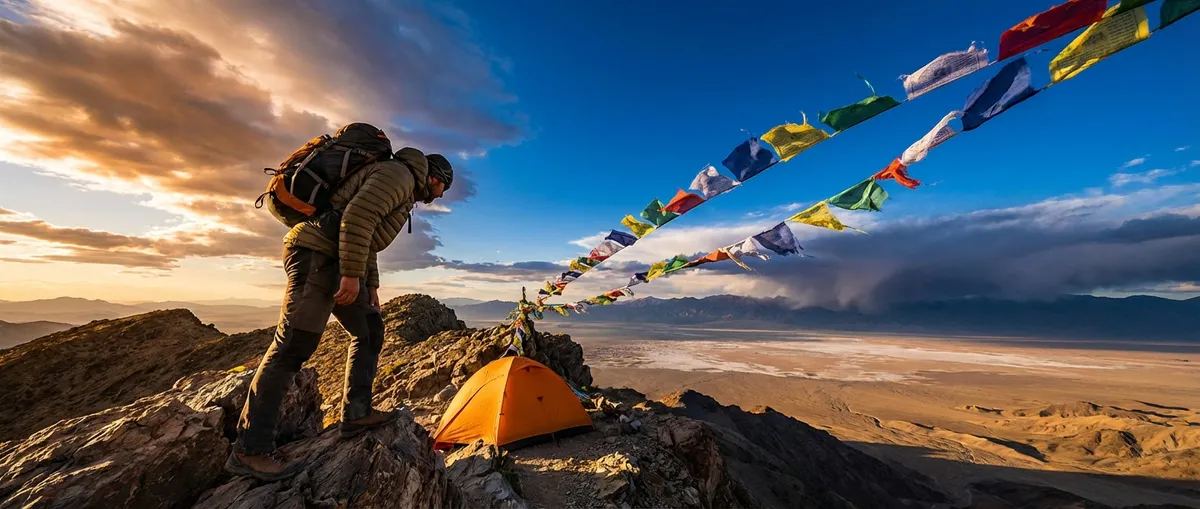
Some views are best earned, not booked. They live at the edges of cliffs, along windswept ridgelines, at the end of trails that make your legs shake and your lungs burn—in the best way. This is where hiking, trekking, and ridge walks stop being hobbies and start becoming quiet revolutions.
Choose a route that intimidates you just enough. Maybe it’s your first full-day hike in the Dolomites, your first hut-to-hut trek in New Zealand, or your first sunrise summit in a nearby national park. You don’t need to be ultra-fit; you just need to be realistic about your limits and willing to train a bit beforehand.
Preparation is non-negotiable. Research trail conditions, difficulty, and elevation gain from trustworthy sources and local guides. Check weather forecasts right up until the morning you depart. Pack the holy trinity: good shoes, enough water, and layered clothing. Add snacks with real calories, a lightweight first-aid kit, and a downloaded offline map. If you’re new, join a guided group or go with someone experienced.
The path itself will stretch you. There’ll be a point where the trail tilts upwards and your inner monologue starts bargaining: “Maybe I’ve gone far enough.” But adventure lives just past that argument. Cresting a ridge, you suddenly see an entire valley unfurl beneath you, peaks like teeth on the horizon, clouds casting slow-moving shadows. It’s not like stepping into a postcard; it’s like creating one with your own effort.
That’s the quiet magic: the view is the same for everyone who stands there, but the way you reached it—sweat, doubt, momentum—is uniquely yours.
4. Say Yes to the Unknown Table: Food as a Doorway, Not a Checklist
Adventure doesn’t only happen on mountaintops and cliff edges. Sometimes it unfolds at a small, wobbly table, on a side street you can’t pronounce, in front of a dish you’ve never seen before. Sharing food can be the fastest way into the heart of a place—and into conversations that rewrite your assumptions.
Instead of hunting for the “most Instagrammable” café, go where everyday life happens. Morning markets, roadside stalls, ferry terminals, night bazaars, and family-run eateries where the menu is on a chalkboard or doesn’t exist at all. Let your curiosity lead: follow smells, long lines of locals, and rooms filled with laughter rather than décor.
Be smart and respectful. Check basic food safety tips for the region: is street food generally considered safe? Are there local guidelines about tap water or raw produce? If you have allergies, learn how to clearly communicate them in the local language (written on a card is best). Locals, official tourism boards, and health advisories can all offer updated, reliable info.
Then lean in. Ask vendors what they recommend instead of ordering the one thing you recognize. Sit at communal tables. Accept invitations to try “just one bite” of something new. That’s how you end up tasting smoky grilled fish on a plastic stool in Southeast Asia, homemade bread fresh from a clay oven in the Caucasus, or slow-cooked stews in a mountain village where the recipes outdate your passport by centuries.
You’ll remember the flavors, yes. But more than that, you’ll remember the person who insisted you try the spicy version, the laughter over mispronounced words, the way strangers became hosts for a single meal.
5. Catch the First Light: Chasing Sunrises Instead of Deadlines
Most of the world runs on alarms that drag us into workdays, not wonders. On the road, you get to rewrite that script. Setting your alarm for sunrise isn’t about productivity; it’s about meeting a place before everyone else wakes up—when streets are washed clean, air is sharp, and light feels brand new.
Pick one or two anchor moments in your trip that you commit to greeting at dawn. A beach facing east in Greece or Indonesia. A temple or lookout in Japan or Peru. A rooftop in a European city where church bells and bikes are the first sounds of the day. Ask locals where they’d go “for the best sunrise,” and you’ll often get a spot that doesn’t appear in guidebooks.
The logistics are simple but important: plan your route the day before, check opening times and safety considerations, and pack light—water, a layer, maybe a thermos of coffee or tea. In cities, stick to well-known routes and stay aware of your surroundings. In nature, use a headlamp and watch your footing; dawn can hide rocks, roots, and drop-offs.
Then watch how the world tilts. At first it’s just you, the chill, and a sky still holding onto stars. Then the horizon stains faint pink, orange, or gold. Buildings soften, mountains sharpen, waves flash white. Occasionally, you’ll share the moment with a handful of quiet strangers, all of you facing the same direction, eyes fixed.
Those early hours rewire your internal clock from “What do I have to do today?” to “What do I get to witness today?” That tiny shift feels small in the moment—but it’s exactly how adventures echo long after you’ve unpacked.
Conclusion
Every adventure begins with a decision: to trade the known for the not-yet-known. To follow rivers instead of routines, stars instead of screens, ridge-lines instead of comfort zones. You don’t need a perfect itinerary or endless savings to begin; you need curiosity, a bit of courage, and a willingness to be surprised.
Pick one of these sparks—water, wild nights, earned views, unknown tables, or first light—and build a small journey around it. Let that be your experiment in living more vividly. The horizon isn’t a line you chase; it’s a mindset you carry.
The world is waiting. The question is: which edge of your comfort zone are you willing to cross first?
Sources
- National Park Service – Plan Your Visit – Practical guidance on planning hikes, safety, and responsible travel in U.S. national parks
- International Dark-Sky Association – Information on certified dark sky places around the world for stargazing and night-sky adventures
- Centers for Disease Control and Prevention – Travelers’ Health – Up-to-date health, food, and water safety advice for travelers by destination
- Adventure Travel Trade Association – Research and insights on adventure travel trends, safety, and best practices
- Leave No Trace Center for Outdoor Ethics – Guidelines on minimizing impact while exploring wild places and trails