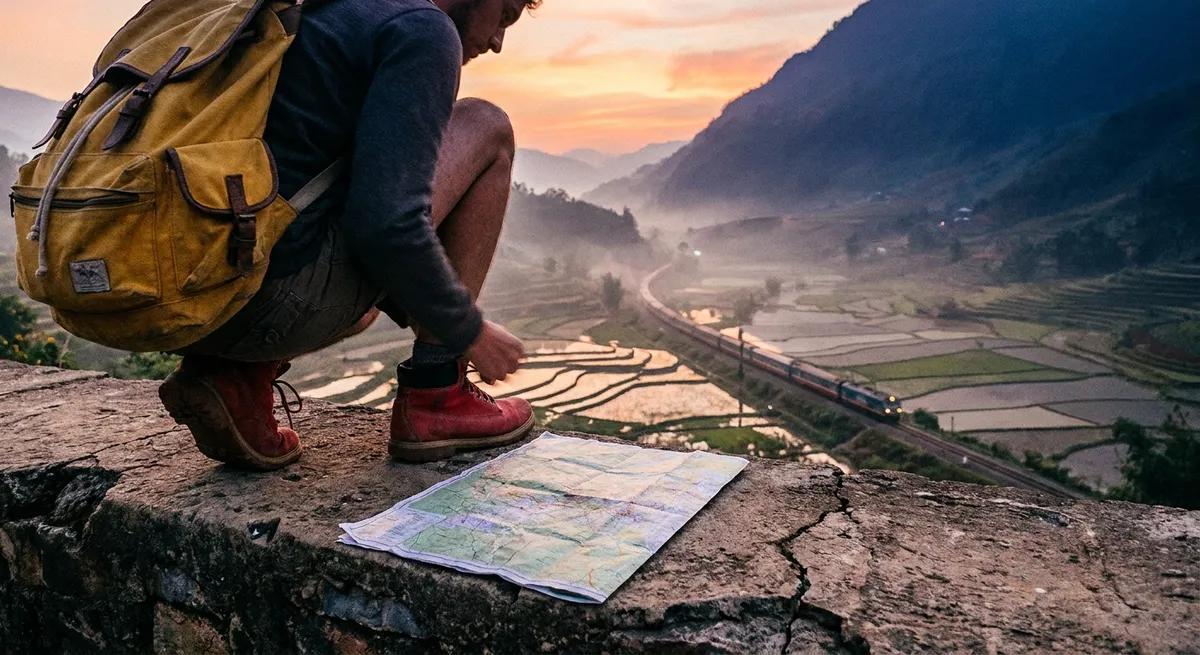
This isn’t about deprivation. It’s about designing a smarter, wilder, more intentional way to roam. Below are five powerful shifts that turn “I wish I could travel more” into “I’m already planning the next one.”
1. Follow the Local Rhythm, Not the Tourist Clock
Peak season is when destinations put on their costume for visitors—prices surge, crowds swell, and “authentic” gets harder to find. Slide a few weeks off that peak, and the entire place changes shape.
Traveling in shoulder or off-peak seasons often means:
- Flight prices that suddenly drop into your budget range
- Accommodations where you’re more guest than “booking reference”
- Locals who have time to talk instead of rushing past crowds
Imagine standing in front of a usually packed museum in Madrid and walking straight in, or hiking a trail in the Dolomites where you can hear your own footsteps instead of a chorus of tour groups. You’re not just saving money—you’re reclaiming space.
Practical move:
Pick a dream destination, then Google its high season. Aim two to six weeks before or after that window. Use flexible-date search tools on flight engines to see which days unlock the biggest drops in price. Let the calendar be your secret budget tool, and you’ll find that your “too expensive” list gets surprisingly short.
2. Turn Nights Into Neighborhoods, Not Just Hotel Rooms
Where you sleep shapes how you remember a place. A standard hotel lobby in one country looks a lot like a standard hotel lobby in another. But stay in a family-run guesthouse, a shared apartment, or a local hostel, and suddenly the city starts talking back.
Budget-friendly stays bring more than savings:
- Hosts who point you to their favorite $3 lunch spots
- Roommates or fellow travelers who share taxi rides, tips, and future plans
- Neighborhoods you’d never have found if you’d stuck to the main strip
Picture a tiny courtyard in Lisbon where laundry flaps above your head as you sip cheap coffee, or a rooftop in Chiang Mai where backpackers swap stories under paper lanterns. Those aren’t just beds—they’re story engines.
Practical move:
Mix your accommodation types on a single trip: a hostel for social energy, a guesthouse for local insight, and maybe a night bus or train to save on both transport and lodging. Always read more than a few recent reviews, and prioritize places praised for cleanliness, safety, and community. Your budget is buying you both a place to sleep and a doorway into how people really live there.
3. Let Food Be Your Guidebook, Not Your Biggest Bill
You don’t need white tablecloths to eat like a king on the road. Some of the best meals in the world come on paper plates, from markets, carts, and corner stalls lit by a single buzzing bulb. Budget travelers know that where locals eat on their lunch break is where your money goes furthest—and your memories dig deepest.
Street food and local spots often mean:
- A fraction of the cost of tourist-oriented restaurants
- Fresh, regional ingredients and recipes passed down for generations
- A front-row seat to daily life—office workers, families, students, everyone
Imagine stirring hot pho at a plastic table in Hanoi while scooters flow by, or biting into a just-fried empanada in a Buenos Aires market while a vendor tells you their family’s recipe story. That’s cultural immersion—delicious, cheap, unforgettable.
Practical move:
Walk three blocks away from the main attraction before you choose where to eat. Look for short menus (sign of fresh food) and busy stalls (sign of local trust). If there’s a line of locals, join it. Ask what’s popular, and try at least one dish you’ve never heard of before. Your taste buds become travelers too, and your wallet barely notices.
4. Trade Pricey Attractions for Wild, Free Experiences
Entrance fees add up fast—museums, exhibits, tours, tickets. But many of the most powerful travel moments don’t charge an entry fee at all.
Break your days wide open with:
- Mountain viewpoints you reach on your own two legs instead of a cable car
- City parks where musicians play into the evening for whoever shows up
- Free walking tours where passionate guides share the city’s spine and soul (tip them what you can)
Think about sitting on a breakwater watching storms roll over the sea in Croatia, or wandering a neighborhood market in Mexico City where colors and sounds hit all at once. The cost is often just your willingness to wander.
Practical move:
Before you go, search for “free things to do in [destination]” and “self-guided walking routes [destination].” Mark every park, viewpoint, shoreline, and public square on an offline map. Build your trip around these anchors and sprinkle in only the paid experiences that matter most to you. When you stop trying to see everything, you start to feel deeply present in the things you do choose.
5. Make the Journey Part of the Adventure, Not Just a Transfer
The fastest route is rarely the most memorable. Budget travel invites you to slow down, connect the dots over land and sea, and turn travel days into some of your favorite chapters.
Longer, cheaper routes can give you:
- Night trains where you fall asleep in one country and wake up in another
- Ferries that roll past archipelagos and coastal villages you’d never see from 35,000 feet
- Shared minibuses and rides where strangers become trip companions in a handful of hours
Visualize leaning your head against a train window in Eastern Europe as tiny villages flicker by, or standing on the deck of a ferry in Greece while the wind and salt air erase the last of your routine life. The “in-between” becomes the point.
Practical move:
When planning, don’t just sort by “fastest”—sort by “cheapest” and “fewest connections,” then ask, What would this extra time give me? A full-day bus ride might save you the cost of a night’s accommodation and show you an entirely different side of the country. Pack a scarf or hoodie, plenty of water, downloaded playlists or podcasts, and an offline map. Treat the journey like an event, not a chore.
Conclusion
Budget travel isn’t a consolation prize; it’s a different way of claiming the world. When you shift your trip from “What can I afford to see?” to “How far can I stretch this adventure?”, doors open—into quieter seasons, local neighborhoods, steaming street food, free experiences, and slow journeys that stitch countries together.
Your passport doesn’t ask how much you spent. It only records that you showed up.
Start with what you have now: pick a place, move your dates off-peak, line up one local stay, circle a few free experiences, and choose one overland route that excites you. The rest will unfold on the road, step by step, dollar by dollar, story by story.
The world is already out there, waiting. All you have to do is decide that “someday” is just another word for “soon.”
Sources
- [U.S. Department of State – Travel Advisories](https://travel.state.gov/content/travel/en/traveladvisories/traveladvisories.html) - Official safety and advisory information to review before planning budget trips
- [OECD Tourism Trends and Policies](https://www.oecd.org/tourism/oecd-tourism-trends-and-policies-20767773.htm) - Insight into seasonality and tourism flows that helps travelers choose off-peak times
- [Hostelling International](https://www.hihostels.com/travel-tips) - Budget accommodation tips, safety guidance, and advice on social, low-cost travel
- [BBC Travel – Budget Travel Features](https://www.bbc.com/travel/tags/budget-travel) - Real-world stories and ideas for exploring destinations on a budget
- [Lonely Planet – Budget Travel Tips](https://www.lonelyplanet.com/articles/budget-travel-tips) - Practical recommendations for saving money on food, transport, and activities while traveling