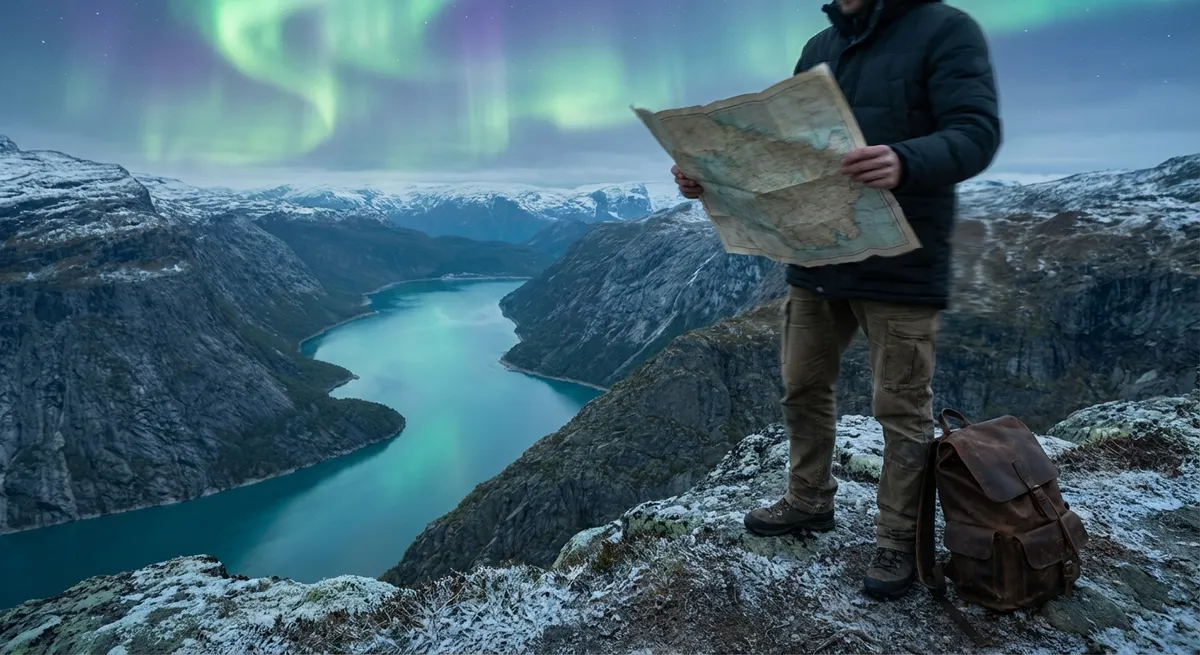
Below are five powerful ways to build adventures that don’t just fill your camera roll, but rewire your sense of what’s possible.
Trade the Viewpoint for the View: Move Through the Landscape, Not Past It
Most travelers look at a place. Adventurers move through it.
Instead of watching the world slide by behind a bus window, choose a way of moving that makes you feel every curve of the land: trek a coastline, cycle through wine valleys, kayak between islands, or ride a sleeper train across an entire country. When your body becomes your vehicle, distance transforms from an obstacle into a story you’re earning step by step.
Start small if you need to. Walk the length of a city in a single day, following a river or tram line. Rent a bike and follow a local greenway that leaves the urban clatter behind. As you move slower, the invisible layers of a place appear: the smell of someone’s lunch drifting from a balcony, the way the light folds around a mountain at 4 p.m., the small-town train station where nobody’s in a rush.
Practical tip: Pick one leg of your next trip and commit to covering it under your own power—walking, cycling, paddling, or even horseback. Download offline maps, mark water and rest stops, and tell someone your route. You’re not just going somewhere; you’re becoming the kind of person who crosses distances.
Step Into Someone Else’s Story: Make the Locals Your Guides
Adventure sharpens when you stop being an observer and become a participant.
Instead of only booking tours, look for ways to sit at somebody’s kitchen table, join a neighborhood ritual, or learn a skill that’s woven into local life. That might mean helping harvest olives in Greece, joining a sunrise tai chi group in a park in Taiwan, or learning how to clean and cook fish with coastal families who’ve done it for generations.
These moments are rarely advertised on glossy brochures. They come from saying yes to small openings: a chatty café owner, a host who invites you to a family dinner, a language class that turns into Friday night outings. Respect, curiosity, and humility are your best gear here. You’re stepping into stories that started long before you arrived—and will continue long after you leave.
Practical tip: Before you go, search for community workshops, volunteering opportunities, or local classes in the area—dance, cooking, crafts, language, urban gardening. When you arrive, ask people, “Where do you go?” not “Where should I go?” Let the answers rearrange your plans.
Seek the Quiet Extremes: Where the World Feels Unreal
There are places on this planet that feel like you’ve slipped off the edge of ordinary reality. Go find them.
Maybe it’s standing beneath the northern lights as they flicker green and purple over a silent, frozen lake. Maybe it’s sinking into the ink-black sky of a certified dark-sky reserve where the Milky Way looks close enough to touch. It could be watching lava glow from a safe distance on a volcanic island or hearing glaciers groan and crack as they slowly move.
These aren’t just postcard moments; they’re perspective resets. The scale of nature throws your daily worries into orbit. You remember that you’re tiny and infinite at the same time—a flash of consciousness standing under billions of stars.
Practical tip: Look for destinations known for a specific natural phenomenon—bioluminescent bays, dark-sky parks, coral reefs, thermal springs, desert dunes. Time your trip around the best season or conditions for that experience, and build your itinerary around that one wild moment. Everything else is a bonus.
Design One “Fear Stretch” for Every Journey
If your heart’s not thumping at least once per trip, you’re probably traveling too comfortably.
A “fear stretch” is anything that nudges you beyond your standard limit but doesn’t ignore safety or common sense. For one person, that might be jumping from a cliff into the sea with a life vest. For another, it’s eating dinner solo at a crowded restaurant or driving a scooter for the first time in light traffic. It could be signing up for a whitewater rafting trip, taking a language-only tour, or hiking pre-dawn to catch a summit sunrise.
The goal isn’t adrenaline for its own sake; it’s proving to yourself that you can do a little more than your old story says you can. Each time you expand that edge, future risks feel less paralyzing. You become the person who tries instead of the person who hesitates.
Practical tip: Before you leave, write down one thing that scares you in a good way. Research it, check safety standards, and talk to people who’ve done it. When the chance appears on your trip, you’ll recognize it—and you’ll be ready to lean in instead of backing out.
Leave Space for Serendipity: Build Unscheduled Magic Into Your Plans
The most electric memories rarely appear on your calendar—they sneak in through the cracks you leave open.
Instead of stuffing your days with back-to-back activities, design “open windows” where anything can happen. Wander with no destination, follow the sound of live music down an alley, say yes to a last-minute invitation, or hop on a local bus just to see where people are going at 5 p.m. on a Tuesday. Give the world a chance to surprise you.
This doesn’t mean being reckless or disorganized; it’s about intentional looseness. Book your beds and big connections, but keep the spaces in between fluid. That’s where you’ll stumble on the sunset viewpoint no blog mentioned, the tiny bookshop that feels like home, or the night market where a stranger teaches you how to say “thank you” in three dialects.
Practical tip: When building your itinerary, protect at least one half-day in every new place as “serendipity time.” No fixed plans. Just you, your curiosity, and the streets. Trust that not knowing what happens next is the very thing that makes it an adventure.
Conclusion
Adventure isn’t waiting on some far-off peak or in a country stamped with exotic ink. It’s built, choice by choice, every time you trade comfort for curiosity, speed for depth, and control for connection. When you move through a landscape instead of past it, step inside local stories, chase the world’s quiet extremes, stretch your fears, and leave room for the unexpected, you don’t just collect voyages—you grow a wilder, braver version of yourself.
Your next trip doesn’t need to be bigger. It just needs to be truer.
Your map is only a suggestion. The real journey starts where you’re willing to draw beyond its edges.
Sources
- UN World Tourism Organization (UNWTO) – Tourism and Culture – Insights into how cultural experiences deepen travel and support local communities
- International Dark-Sky Association – Dark Sky Places – Information on certified dark-sky parks and reserves for stargazing adventures
- National Park Service (NPS) – Safety & Trip Planning – Practical guidance on planning safe outdoor adventures and managing risk
- Adventure Travel Trade Association – Adventure Travel Research – Data and analysis on adventure travel trends and traveler behavior
- Centers for Disease Control and Prevention – Travelers’ Health – Essential health and safety advice for international trips and active adventures