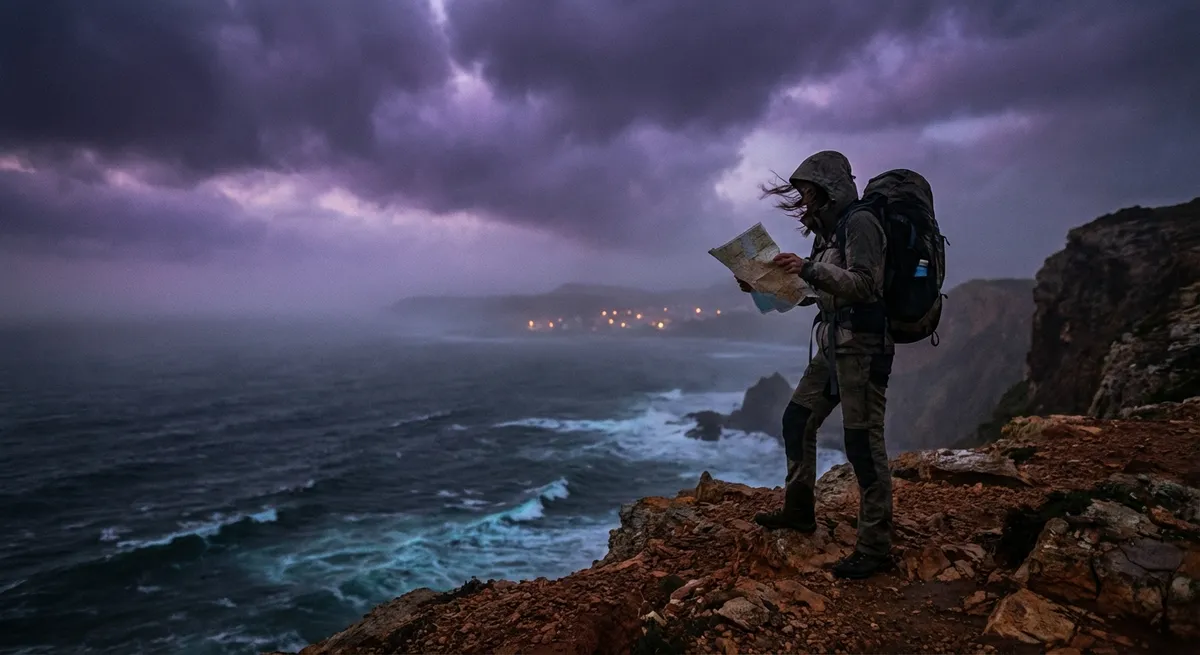
Below are five powerful ways to travel that don’t just change your location—they change your story. Each one is designed to pull you out of routine and into a life that feels bigger, bolder, and intensely alive.
1. Follow the Water: Rivers, Coasts, and the Call of the Unknown
Water is nature’s invitation to move—downriver, along a jagged coast, across a silent lake at dawn. When you let water set the rhythm of your journey, the world shifts around you: cities fade into forests, mountains rise without warning, and small villages appear like secrets along the shore.
Picture steering a kayak through Norway’s fjords as mist clings to the cliffs, or drifting slowly down the Mekong at sunset, where the line between sky and river blurs to molten gold. On river journeys, your pace slows, and so does your mind. You start to notice details: the smell of wet earth after rain, the way local fishermen read currents like a book, the quiet power of a river that has flowed longer than any human story.
Coastal routes offer a different kind of wild: salty air, crashing waves, and routes that twist between fishing towns and hidden coves. Whether you’re road-tripping Big Sur’s cliffs, cycling Portugal’s Atlantic coast, or island-hopping through Greece by ferry, following water keeps your path fluid. Plans become flexible, and you learn to adapt to tides, weather, and chance encounters.
Practical advice: Build “drift days” into your itinerary—unplanned days where your only rule is to keep following the river or coast until something makes you stop: a trailhead, a market, a café that smells too good to walk past. Bring a dry bag, a lightweight rain shell, and a sense of humor. Water doesn’t care about your schedule—and that’s part of the adventure.
2. Sleep Where the Sky Feels Close: High-Altitude and Open-Sky Nights
If you want to feel small in the best possible way, spend a night where the sky feels close enough to touch. High-altitude camps, desert bivouacs, and remote cabins under star-blanketed skies pull you out of artificial light and back into the oldest show on Earth.
Imagine lying in a tent in Patagonia, wind drumming on the fabric as the Milky Way spills across the sky like powdered light. Or tucked into a mountain hut in the Alps, where the night is so quiet you can hear snow shift on distant peaks. In places like the Atacama Desert or Namibia’s NamibRand, the stars are so bright they cast actual shadows, and your sense of time dissolves into the slow spin of constellations.
These nights aren’t always comfortable. The air is thinner up high, temperatures drop hard after dark, and the nearest store might be a full day away. But that’s exactly why they matter. You feel every breath, savor every warm meal, and realize how much of life at home you live on autopilot.
Practical advice: If you’re heading to altitude, learn the basics of acclimatization: ascend gradually when you can, drink plenty of water, and give yourself a buffer day to rest. In remote places, a quality sleeping bag, headlamp, and backup power bank turn “miserable night” into “legendary memory.” Check local regulations—some parks require permits or guides for overnight stays.
3. Let Your Tastebuds Lead: Adventures Built Around a Single Flavor
Some journeys begin with a map. Others start with a craving.
Choose one local flavor—saffron, mezcal, coffee, truffles, ramen, olives, mangoes—and let it be your compass. Hunt down where it’s grown, processed, cooked, or celebrated, and you’ll discover entire worlds that never show up on standard itineraries.
Maybe you start in Oaxaca, tracing mezcal from agave fields to smoky palenques, learning how climate and soil shape flavor. Or you follow coffee from Colombia’s cloud forests to tiny roasting houses, waking up to mist-wrapped fincas and stories from farmers who’ve worked the same hillsides for generations. In Japan, ramen can be your guide as you zigzag between cities, tasting regional broths, slurping at steam-filled counters, and chatting with chefs who’ve spent decades perfecting one bowl.
What begins as “I want to try this” quickly becomes “I want to understand this.” You learn about local agriculture, history, trade routes, and resilience. Meals become more than food—they become context, connection, and sometimes, friendship.
Practical advice: Before you go, research where your chosen ingredient or dish originates and how seasonal it is. Book at least one workshop, tasting, or farm visit with a reputable local operator. Keep a travel food journal—note flavors, settings, and the people you meet. It becomes a map of your adventure through taste.
4. Cross a Border on Foot: Slow Arrivals That Reshape Distance
There’s something quietly revolutionary about walking across a border. No boarding gate, no overhead bin struggle—just your feet, your bag, and a line on the ground that separates two worlds.
Think of crossing from one European country to another along a forest path, drifting between languages as easily as you cross a stream. Or stepping from one side of a mountain pass to the other and watching the architecture, food, and even road signs transform within a few steps. These crossings shrink the idea of “foreign” and expand your sense of belonging to a larger, shared planet.
On long-distance trails that span countries—like the Camino de Santiago routes in Europe or trans-border trekking routes in Central Asia—you don’t just see a place, you move through the connective tissue between places: the small towns, border villages, and in-between landscapes most travelers fly over. Borders become less like walls and more like bridges.
Practical advice: Always research legal requirements first—some borders can be crossed on foot easily, others require specific checkpoints, visas, or permits. Carry paper copies and digital backups of your documents. Start with well-known walking routes, where local infrastructure, signage, and transport options make logistics easier if plans change mid-journey.
5. Say Yes to One Bold Skill: Learn Something That Scares You (a Little)
Real adventure isn’t only about where you go—it’s about who you become on the way. One of the fastest ways to supercharge a trip is to build it around learning a skill that both excites and intimidates you.
Maybe that’s earning an open-water diving certification on a coral reef, learning to surf on a rugged Atlantic coast, or taking a mountaineering course on glaciated terrain. It could be paragliding over a valley, canyoning through waterfalls, or enrolling in a wilderness survival school where your phone becomes dead weight and your knife becomes your best friend.
The point isn’t to chase danger; it’s to flirt with your limits in a controlled, informed way. The first time you breathe calmly underwater, stand up on a board, or self-arrest on a steep slope, you feel your confidence rearrange itself. That new courage doesn’t stay on the mountain or in the ocean—it follows you home to conversations, career choices, and the way you handle fear.
Practical advice: Choose reputable, certified instructors and schools. Look for internationally recognized certifications where applicable (for example, diver training through PADI or SSI, avalanche courses backed by established organizations, or guides licensed by regional mountaineering bodies). Start with beginner-friendly options, and be honest about your fitness level. Courage plus preparation is the sweet spot.
Conclusion
Your next adventure doesn’t have to be louder, farther, or more extreme than anyone else’s—it just has to be truer to you, and a little beyond what you already know you can handle. Follow a river until the map turns green, sleep where the stars look close enough to touch, chase a single flavor until it opens a whole culture, walk across a border to feel how small lines reshape big lives, and say yes to learning something that scares you into feeling alive.
The world is still wilder than your routine wants you to believe. All it’s waiting for is your first step past the familiar.
When you’re ready to hop next, don’t just ask, “Where can I go?” Ask, “Who do I want to be when I come back?” Then build an adventure worthy of that answer.
Sources
- Centers for Disease Control and Prevention – High-Altitude Travel & Altitude Illness - Guidance on acclimatization, risks, and safety at altitude
- International Dark-Sky Association – Dark Sky Places - Information on some of the best regions on Earth for stargazing and night-sky experiences
- UNESCO World Heritage Centre – Camino de Santiago - Background on one of Europe’s most famous cross-border walking routes
- PADI – Learn to Dive - Overview of scuba diving training, certifications, and safety standards worldwide
- UN World Tourism Organization (UNWTO) - Research, reports, and guidelines on sustainable and adventure-oriented tourism