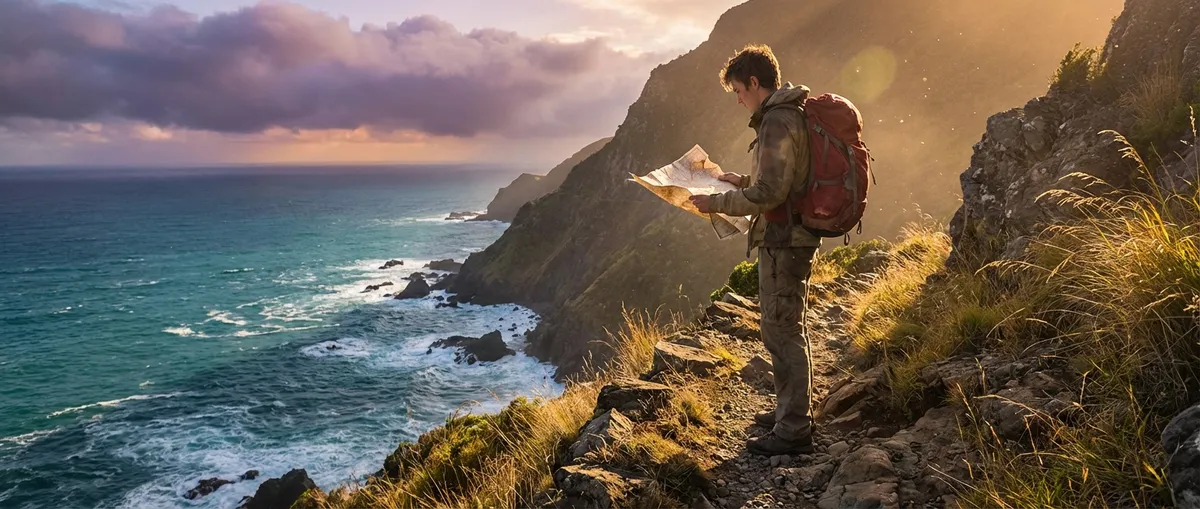
Below are five adventure sparks designed to pull you out of autopilot and into the kind of travel that lingers long after your bags are unpacked. Each one is vivid, doable, and built to shift the way you move through the world.
Trade Highways for Human-Powered Journeys
There’s a different kind of magic in moving under your own steam—on foot, on two wheels, or by paddle—where every mile has a texture, a smell, and a story you can’t get from a car window.
Long-distance hikes, bikepacking routes, and multi-day paddling trips slow travel down enough that you can actually feel distance. A ridge line you’ve been walking toward all day becomes a victory when you finally stand on it. The river bend you heard long before you saw it becomes a landmark etched into your memory.
To get started, look for well-marked trails or routes with established huts, campsites, or guesthouses. Pack lighter than you think you need, but smarter than you want to—think quick-dry layers, blister care, and a tiny luxury (like a good chocolate bar) for morale when the last hill feels unfair. If you’re new, start with a one- or two-night micro-expedition and use it as a test run for a longer mission.
The payoff isn’t just the views. It’s the way your sense of time stretches, the way conversations deepen when you walk or ride for hours together, and the quiet pride of knowing you crossed a landscape not as a passenger, but as a participant.
Sleep Where the World Feels Raw and Big
Some adventures begin when the sun goes down and the world becomes more sky than anything else. Camping on a beach, sleeping in a mountain hut, or spending a night in a desert camp pulls you into a version of Earth that feels older, wilder, and utterly unbothered by your to-do list.
You don’t need extreme survival skills to experience this—just intention and preparation. Choose locations that are legal, safe, and recommended by local guides or park authorities. Check weather, wind, tides, and wildlife precautions ahead of time. A good sleeping bag, a reliable headlamp, and layers can transform a cold, restless night into a cocooned, star-soaked memory.
The thrill comes from simple moments: the sound of waves replacing city noise, the smell of pine in the dark, the silhouette of mountains against a sky full of stars that no photograph can truly catch. Waking up outside—hair wild, face salty or dusty—makes coffee taste more like a reward than a ritual.
These nights rewire something subtle inside you. You remember how little you actually need to feel rich in experience, and how awe can swallow stress in a heartbeat.
Dive Into Elements You Don’t Control (Water, Wind, and Vertigo)
Adventures that flirt with your comfort zone—without trampling safety—have a way of engraving themselves into your memory. Think whitewater rafting through a canyon, learning to surf your first green wave, rock climbing on beginner-friendly routes, or paragliding over a valley that suddenly looks very, very small.
The key is to choose reputable operators and certified instructors. Look for guide companies that emphasize safety briefings, keep group sizes small, and are transparent about conditions and experience levels required. Don’t be shy about asking questions; good guides respect curiosity and caution.
Lean into the fear without glorifying recklessness. It’s perfectly normal for your hands to shake before you step off a platform, grab a first hold, or drop into moving water. That spike of adrenaline, followed by the whoop of relief when you realize you’re actually doing it—that’s the sweet spot.
You’ll come away with more than photos. You’ll leave with a recalibrated idea of what you’re capable of, and that confidence has a habit of slipping quietly into the rest of your life.
Let Local Voices Lead the Way
Some of the richest adventures don’t involve cliffs or rapids at all—they unfold in kitchens, markets, festivals, and backstreets, guided by people who call your destination home.
Seek out locally run walking tours, food safaris, or community-based experiences. Join a neighborhood cooking class where you shop for ingredients at a morning market, or sign up for a cultural workshop—dance, music, crafts—where you’re not just watching, but participating. These are the moments where language barriers become punchlines and strangers become storytellers.
Do a bit of homework: read about local customs, basic phrases, and what’s considered respectful dress and behavior. Ask permission before taking close-up photos of people. Be generous—with your curiosity, your time, and your willingness to listen more than you talk.
What feels like a casual afternoon to you might be part of someone’s everyday life. Treat it with the reverence it deserves, and you’ll walk away with the kind of stories you can’t manufacture: the grandmother who insisted you take a second serving, the kid who tried to teach you a local game, the off-menu dish the stall owner swore you had to try.
Turn Each Trip Into a Personal Quest
Instead of treating your adventure as a checklist of “must-sees,” frame it as a quest—one that only makes sense to you. This transforms even ordinary destinations into playgrounds for discovery.
Maybe your quest is to swim in natural water in every country you visit, to find the highest viewpoint in every city, to trace a historic route, or to document one hyper-specific thing (old doors, street musicians, roadside shrines) everywhere you go. A quest gives you direction without locking you into a rigid plan.
Practically, this helps you say yes to opportunities and no to noise. If your quest is sunrise views, you’ll pass on late nights that don’t matter and instead scout early-morning vantage points. If it’s local snacks, you’ll spend more time in corner shops and markets than in malls and tourist restaurants.
This approach makes your travel deeply personal. When you look back, your journeys won’t blur into generic beaches and cityscapes. They’ll be threaded together by a narrative only you could have written—one adventure at a time.
Conclusion
Adventure isn’t a category of travel reserved for the fearless or the elite. It’s a decision—to walk instead of watch, to step outside instead of scroll, to chase the edges of your own map even when your voice shakes a little.
Choose a human-powered route and feel the miles. Sleep where the sky is bigger than your plans. Let wind, water, and gravity remind you what your body can do. Hand the reins to local voices. Give every journey a quest that matters to you.
You don’t have to wait for the “perfect” trip. Pick one of these sparks, plant it in your next weekend or vacation, and let it grow teeth and wings. The version of you that returns will not be exactly the same as the one who left—and that’s the whole point.
Sources
- National Park Service – Trip Planning & Safety - Guidance on preparing for outdoor adventures, including hiking, camping, and backcountry travel
- Leave No Trace Center for Outdoor Ethics - Core principles for minimizing impact while camping, hiking, and exploring wild places
- Adventure Travel Trade Association - Research and insights on global adventure travel trends and best practices
- Centers for Disease Control and Prevention – Traveler’s Health - Essential health and safety information for international travelers
- REI Co-op Expert Advice: Backpacking 101 - Practical tips on gear, preparation, and safety for backpacking and human-powered trips