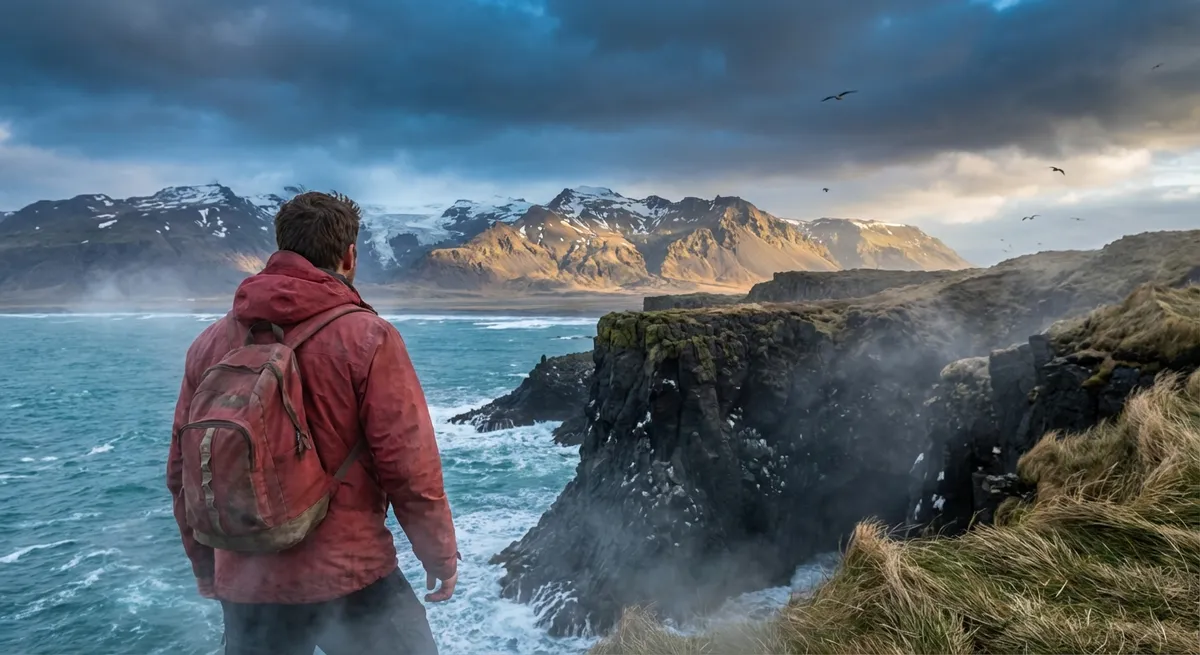
Glacial Silence and Midnight Sun in Arctic Norway
In Arctic Norway, the horizon stretches in slow motion. The light lingers long after your watch insists it’s night, and silence arrives in layers: wind against your jacket, distant waves, the creak of ice. Tromsø and the Lofoten Islands are your gateways to a world where the same sky can host blazing auroras in winter and never‑ending sunset in summer.
Come in winter to chase the northern lights by dogsled or snowshoe, letting your only headlamp be the flicker of green overhead. Spend a night in a rorbu—a traditional red fisherman’s cabin on stilts—waking to mountains that plunge straight into the sea. In summer, trade snow for sea kayaks and hike ridgelines that look down on glassy fjords.
Practical edge: travel with local guides for activities like aurora hunting or glacier hiking; Arctic conditions shift fast and local knowledge is priceless. Aim for shoulder seasons (late September–October or March–April) for fewer crowds, clearer skies, and more affordable stays. Pack layers that can handle wind, wet, and cold… then step outside longer than feels comfortable. That’s when the Arctic starts to speak.
Volcanic Horizons and Lava Glow in Hawaiʻi’s Big Island
On Hawaiʻi Island, the ground feels young—restless, even. Black lava fields stretch like frozen rivers, new earth poured over old. At Hawaiʻi Volcanoes National Park, you walk along the rim of vast craters, peer into steam vents, and trace the line where molten rock once met the sea. It’s one of the few places on Earth where you can watch a planet still building itself.
Time your visit for after dark to see the glow from active vents (when eruptions are happening) paint the sky a deep, otherworldly red. By day, hike across the solidified Kīlauea Iki crater, where a lava lake once roiled beneath your feet, or drive the Chain of Craters Road toward the crashing Pacific. On the coastline, sea arches stand like temporary monuments to erosion and time.
Practical edge: check current volcanic conditions on the National Park Service site before you arrive; trails and viewing areas can open or close quickly due to activity. Respect all closures and Hawaiian cultural sites—this land is sacred long before it is scenic. Rent a car, bring a headlamp, and always carry more water than you think you’ll need; the black lava can reflect brutal heat, even under overcast skies.
Desert Stars and Deep Canyons in Jordan’s Wadi Rum
Wadi Rum looks like the backdrop of a sci‑fi epic because, in many films, it is. Massive sandstone cliffs erupt from an ocean of red sand, and at night the desert sky becomes a planetarium so bright you hardly need a flashlight. Out here, distance is measured not just in kilometers, but in silence and starlight.
Travel by 4x4 with Bedouin guides, then slow down to camel pace as you cross wind‑carved dunes. Climb simple rock scrambles to stand at viewpoints where the valley opens endlessly around you. As the sun drops, camp in a Bedouin camp that blends tradition with comfort: thick blankets, sweet tea, and fire‑lit meals under a canopy of constellations.
Practical edge: choose locally owned camps that employ Bedouin guides; you’ll get richer stories and directly support the community that calls this desert home. Visit in spring (March–April) or autumn (October–November) for cooler days and crisp nights. Bring a lightweight scarf or buff for sun and sand, and give yourself at least two nights—one to be dazzled, and one to slow your breathing to the pace of the desert.
Forest Trails and Cloud-Drift in Costa Rica’s Monteverde
Monteverde is what happens when the sky decides to live inside a forest. Mists drift between moss‑covered branches, orchids cling to tree trunks, and bridges hang at canopy height so you can walk at eye level with toucans. Every step is a reminder that “jungle” is not chaos—it’s a deep, breathing system, layered and alive.
Hike early mornings when wildlife is most active and the forest is stitched with birdsong. Join a guided night walk and watch the forest flip; diurnal creatures retreat while glowing fungi, tree frogs, and nocturnal mammals begin their shift. For an adrenaline surge, zipline across ravines and through clouds, balancing the thrill with an afternoon wandering quiet trails in a private reserve.
Practical edge: Monteverde sits high and damp; pack a light rain shell, quick‑dry clothing, and shoes with real grip. Opt for certified eco‑lodges and nature reserves that protect habitat and funnel fees back into conservation. Book at least one guided hike—local naturalists will point out creatures and plants you’d never notice alone, turning a “nice walk” into a living biology lesson.
Tidal Roads and Cliff-Top Lighthouses in Atlantic Canada
On Canada’s Atlantic edge—Nova Scotia, New Brunswick, and Prince Edward Island—the coastline is a slow-burn kind of wild. Here, tides rise higher than anywhere else on Earth in the Bay of Fundy, and red‑clay cliffs crumble into surf that booms against rocks older than most mountain ranges. Fishing villages are small, lighthouses stubborn, and the ocean never far from view.
Visit the Bay of Fundy to walk on the ocean floor at low tide, weaving between towering rock formations, then return hours later to watch the sea reclaim everything. Drive the Cabot Trail in Cape Breton, where the road coils along cliffs and moose wander the edges of boreal forest. On Prince Edward Island, trade drama for charm: cycling along quiet coastal roads, the scent of salt and wildflowers riding the breeze.
Practical edge: tides in the Bay of Fundy are serious business—check official tide tables and plan hikes accordingly; what looks like a gentle bay can become a fast‑moving wall of water. Summer brings warmer temps and open seasonal businesses, while late September rewards road‑trippers with fiery foliage and thinner crowds. Dress in layers; Atlantic weather likes to change its mind every few hours.
Conclusion
The world’s edges aren’t only found at the ends of continents or in the highest peaks—they live wherever wildness is allowed to breathe. Whether you’re standing under Arctic auroras, tracing fresh lava, crossing a red desert, drifting through cloud forest, or racing the world’s fastest tides, these destinations remind you of something essential: you are a tiny piece of something vast, and that is liberating, not limiting.
Pick one place that pulls at you—not the most convenient, not the most famous, but the one that makes your pulse jump when you imagine it. Mark it on a map. Start learning its weather, its customs, its seasons. The journey begins long before your flight; it starts the moment you decide that your next destination won’t just be another pin, but a place that rewires the way you see the planet—and your place on it.
Sources
- Visit Norway – Northern Lights and Arctic Experiences – Practical information on seeing the aurora and traveling in Northern Norway
- U.S. National Park Service – Hawaiʻi Volcanoes National Park – Official updates on volcanic activity, safety, and hiking in the park
- UNESCO World Heritage Centre – Wadi Rum Protected Area – Background on the natural and cultural significance of Wadi Rum
- Costa Rica Tourism Board – Monteverde Region – Overview of Monteverde’s cloud forests, activities, and conservation focus
- Parks Canada – Bay of Fundy and Atlantic Canada – Official information on national parks, tides, and road-trip planning in Atlantic Canada