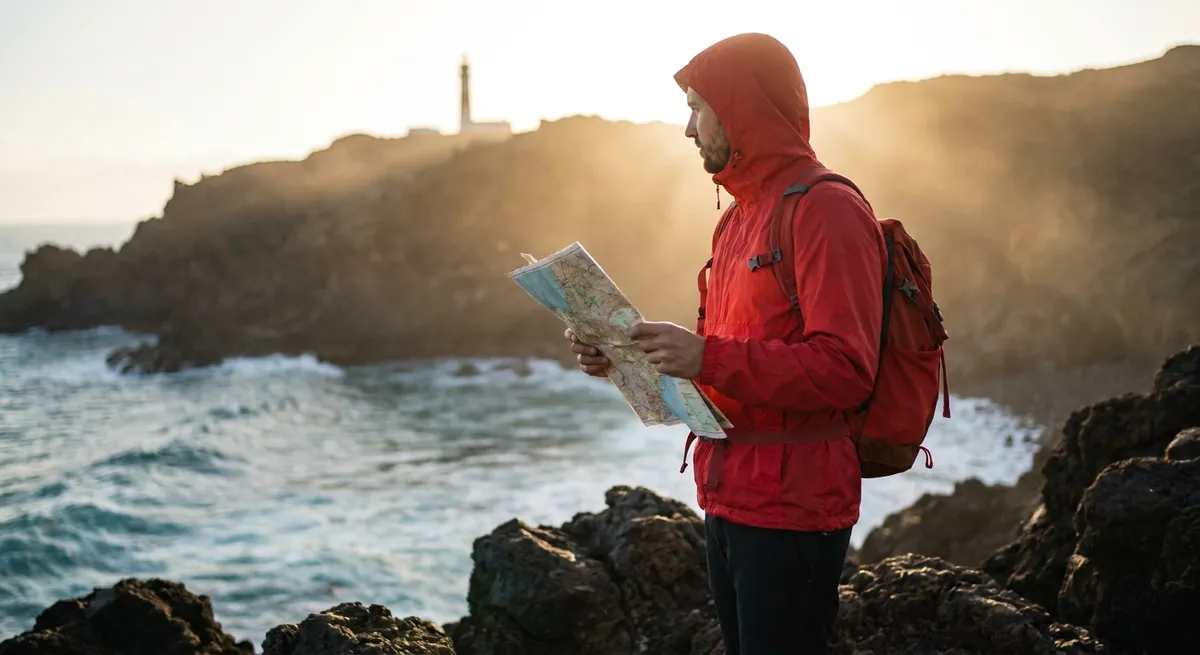
Below are five kinds of destinations that don’t just look good on your feed—they linger in your memory and shift how you move through the world.
1. High-Altitude Cities Where Every Step Feels Like Flight
High-altitude cities push you just enough to remind you that you’re alive. Places like La Paz in Bolivia, Cusco in Peru, and Lhasa in Tibet sit so close to the sky that even climbing a staircase can feel like a small expedition. The reward? Crystal-clear light, jagged mountain horizons, and a sense that you’re living closer to the edge of the planet.
Wander La Paz’s cable cars strung across the city like floating streets, watching neighborhoods glide beneath your feet. In Cusco, cobblestone alleys lead to Inca foundations and Andean viewpoints, where early mornings are wrapped in mist and the smell of wood smoke. Give yourself time to acclimate—walk slowly, drink water, skip heavy meals the first day, and listen to your body.
High-altitude destinations are invitations to slow down and pay attention. You’ll notice your breath. You’ll measure your steps. And in that gentler pace, you’ll realize how much you usually rush through your days. Here, even getting from one side of town to the other can feel like a tiny summit—and that makes every view feel earned.
2. Night-Sky Sanctuaries Where Darkness Becomes the Main Event
In a world that’s always lit up, it’s rare to stand under a sky so dark you can see the Milky Way spill across it like a river of light. Dark-sky reserves and remote stargazing destinations—from Utah’s national parks to New Zealand’s Aoraki Mackenzie region and Namibia’s vast deserts—turn the night into their main attraction.
By day, you hike, drive, or paddle through wide-open landscapes. By night, you grab a blanket, a warm layer, and look up until your neck aches in the best way. You’ll see constellations you’ve only read about, shooting stars that burn quick wishes across the horizon, and sometimes the faint glow of distant galaxies that stretch your idea of “far.”
To make the most of these places, go during new moon phases when the sky is darkest, and step away from any artificial light. Download a stargazing app, learn a few constellations before you go, and give your eyes 20 minutes to adjust to the dark. Out there, with no skyscrapers or streetlights, the universe suddenly feels both enormous and strangely intimate—and you realize how small your daily worries really are.
3. Borderland Towns Where Cultures Blend in the Streets
Border towns are where maps blur and cultures tangle together in the best possible way. Think of places like Tijuana (Mexico–U.S.), Strasbourg (France–Germany), or Iguazú Falls region (Argentina–Brazil–Paraguay). These are cities and regions that exist in the “in between,” where languages merge, recipes cross borders, and currencies sometimes change with a single bridge crossing.
Walk a market in a border town and you’ll hear overlapping accents, see mixed ingredients, and taste dishes born out of crossings and compromise. Street art often carries political stories and personal histories. Cafés and food stalls may serve fusion not because it’s trendy, but because it’s how people have eaten for generations—borrowing from both sides of the line.
Traveling through borderlands demands curiosity and respect. Read up on local history, understand any required visas or documents if you plan to cross, and consider joining a local walking tour for context. These are destinations that challenge neat narratives and celebrate complexity. They remind you that identity, like travel, is rarely just one thing.
4. Island Trails Where the Journey Circles Back to the Sea
Islands have a way of focusing your attention: there’s only so far you can go before you meet water again. Trail-rich islands—from Scotland’s Isle of Skye to Portugal’s Azores and Japan’s Yakushima—wrap wild landscapes into manageable loops, letting you touch mountains, forests, and coastline in a single day.
Picture hiking a cliffside path in the Azores, hydrangeas spilling blue along the lane while the Atlantic hammers the rocks below. Or tracing the fairy-tale landscapes of Skye, where green valleys fold into sea lochs and rock pinnacles pierce the clouds. On Yakushima, you weave through ancient cedar forests so moss-draped and quiet you feel like you’ve stepped back in time.
Island hiking teaches you to travel light and move steadily. Pack layers—weather can flip quickly when sea and land collide. Bring a refillable bottle, local trail maps, and respect for fragile ecosystems: stay on marked paths, carry out your trash, and keep noise low. As you circle back to the harbor at the end of the day, legs aching in that satisfying way, the sea becomes a mirror reflecting everything you’ve just walked through.
5. River Cities That Reveal Themselves by Water
Some destinations only make sense when you see them from their rivers. Cities like Bangkok on the Chao Phraya, Budapest on the Danube, and Cairo along the Nile grew up hugging the water, their histories carried along the currents. Exploring these places by boat shifts your angle—suddenly alleyways, temples, and palaces line up in a new perspective.
In Bangkok, long-tail boats slice through canals where houses perch on stilts and floating markets drift by in a blur of color and steam. In Budapest, an evening cruise shows off a city of light—the Parliament building glowing like a storybook castle, bridges strung with golden bulbs. On the Nile, feluccas with white sails slide past riverbanks where modern life shares space with ruins older than many countries.
For river cities, plan at least one journey that uses the water as your main road: a commuter ferry instead of a taxi, a local boat instead of a bus. Go at different times of day—dawn for quiet reflection, evening for city lights. Wear a light jacket (river breezes can surprise you), protect your gear with a dry bag or zip-lock pouch, and keep your camera or phone ready. These rides remind you that cities aren’t just grids on a map; they’re living, flowing stories anchored to the water that shaped them.
Conclusion
The destinations that stay with you aren’t always the most famous—they’re the ones that shift your pace, tilt your perspective, and ask a little more of you. High-altitude streets that slow your steps. Night skies that make you feel small and limitless at once. Borderlands that blur edges, island trails that loop you back to the sea, and river cities that unfold like moving postcards.
You don’t have to see the whole world to feel changed by it. You just have to choose places that ask you to meet them fully—on foot, under the stars, across invisible lines, beside restless water. The map is wide. Pick a corner that stretches you, and let your next trip set a new rhythm for everything that comes after.
Sources
- [UNESCO International Dark Sky Reserves](https://www.unesco.org/en/articles/unesco-heritage-and-starry-skies) – Overview of protected dark-sky areas and the importance of preserving night skies
- [U.S. National Park Service – Altitude Illness](https://www.nps.gov/articles/altitude-illness.htm) – Practical guidance on staying healthy while traveling to high-altitude destinations
- [UN World Tourism Organization – Tourism and Culture](https://www.unwto.org/tourism-and-culture) – Insight into how cultural exchange and border regions shape modern travel
- [Visit Scotland – Isle of Skye](https://www.visitscotland.com/destinations-maps/isle-skye) – Official information on trails, landscapes, and experiences on Skye
- [Budapest Info – Danube River Experiences](https://www.budapestinfo.hu/danube) – Official city tourism page highlighting river cruises and waterfront attractions