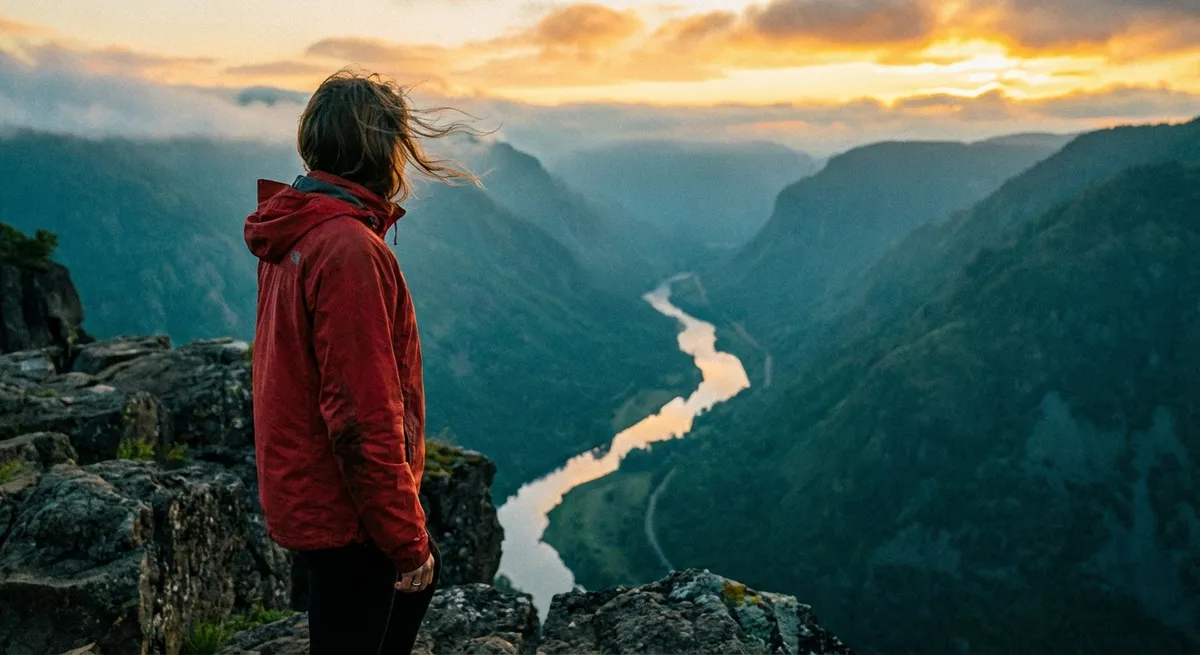
Adventure doesn’t always mean dangling off a cliff or crossing a desert solo. It means choosing the less obvious path, saying yes when it would be easier to say no, and letting curiosity win over comfort. Here are five powerful ways to build that kind of adventure into your travels—experiences that don’t just fill your camera roll, but stretch your courage, your senses, and your story.
1. Trade Spectator Seats for the Front Line of Nature
Watching a sunrise from a hotel balcony is nice. Watching it from a ridgeline you hiked to in the dark? That’s a memory that rewires you.
Find places where you’re not just looking at nature—you’re moving through it. Think multi-day hut-to-hut treks in the Alps, camping along Patagonia’s wild trails, or kayaking through Norway’s fjords while seals track your paddle strokes. When you’re carrying everything you need on your back or in your boat, the world shrinks to the rhythm of your breath, the weight on your shoulders, and the changing sky overhead.
Plan for one “front line” moment on your next trip: a dawn summit hike, a guided glacier walk, a desert overnight under unpolluted stars. Check local park regulations, weather reports, and required permits early—many of the most breathtaking routes are limited entry. Start with a guided experience if you’re new to backcountry travel; you’ll gain skills and confidence you can carry into future trips. The goal isn’t to suffer—it’s to feel the landscape with your whole body, not just your eyes.
2. Step Into Someone Else’s Daily Life, Not Just Their Landmarks
The most life-changing adventures rarely happen in front of monuments; they happen in kitchens, corner shops, night markets, and bus stops. When you travel like a quiet observer, you come home with photos. When you travel like a temporary local-in-training, you come home different.
Build time into your itinerary for ordinary life in extraordinary places. Take a local cooking class in Oaxaca where you shop the market before lighting the stove. Join a morning tai chi session in a park in Taipei instead of hitting the hotel gym. Visit a neighborhood football match in Lisbon or a village festival in rural Georgia. Ask your hosts or guides where they would take a visiting friend for lunch, or which local event they’re most excited about this month.
Respect is your passport here—learn a few key phrases, read up on basic cultural etiquette, and approach each interaction with curiosity, not comparison. These encounters are less about ticking off “authentic” experiences and more about letting your assumptions be gently challenged. Adventure isn’t only cliffs and rapids; sometimes it’s sitting on a plastic stool, sipping street-side tea, and realizing how big—and how connected—the world really is.
3. Chase Elements, Not Just Destinations
Instead of asking, “Where should I go next?” try asking, “What element do I want to be surrounded by?” Water. Ice. Sand. Jungle. Altitude. Sound. Silence. Then build your adventure around that.
If you’re drawn to water, imagine freediving in crystalline cenotes in Mexico, learning to surf on Morocco’s Atlantic coast, or sailing between remote islands in Greece with nothing but horizon in every direction. If wind and height thrill you, think via ferrata routes in the Dolomites or paragliding over the emerald valleys of northern Vietnam. Crave silence? Consider a cabin near Iceland’s interior highlands or a winter trek through Finland’s snow-blanketed forests, where your footsteps become the loudest sound you hear.
Once you choose your element, research seasons carefully; the same place can feel wildly different in July than in January. Look up local guides and outfitters with strong safety records and certifications, and read recent reviews from adventure travelers, not just vacationers. This element-first approach helps you break free from trending “must-see” lists and leads you toward experiences that resonate with who you are—whether you’re soothed by waves or electrified by big skies.
4. Turn Motion Into the Main Event, Not Just a Way to Get There
Most itineraries treat transportation as a time to endure, not enjoy. But when you flip that script, the journey itself becomes the adventure.
Swap the quick flight for the overnight train with a sleeper cabin. Take the long-distance bus that winds over mountain passes instead of the express route through tunnels. Consider cycling across a region like the Danube River Trail, where each day is a moving postcard, or tackling part of a historic pilgrimage route like Spain’s Camino de Santiago, even if you only walk a section. On the water, ferries between Greek islands or slow boats along the Mekong can reveal a country’s rhythm more honestly than any airport ever will.
To make motion your main event, pack light—every extra kilo will weigh on your sense of freedom. Keep key items under your control (water, layers, power bank, offline maps, translation apps) so the unpredictability of the journey feels exciting, not stressful. Give yourself buffer days so delays turn into unexpected side quests, not trip-ruining disasters. When you stop treating movement as dead time, you open the door to chance conversations, surprise views, and the humbling realization that the world is big and beautifully slow when you let it be.
5. Design One “Leap Moment” Into Every Trip
Every journey has at least one decision point where you either lean in or back away: the canyon swing you’re not sure you can step off, the open-mic night you’re tempted to join, the backroad trail that looks steeper than you’d like. Make space for that moment on purpose.
Before you leave, write down one thing that scares you in a healthy way—something physical (like a whitewater rafting day), social (attending a local meetup where you know no one), or personal (traveling solo for 24 hours within a longer group trip). Then build it into your plan with intention: research reputable operators, understand the risks, talk to people who’ve done it, and set your boundaries clearly. The point isn’t to impress anyone; it’s to widen the circle of what you believe you can handle.
When the moment comes, remind yourself: fear and excitement feel almost identical in the body. Name what you’re feeling, breathe slower than your heartbeat, and take one small step at a time. Say yes if it’s safe, no if it truly crosses your line—and honor both choices. The real adventure is learning to trust your judgment in unfamiliar terrain. That confidence doesn’t stay on the mountain or the river; it follows you home, into meetings, relationships, and the quiet choices that shape your life.
Conclusion
Adventure is not a personality type; it’s a habit of choosing the slightly wilder option, over and over, until it becomes who you are. You don’t have to quit your job or cross an ocean to live more boldly—you just have to start asking different questions.
Where can I move through nature instead of just looking at it? Whose daily life can I glimpse, respectfully, for a moment? Which element calls to me right now? How can I turn the journey into the best part of the story? And where, on this next trip, will I draw my line—and then step just beyond it?
Answer those, and your travels won’t just fill weekends and vacation days. They’ll wake you up to a bigger, braver version of your own life—one adventure at a time.
Sources
- U.S. National Park Service – Plan Your Visit - Guidance on permits, safety, and planning immersive nature experiences in U.S. national parks
- Leave No Trace Center for Outdoor Ethics - Principles for responsible adventure travel and minimizing impact in wild places
- Adventure Travel Trade Association - Research and insights on global adventure travel trends and safety considerations
- Camino de Santiago Official Website - Information on routes, preparation, and cultural context for one of the world’s most famous pilgrimage trails
- UNESCO World Heritage Centre – Sustainable Tourism - Guidance on experiencing culturally rich destinations responsibly and respectfully