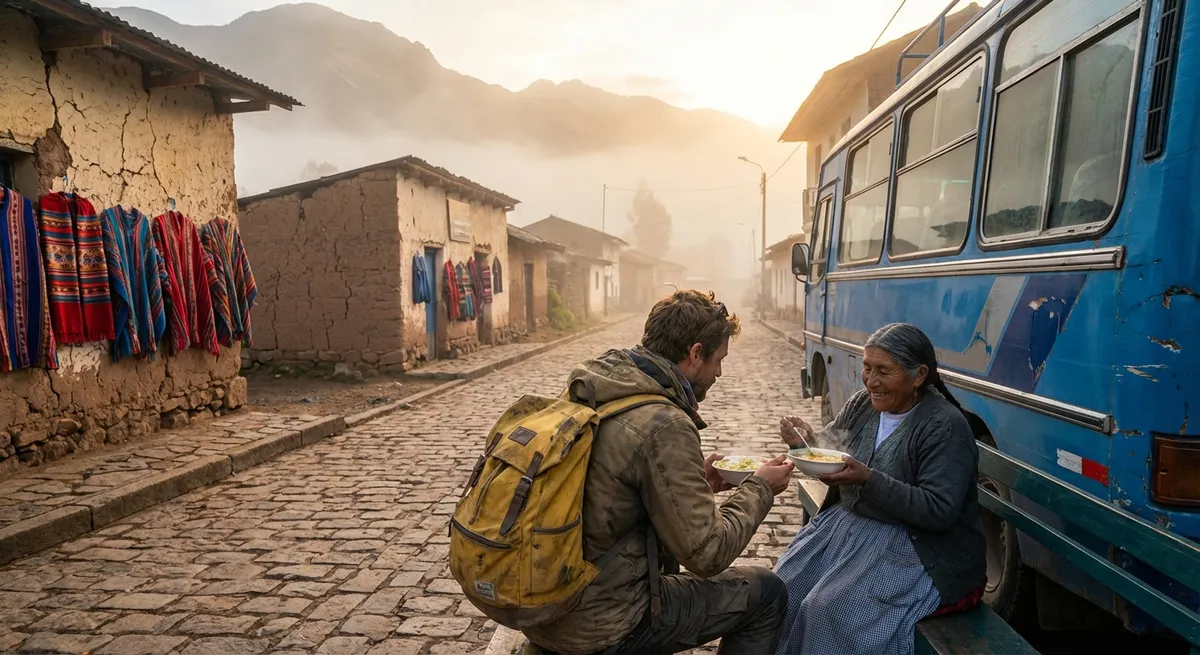
Rewriting Wealth: Trading Currency for Curiosity
Most people think travel is a luxury reserved for “later”—after promotions, savings goals, and a dozen other milestones. Budget travelers know better: your greatest resource isn’t your bank account, it’s your curiosity. When you let curiosity lead, cost becomes a puzzle, not a barrier.
Start by shifting your mindset from “What can I afford?” to “What am I willing to trade?” Maybe that $200 hotel becomes four nights in a clean, locally run hostel and a street food tour that tastes like a secret. That single fancy dinner? Swap it for a week of market picnics under cathedral steps or on empty stretches of beach.
You’re not depriving yourself; you’re prioritizing. Each budget choice is a deliberate “yes” to more time away, more detours, and more chances to be surprised by the world. When you see money as fuel for experiences rather than a measure of status, the map suddenly stretches much farther than you’d been told.
Captivating Point 1: Riding the World on Slow Wheels and Sleeper Trains
Fast travel gets you there; slow travel lets you feel it.
Booking an overnight bus, train, or ferry can turn a simple transfer into an adventure that saves you both time and money. Instead of paying for a hotel and a daytime ticket, you roll across borders while you sleep—waking up in a new city, country, or climate.
Picture lying in a narrow sleeper berth as the countryside streaks by: neon-lit villages in Vietnam, moonlit fields in Eastern Europe, or rust-colored plains in Mexico. You share snacks with your seatmate, swap playlists, or simply press your forehead to the cool glass, memorizing the shadowy outline of mountains you’ll hike at dawn.
This style of moving teaches you patience and presence. Long-haul rides become mobile classrooms: learning how families travel together, how vendors hop on at tiny stations to sell hot tea or tamales, how landscapes reshape themselves every hundred kilometers. With a bit of planning—checking safety standards, reading real traveler reviews, and packing a neck pillow and earplugs—you turn transportation into one of the richest parts of your trip, not just something to endure.
Captivating Point 2: Sleeping in Stories, Not Just Beds
On a budget, where you sleep becomes part of the adventure instead of just a place to drop your backpack.
Hostels aren’t just for students anymore; many are design-conscious, eco-minded, and community-focused. Think rooftop terraces where sunset turns into spontaneous guitar sessions, coworking spaces where a quick email check morphs into a new travel plan with strangers, or shared kitchens where dinner becomes a language lesson. Budget guesthouses and homestays put you closer to the heartbeat of a place—waking up to the smell of home-cooked bread in a Mediterranean village or sharing tea with your host in a mountain town.
If you’re feeling bolder, there’s couchsurfing and hospitality exchanges, where the “payment” is conversation, curiosity, and respect. In rural areas, you might find farm stays where your room rate includes helping with the harvest, feeding animals, or learning how local herbs are used in traditional cooking.
What you sacrifice in private minibars and plush bathrobes, you gain in midnight conversations, borrowed bicycles, and handwritten maps drawn by your host on a napkin. These stays often end with something more valuable than a loyalty program: a place you can come back to, and people who remember your name.
Captivating Point 3: Turning Street Food into a Global Tasting Menu
Forget white tablecloths and reservation lines—the world’s best meals often come served on paper plates, from sizzling griddles, or out of tiny, steaming stalls on noisy corners.
Budget travelers quickly learn that street food is where a city’s soul shows up: in the ladle of a soup vendor in Bangkok, the tortilla press of a family stand in Oaxaca, or the coal grill of a kebab stall in Istanbul. Your dollars stretch further here, but so does your experience. Each bite carries history—migration routes, trade winds, family recipes passed down long before tourism ever arrived.
To keep it safe and joyful, follow the locals: long lines, high turnover, and fresh ingredients are your allies. Watch how food is handled, choose cooked-to-order options when you’re unsure, and start with small portions so you can sample widely. For the cost of one upscale meal, you can turn an entire day into a roaming feast: breakfast at a bakery, lunch at a market, dinner from a night stall, dessert from a pushcart under neon signs.
It’s not just about saving money; it’s about traveling with your senses wide open, letting flavor be your guide to neighborhoods you’d never otherwise see.
Captivating Point 4: Collecting Free Moments That Feel Priceless
The most unforgettable travel memories often cost nothing at all.
Sunrise walks through nearly empty streets, when shopkeepers are just lifting their shutters. Wandering public parks where families gather on weekends, sharing snacks and music. City viewpoints reached by public stairs instead of cable cars. Free museum days, neighborhood festivals, street performances, and riverside promenades where locals stroll at dusk.
Budget travelers become experts at spotting these open doors. You learn to scout free walking tours (tipping what you can), explore university campuses that double as architectural wonders, and time your visit to open-air concerts or cultural events sponsored by cities and cultural institutions. Public libraries in big cities can become temporary offices, reading rooms, or simply a quiet refuge where you glimpse everyday life.
When you stop equating “value” with a price tag, you realize the world is full of unscripted, wildly generous experiences: being invited into a pickup soccer game, joining a dance in a plaza, or sharing a bench with someone who ends up showing you their version of the city. Money can’t buy that kind of access—but your openness can.
Captivating Point 5: Traveling Light to Go Further and Say “Yes” More Often
Every extra thing you carry is a decision you made in fear of “what if.” Every thing you leave behind is an opening for “what’s next?”
A lean backpack or carry-on unlocks a kind of freedom that budget travelers quickly come to crave. When you can easily walk 20 minutes from a bus station to your lodging, you avoid taxis. When you don’t have checked bags, you can pounce on cheaper flights with tight layovers or hop on budget airlines without extra fees. When your bag is light enough to sling over one shoulder, you can say yes to last-minute detours, shared rides, or spontaneous hikes.
This isn’t about suffering or bragging rights—it’s about designing a toolkit for movement. A small set of versatile clothes, quick-dry fabrics, a compact first-aid kit, a sarong or scarf that doubles as blanket and towel, a reusable bottle and utensils so you can picnic anywhere. Thoughtful minimalism becomes its own adrenaline rush: realizing you have everything you need on your back and very little to lose by changing your plans.
Travel light, and suddenly the world doesn’t feel like a maze of logistics. It feels like a playground of options.
Conclusion
Budget travel isn’t a consolation prize for people who can’t afford “real” vacations—it’s a deliberate, resilient way of moving through the world that trades polish for possibility. When you choose slow rides over short flights, hostels over hotels, street food over fine dining, and experiences over expenses, you’re not just saving money. You’re building a life that’s rich in different currencies: time, connection, spontaneity, and awe.
You don’t have to wait for permission, a promotion, or a perfect savings number to start. Begin with a weekend, a nearby country, or a border town reachable by train or bus. Pack less than you think, plan just enough to feel safe, and leave the rest open for the road to surprise you.
The world is already in motion. Your budget is not your cage—it’s your challenge. How far can you go with what you have right now?
Sources
- World Tourism Organization (UN Tourism) – International Tourism Highlights – Data and insights on global travel trends, including spending patterns and tourism growth.
- U.S. Department of State – Travel Advisories – Official safety information and guidance for international destinations.
- Centers for Disease Control and Prevention – Travelers’ Health – Health recommendations, vaccines, and practical tips for staying healthy on the road.
- Lonely Planet – Budget Travel Tips – Practical, field-tested advice for keeping travel costs low while seeing more.
- Rick Steves Europe – Money-Saving Travel Tips – Strategies for cutting costs on transportation, lodging, and daily expenses, especially in Europe.